Denmark

Denmark is an archipelago made up of 406 islands and 7,314 miles of coastline, which is longer than the Great Wall of China.  No place in Denmark is more than 30 miles from the sea.


The Danish monarchy is the oldest continuing monarchy in the world and has existed for over 1,000 years.  Queen Margarethe II is the current head of state.


Denmark has more than twice the amount of bicycles (4.2 million) than cars (1.8 million). Copenhageners pedal more than 1.13 million km on their bicycles each day.


Salaries in Copenhagen are the third highest in the world – only surpassed by Zurich and Geneva.  The UN World Happiness Report has rated Danes as the happiest people on earth two years in a row.


With its palaces and gardens, Copenhagen hosts more visitors than any other Nordic city.  The name Lego® is an abbreviation of two Danish words leg godt, meaning “play well.” The company was started in 1932 by Ole Kirk Christiansen. Lego began producing its iconic bricks in 1958. For more than 60 years, over 320 billion Lego bricks have been sold worldwide—nearly 60 bricks for every human on the planet.


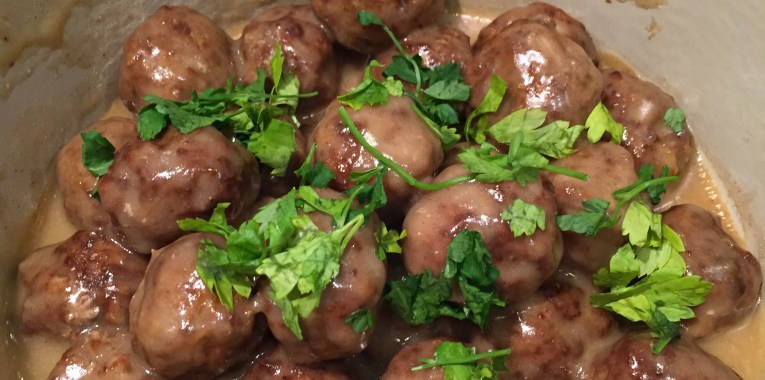
The Danes are certified foodies. They are the fifth largest exporter of food in the world, despite their small population.  Copenhagen has more Michelin-starred restaurants than any other city in Scandinavia.  Some of their traditional dishes include Æblekage, (apple charlotte) , Hakkebøf (ground beef steak), Stegt flæsk med persillesovs (pork slices with potato and bechamel sauce) and Klipfisk (dried cod).  I decided to cook Frikadeller (pan fried meatballs) with Danish brown gravy.
I was skiing in France when I cooked this dish for 18 people!! (I quadrupled the volume of ingredients).  It was generally well received, although some felt the gravy was a little too vinegary.
Rating overall 7/10


Serves 4 hungry people
Prep time: 45 minutes
Cook time: 15-25 minutes


For the Frikadeller:
275g ground pork
275g ground veal
½ tsp salt
½ tsp pepper
1 large onion
2 tbsps flour
1 small egg


Chop the onion into fine pieces, and mix meat and onions together.
Add egg and mix again.
Add flour and remaining ingredients.
Form mix into 6-8 balls.
Melt butter in frying pan and cook for 10 min on each side over a medium heat.
(If you are doing this for a large volume of people you can brown the meatballs in the frying pan and then transfer to the oven for about 15 minutes or until the meatballs are cooked through)


For the brown gravy:
4 tbsps Danish butter
4 tbsps flour
3 cups beef stock
3 tbsps white vinegar
Salt and pepper
3 tbsps sherry
Colouring to darken the gravy (optional)


Melt butter over low heat in a pot.
Add flour and stir until smooth.
Add half of the meat stock slowly while constantly stirring.
Add the rest of the stock with vinegar and boil slowly, while constantly stirring.
Add salt and pepper.
Add sherry at the very end, just before removing from heat.
Remove from heat, allow gravy to cool for 4-5 minutes while stirring constantly.


I served the dish with buttered tagliatelle.


IMG_8337
Danish dinner for the skiers!!

Serbia

Serbia is a land locked country situated in the central part of the Balkan Peninsula.  Bordered by 8 countries; Hungary, Romania, Bulgaria, Macedonia, Albania, Montenegro, Croatia and Bosnia and Herzegovina.
Nearly half of Serbia is mountainous, with the Dinaric Alps on the western border, the North Albanian Alps (Prokletija) and the Sar Mountains in the south, and the Balkan Mountains along the southeast border.
Serbia had previously been a dominant state within Yugoslavia.  Serbia’s brutal war in the southern province of Kosovo, started in 1998, causing Montenegro to distance itself from Slobodan Milosevic and his Yugoslav government. On February 4, 2003, the name “Yugoslavia” passed into history, replaced by the union of “Serbia and Montenegro.”  Serbia became a stand-alone sovereign republic in the summer of 2006 after Montenegro voted in a referendum for independence from the Union of Serbia and Montenegro.  The two republics had been united in one form or another for nearly 90 years.
Some interesting facts:
Serbia is the largest exporter of raspberries in the world, contributing 30% to the international market.
‘Vampire’ is a Serbian word and is known the world over.
Serbia is ahead of the Swiss in clock making. They started this almost 600 years before the Swiss took over the industry.
Nikola Tesla was Serbian and there has been a museum in his name in Belgrade since 1952.
I came across many different meat dishes when researching Serbia namely; Ćufte u paradajz sosu (meatballs in tomato Sauce) , Đuveč (stewed vegetables and pork or chicken similar to pilaf) , Paprikaš (pork or chicken and pepper stew), Ćevapi u lepinji sa kajmakom (kebabs in flatbread with kaymak) and Podvarak (roast meat with Sauerkraut).  I decided to cook Pljeskavica (a ground beef/pork patty).
Rating: 6/10 – I felt there was too much paprika which overpowered the flavour for me.  I would halve the quantity if I made them again.
Serves 6
Prep time: 10 minutes + 8 hours fridge time
Cook time: 10 – 15 minutes
450g ground beef chuck
225g ground pork
225g ground lamb
2 cloves garlic, finely chopped
1/2 cup finely chopped onions
1 1/2 tsp salt
1 tbsp sweet or hot paprika (I would use half this amount)
Mix together all ingredients until thoroughly combined and refrigerate for several hours for flavours to meld and mixture to firm.
Heat griddle pan.
Using slightly dampened hands, divide meat mixture into 6 portions.
Form into thin patties, 20 cm x 1cm, or about the size of a small dinner plate.
Pan fry pljeskavica about 5 minutes per side.

Serve in a pitta bread with salad.

IMG_8087
Pljeskavica mix
IMG_8105
Pljeskavica
IMG_8107
Griddling the Pljeskavica
IMG_8119
Pljeskavica


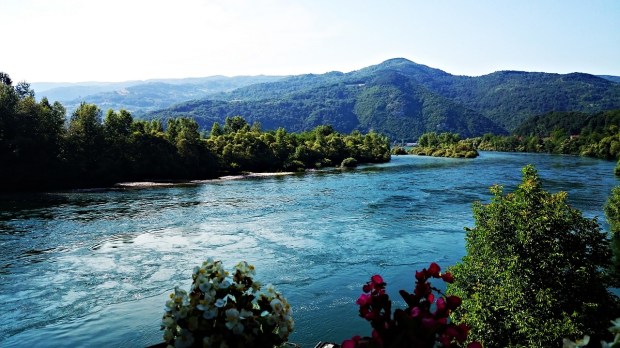
river-882718_1280
Serbian river
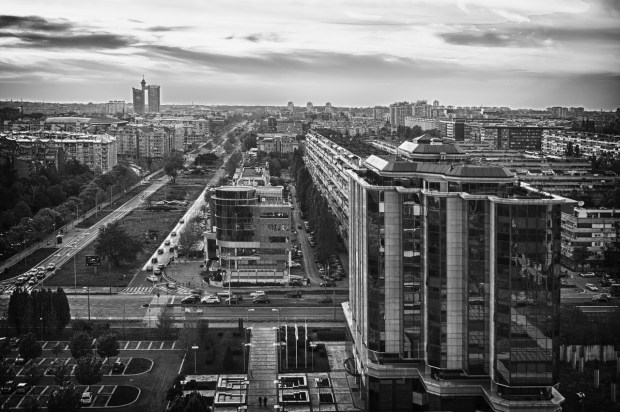
belgrade-466173_1280
Belgrade, Serbia

Ireland

As I had my mother in law staying with us from Ireland and the kids were also here, it felt only right to cook Ireland on St Patrick’s Day!
So, The Emerald Isle, my husband’s homeland .. the pressure’s on!!
I’ve been to Ireland several times and have had the pleasure of visiting Cork, Dublin and Galway.  All very different and yet delightful in their own unique way.  Beautiful beaches and sea views in Cork, great food, shopping and bars in Dublin and stunning scenery in Galway.
The land of potatoes, guinness, shamrocks and leprechauns has a very long and interesting history.  The first people arrived in Ireland in around 7000 BC and lived by farming and fishing.
In 432 a man named Patrick arrived in Ireland from Western England.  He had been captured by Irish pirates, brought to Ireland as a slave and was forced to work as a herdsman.  He managed to escape back to England but had a vision in which he read a letter asking him to come to Ireland, so he returned to become a missionary and the first bishop of Ireland.  He is said to have died on 17th March 461.
The Great Famine was a period of mass starvation, disease, and emigration in Ireland between 1845 and 1852.  The famine was caused by potato blight.  One third of the population was dependent on the potato for a range of ethnic, religious, political, social and economic reasons and therefore impacted Ireland significantly.  During the famine, approximately 1 million people died and a million more emigrated from Ireland causing the island’s population to fall by between 20% and 25%.
A few quick facts:
Ireland’s top tourist attraction is the Guinness storehouse in Dublin, where over 1 million people visit every year.
In 2010, Dublin was designated UNESCO City of Literature, one of only four in the world (the others are Edinburgh, Iowa and Melbourne).
James Hoban, designer of The White House was Irish.
Rotunda Hospital in Dublin is the longest continually operating maternity hospital in the world.
The Titanic made it’s last port of call in Cobh (then called Queenstown) on 11th Feb, 1912.
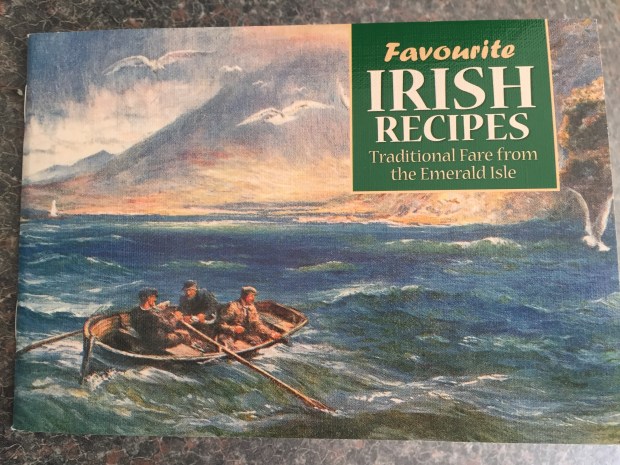
When it comes to Irish food, there was a lot to choose from.  A few years ago, my mother in law had given me an Irish recipe book which came in very handy!  Some obvious options I considered were Irish stew, Colcannon and a full Irish breakfast!  However, I opted for Scallop pie and Soda bread.  Thankfully both went down extremely well.
Rating: 9/10
Recipe for Scallop pie:
Prep time: 1 hour

Cook time: 45 minutes

IMG_7961


Recipe for Soda bread:
Prep time: 10 minutes
Cook time: 40 minutes (longer than the recipe states)
IMG_8022


IMG_7962
Irish cookbook
dublin-1049403_1280
The Ha’penny Bridge, Dublin
cliff-of-mohar-324746_1280
Cliffs Of Moher, County Clare
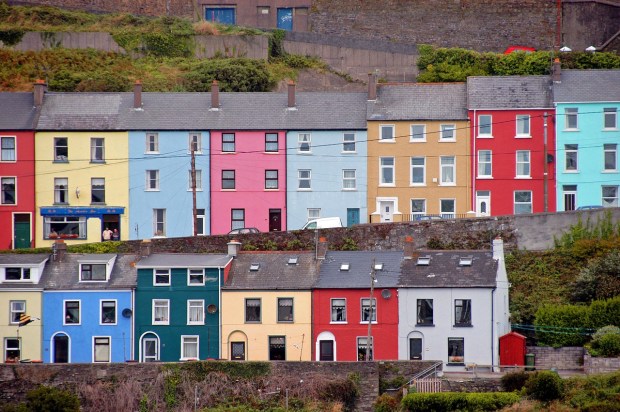
cobh-cove-285147_1280
Cork
ireland-531137_1280
Guinness
IMG_8021
Family fun on St Patrick’s Day 2016

Poland

“Cześć” … “Hello”
The world’s tallest statue of Jesus is found in the town of Swiebodzin in Poland.  The 167 foot tall statue (including its 55 foot pedestal) is called Christ The King and towers higher than Rio de Janeiro’s Christ The Redeemer which stands at a mere 125 feet.
It is also home to Wroclaw, Europe’s Capital of Culture 2016, which is often called The Venice of the North, due to it’s location on the Odra River, with its 12 islands, 130 bridges and riverside parks.
One of the world’s oldest salt mines is the Wieliczka Salt Mine which was built in the 13th century and produced table salt until 2007.   It is also referred to as “the Underground Salt Cathedral of Poland” due to its three chapels and an entire cathedral which was carved out of the rock salt by the miners and was placed on the UNESCO list of World Heritage Sites in 1978.
Many notable people hail from Poland including; Marie Curie, Chopin, Roman Polanski and Pope John Paul II.
Poland has been invaded or fought for freedom in insurrections 43 times from 1600 – 1945.
In September 1939, World War II started with the invasions of Poland by Nazi Germany and the Soviet Union (as part of the Molotov–Ribbentrop Pact). More than six million Polish citizens died in the war.

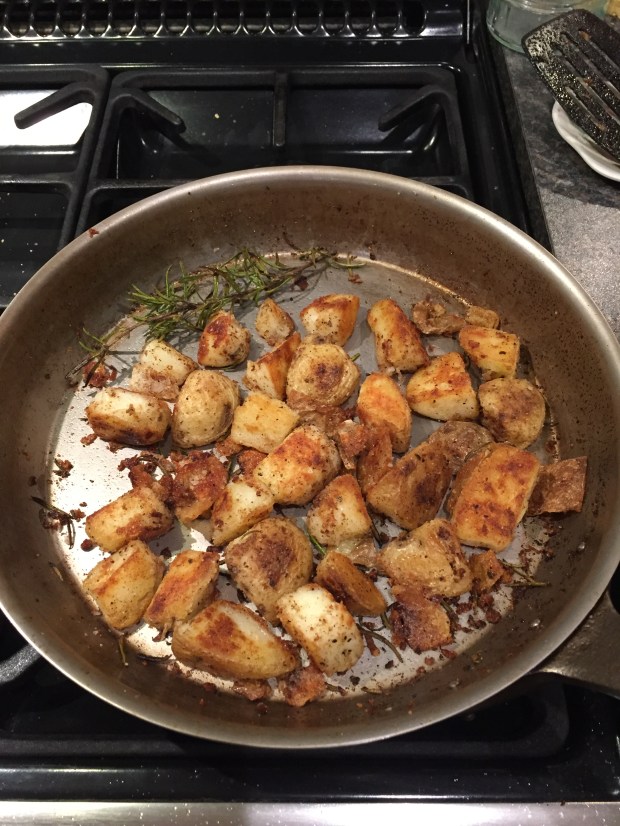
Some popular Polish recipes include Bigos (hunters stew), Pierogi (dumplings),   On a wet and cold February evening however, we were in the mood for something relatively simple & quick, so I cooked Kotlet schabowy (breaded pork cutlet) and served it with little roasted rosemary spuds.
Rating: 7/10.  It could’ve benefited from a little more seasoning, so I have adapted the recipe slightly.

Prep time: 10 mins
Cook time: 15 mins

2 boneless pork shoulder steaks (or 1 each for however many you want to feed!)
Salt and black pepper
1 tsp season all
Plain flour
1 large egg beaten with 1 tsp water
Panko breadcrumbs
Vegetable oil

Bash the pork between two pieces of clingfilm to 1/4-inch thickness.
Season both sides of the steaks with salt and pepper.
Put flour on a plate with 1 tsp of season all.
Dredge each steak in flour, then egg, then panko breadcrumbs.
Allow cutlets to dry for 10 minutes before frying.
Heat oil to a depth of 1/2 inch in a large skillet.
Fry the pork cutlets one at a time in the pan for 5 minutes per side until golden.
Put in the oven covered with foil to keep warm whilst you cook the other steak(s).
Serve with chips or little roasted potatoes.

Norway

The land of Vikings, Skiing and Fjords.  Norway has the greatest length of any European country with almost one third of the country situated north of the Arctic Circle.  It has Europe’s deepest lake (Hornindalsvatnet – 514m), highest waterfall (Vinnufossen – 860m) and longest coastline at over 21,000km.  The Lærdal Tunnel, opened in 2000, is the longest road tunnel in the world (24.5 km).

Some interesting facts about Norway:

– Norway has won more Winter Olympic medals than any other country on Earth, with a grand total of 303 medals (including 107 gold medals) as of 2012, 50 more than the USA.
– The U.S. has more people of Norwegian descent than Norway.
– Norway will be the first country to turn off FM radio in 2017 and switch completely to digital.
– All prisoners in Norway have internet in their cells.
– Norway gets 98-99% of its electricity from hydroelectric power, more than any other country.

– The Vikings of Norway are well known, however they did not have helmets with horns. In fact, it is not clear if Vikings used helmets at all. While tens of thousands of Viking weapons have been uncovered, only one helmet from around the Viking period exists.
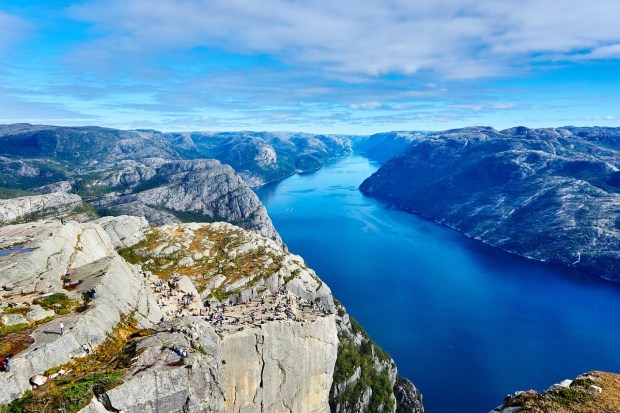
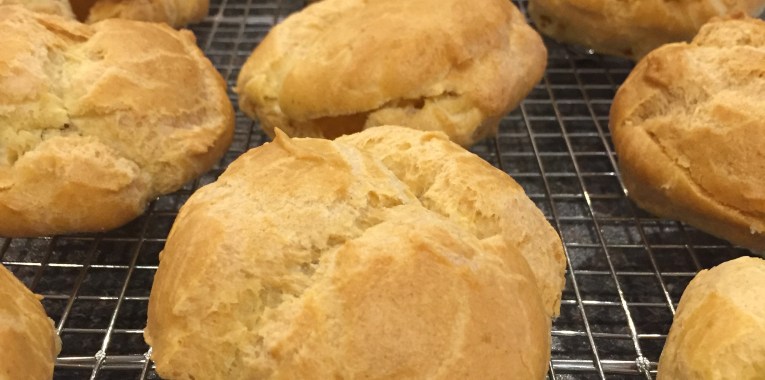
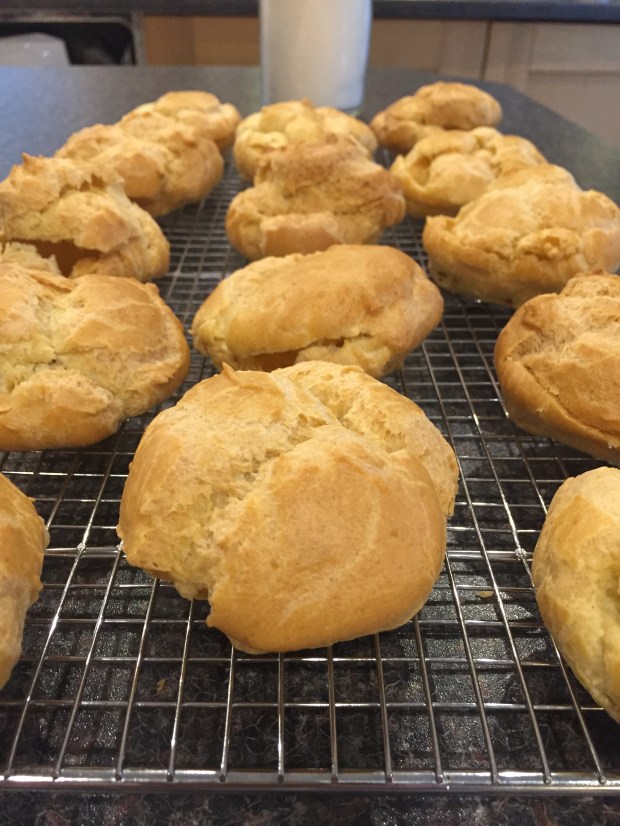
Norwegian cuisine is known for fish dishes; Smoked salmon Gravlaks, Rakfisk (fermented trout) and Mølje (poached fish, roe and liver).  Other dishes include Lapskaus (similar to Irish stew), Fårikål (mutton stew) and Smalahove (made from sheep’s head).  I was in the mood for something sweet, so I opted to cook the very simple Vannbakkels (choux buns) filled with vanilla cream.

Rating: 8/10

Makes 15 buns

Prep time: 5 mins
Cook time: 10 + 35 mins baking
Choux:
250ml water
125 g butter
125 g plain flour
4 eggsCream filling:
200ml double cream
1 tbsp icing sugar
1 tsp vanilla essencePlace the butter and water in a saucepan and bring to boil.
Remove from the heat and sieve in the flour slowly until all the flour is mixed in and it forms a smooth ball.

Preheat oven to 190c.
Let the batter cool slightly then beat in the eggs one at a time until mixed well.
Spoon tablespoons of batter onto a baking sheet lined with baking parchment and bake for 30- 35 minutes or until golden brown and well risen.
Once cooked pierce each bun open, just enough to let some steam out.
Leave to cool on a wire rack.
Whip the cream with the vanilla essence & icing sugar.
Once the vannbakkels are cooled, spoon or pipe in the cream filling.

Enjoy!

IMG_7222
Ingredients
IMG_7231
Vannbakkels (choux buns)
IMG_7236
Vannbakkels (cream filled choux buns)
the-fjord-483189_1280
Norwegian fjord village
fjord-984130_1280
Norway fjord

Sweden

Some interesting stats about Sweden:
86% of Swedes live in cities
There are 95,700 lakes in Sweden, making up approx 9% of its total area
The highest & lowest ever recorded temperatures are 38 degrees celsius (Jun) and -53 celsius (Feb)
Swedes are entitled to 480 days of paid parental leave, 90 of those days are reserved for the Dad
Students are paid $187 per month to attend high school
They’ve won 25 Oscars over the years – Ingrid Bergman won 3
Despite being a military power in the 17th century and one of the world’s largest producers of weapons, Sweden has not participated in any war for almost two centuries, including both world wars
With a tax rate of 51.4% of GDP, Swedes are one of the most highly taxed populations in the world. Ironically, they are generally happy to pay a high tax rate, and the Swedish word for tax is skatt, or “treasure.”
Between 300,000 and 400,000 moose (Alces alces) roam the Swedish woods. Over 100,000 are shot during the annual hunt, and about 250,000 people participate in the hunt. The moose is also considered the most dangerous animal in Sweden. Every year, they cause approximately 6,000 road accidents.

ABBA is the fourth-best selling music act in history, after Elvis Presley, the Beatles, and Michael Jackson. The group has sold over 375 million records worldwide. At one point, ABBA was second only to Volvo as Sweden’s biggest export earner.

And finally .. 1.8m Ikea meatballs are eaten on average every day worldwide!
When it comes to the food, I really was spoilt for choice.  Some of the mouthwatering temptations include Semlas (cream filled buns), Jansson’s temptation (a creamy potato and anchovy casserole), Västerbotten cheese pie & a huge array of fish & shellfish dishes.  However, I simply couldn’t resist the obvious. I cooked Köttbulla (Swedish meatballs) and they were absolutely delicious!
Rating: 10/10


45g fresh white bread, crusts removed and bread cut into 1/2-inch pieces
1/4 cup milk
2.5 tbsps unsalted butter
1/2 medium onion, chopped finely
340g minced beef chuck (about 20% fat)
140g minced pork (about 25% fat)
2 tsp salt
1 large egg
1/8 tsp ground white pepper
Pinch ground allspice
Vegetable oil, for frying
1.5 tbsp flour
1 cup chicken stock
1/2 tsp soy sauce
1/4 tsp apple cider vinegar
Chopped flat-leaf parsley, for garnish
In a medium bowl, combine bread with milk, tossing to coat. Let stand until bread is completely softened and most of the milk absorbed, about 10 minutes.
Meanwhile, in a small skillet, melt 1 tablespoon butter over medium-high heat.
Add half of the onion and cook, stirring, until onion is golden and tender, about 5-6 minutes.
In a stand mixer fitted with the paddle attachment or in a food processor, combine minced beef, minced pork, bread and any remaining milk, cooked onion, remaining raw onion, salt, egg, white pepper, and allspice.
Starting on low speed and increasing to medium-high, beat mixture until ingredients are thoroughly combined, about 30 seconds to 1 minute.
Line a baking sheet with parchment paper.
Dipping your hands in water as needed to prevent meatball mixture from sticking, roll roughly 1-tablespoon-sized portions of meatball mixture into balls slightly smaller than golf-ball size.
Transfer to lined baking sheet.
Set a rack over a clean baking sheet and heat oven to 200°F. Heat about 1/2 inch of oil in a wide skillet to 350°F.
Working in batches, lower meatballs into oil and fry, turning until well browned all over, about 2 minutes. Transfer browned meatballs to the rack and keep warm in the oven.
In a medium saucepan, melt remaining 1.5 tablespoons butter over medium-high heat until foamy.
Whisk in flour and cook, whisking, until raw flour smell is gone, about 3 minutes.
Whisk in chicken stock, bring to a boil, lower heat to a simmer and cook until thickened, about 3 minutes.
Whisk in soy sauce and cider vinegar. Season with salt and white pepper.
Add meatballs to gravy and stir to coat. Simmer until meatballs are heated through.
Serve with buttered mashed potatoes.

Andorra

Andorra is probably best known for its ski resorts.  Grandvalira is the largest ski area in the Pyrenees, with 210 km of ski slopes.  It was founded in 2003 when two of the oldest ski resorts Pas de la Casa-Grau Roig and Soldeu-El Tarter joined together.  This year it is hosting the Freeride Junior World Championship, the Speed Skiing World Cup trials and the seventh annual Skiers Cup.

Andorra is the only co principality in the world.  A principality is a place ruled by a prince, such as Monaco.  Andorra, however, is a co-principality, having two princes who jointly share the position, neither of whom are actually from Andorra!
Its population is about 84,000 and boasts the third highest life expectancy in the world. 
Tourism is its biggest industry, with 10.2m visitors every year, which is no doubt encouraged by its tax haven status and duty-free shopping.
Andorra la Vella is the highest capital in Europe at 1023 meters above sea level.
Apparently, by law the male head of each family in Andorra is required to own a gun in case of attack or emergency.
Its cuisine includes Escudella, which means ‘bowl’ (a stew containing more cholesterol than most people consume in a year!), Trinxat (cabbage & bacon potato cake), Brac de Gitano (cream roll)  and Cunillo (rabbit & tomato stew).  I decided to cook the simple but tasty Truites de Carreroles (mushroom omelette).
Rating: 7/10
 
Enough for a healthy breakfast for 2:
1 large shallot, thinly sliced
3 tbsps unsalted butter
1⁄2 tsp salt
1⁄4 tsp black pepper
1 1⁄2 cups portabella mushrooms, thinly sliced
1 tbsp chopped fresh tarragon (or 1 tsp. dried)
5 large eggs
1⁄2 cup coarsely grated gruyere cheese
 
Cook shallot in 2 tbsp butter with 1/4 tsp salt and 1/8 tsp pepper in a 10-inch nonstick skillet over medium heat, stirring occasionally, until softened, 3 to 4 minutes.
Stir in mushrooms and cook, stirring often, until tender, about 5 minutes. Stir in tarragon and transfer to a bowl.
Beat eggs with 1/4 tsp salt and 1/8 tsp pepper until well combined.
Heat remaining butter in same skillet over medium-high heat until foam subsides, then add eggs and cook until underside is set, about 1 minute.
With a fork, pull set eggs to center, letting uncooked eggs run underneath.
Before eggs are completely set, add mushroom mixture and cheese to one half, on the side away from handle.
Fold other half of eggs over filling with a heatproof rubber spatula.
Tilt the pan as you roll the omelette onto a plate.
 

Albania

Albania has had a wild history, like a lot of eastern Europe.  It’s little visited by tourists and is little developed.  Mother Teresa is probably Albania’s most famous citizen, having won a Nobel peace prize and well on her way to being a saint. Tirana International airport was named after her in 2001.

Skanderbeg is also another important name in Albania, for his freedom struggle. He successfully overthrew three Ottoman sieges and also led several anti-Ottoman agitations in Albania. Ahmet Bey Zogu became the first president of Albania in 1925 and in 1928 ascended the throne under the name Zog.  Having a King Zog is interesting enough, but he is also the only national leader in modern times to return fire during an assassination attempt.

Elvanagjata is the most popular artist of Albania .. and worth a google search 😉
Albanians nod their head up and down to mean ‘no’, and shake it from side to side for ‘yes’.It’s one of only 3 European capitals to be without a McDonalds.Thank you to Mimoze for her tip on this dish 🙂

Rating: 9/10 .. lovely flavour

3 tbsp unsalted butter

1/2 tbsp olive oil
600g lamb shoulder cut into chunks
Salt and freshly ground black pepper, to taste
1/4 cup flour
50g long grain white rice
2 cloves garlic, finely chopped
1.5 tbsp finely chopped oregano
250g plain yoghurt
2 large eggs
Freshly grated nutmeg
Heat 1.5 tbsp. butter and the oil in a saucepan over medium-high heat
Season lamb with salt and pepper and toss with 1 tbsp flour
Working in batches, cook lamb, turning as needed, until browned, 10–12 minutes
Add rice, garlic, oregano, and 1/4 cup water; boil
Reduce heat to medium-low; cook, covered, until rice is just tender, about 15 minutes
Add salt, and pepper and transfer to a baking dish
Heat oven to 375°
Melt remaining butter in a small saucepan over medium-high heat
Whisk in remaining flour; cook until smooth
Remove from heat; whisk in yoghurt, nutmeg, eggs, salt, and pepper until smooth
Pour yoghurt sauce evenly over lamb mixture
Bake until golden and the lamb is tender, 45–60 minutes
Serve with green beans & salad

IMG_6767IMG_6771IMG_6762