Burkina Faso

Burkina Faso, once named ‘Upper Volta’, was renamed “Burkina Faso” on 4 August 1984 by then President Thomas Sankara. The words “Burkina” and “Faso” both stem from different languages spoken in the country. “Burkina” comes from Mossi and means “honest” or “honest people”, while “Faso” comes from the Dyula language and means “fatherland”. The capital of Burkina Faso is Ouagadougou, it literally means “You are welcome here at home with us”.

Gold is Burkina Faso’s main export, followed by cotton and animal products. Together gold and cotton make up 70% of the country’s exports. It is Africa’s largest producer of cotton.
However it remains one of the poorest countries in the world, with around 44.5% of its population living below the poverty line and it ranks 183 out of 187 countries on the UNDP Human Development Index in 2014. The World Food Programme has several projects geared towards increasing food security in Burkina Faso.

According to Lonely Planet, highlights for visitors to Burkina Faso include:
Colourfully painted fortress like houses in Tiebélé
Mud-brick mosques of Bani
Gorom Gorom market
Fespaco – Ouagadougou’s film festival and
Moro-Naba ceremony, a throwback to the Mossi’s golden age.

Burkina Faso’s cuisine is based on staple foods of sorghum, millet, rice, maize, peanuts, potatoes, beans, yams and okra. The most common sources of animal protein are chicken and fresh water fish. Grilled meat is also common, particularly mutton, goat and beef. Recipes I came across included Tô or Saghbo (a dough-based meal of cooked millet, served with a sauce of vegetables and mutton), Ragout d’Igname (lamb and yam stew), Gombo (okra sauce), Maan Nezim Nzedo (fish stew) and Krakro (sweet potato fritters). I opted for Riz graz (“Fat rice” cooked with onions, tomatoes and meat), which had a pleasant spicy warmth and good flavour.

Rating: 8/10

Serves: 2
Prep time: 20 minutes
Cook time: 45 minutes

1 habanero or jalapeno chilli pepper
1-2 garlic cloves
1⁄2 onion, finely chopped
2 tomatoes, chopped
1⁄4 cup oil
250g beef or chicken, cubed
2 tbsp tomato puree
2 cups water
1 maggi seasoning, cube (or chicken bouillon)
1 cup long grain white rice
salt and pepper

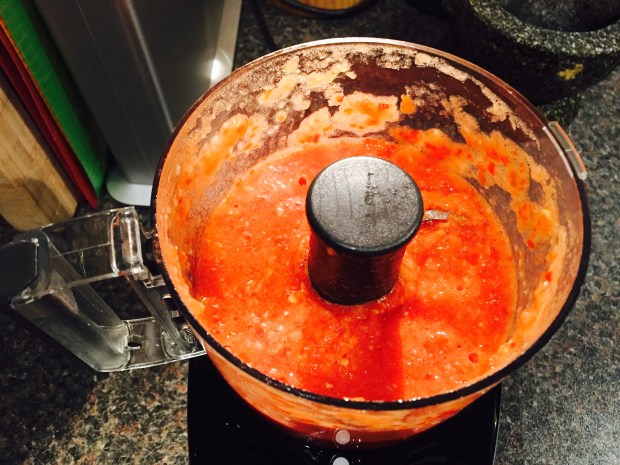
Put the chilli, garlic, tomatoes and onion into a food processor and pulse until you get a nice paste
Add the oil to a pan over medium heat and add the paste
Cook for 8 minutes, then remove from the heat and set asid
Use a little bit of water (about 1/2 cup) to rinse out your food processor, then put the water in a separate pot along with the meat
Bring the meat and water to a boil, then reduce heat and simmer for 15 minutes
Add the meat to the pan containing the paste, along with the tomato puree remaining water and Maggi (or stock) cube and stir
Wash the rice under the tap until the water runs clear, then add it to the pot and bring to a boil
Reduce heat, cover and let simmer for 15 minutes
Check it, then cook for another 10 minutes or until the water has been absorbed
Season to taste and serve

fullsizeoutput_11ac
Ingredients for Riz graz (“Fat rice” cooked with onions, tomatoes and meat)
fullsizeoutput_11ad
Sauce for Riz graz (“Fat rice” cooked with onions, tomatoes and meat)
fullsizeoutput_11d9
Riz graz (“Fat rice” cooked with onions, tomatoes and meat)
fullsizeoutput_1211
Riz graz (“Fat rice” cooked with onions, tomatoes and meat)
fullsizeoutput_120c
Riz graz (“Fat rice” cooked with onions, tomatoes and meat)
gurunsi-tribe-houses-in-tiebele
Gurunsi tribe houses in Tiebélé
ouagadougou
Ouagadougou
mud-mosque-bani
Mud Mosque Bani

Italy

Italy is one of my favourite places in the world! I’ve been lucky enough to visit many stunning places in Italy – Tuscany, Florence, Venice, Milan, Sardinia and of course, Rome. All distinctly different with their own style and features. My highlights would include driving the mountainous coast road in Sardinia, the amazing fresh produce in a local Tuscan village market, feasting on Risotto Milanese in the beautiful Locanda Del Gatto Rosso restaurant, Milan and lazing by the pool, basking in the Italian sunshine at the wonderful Aldrovandi Villa Borghese hotel, Rome.  Still on my bucket list are Sorrento, Verona, Palermo and Puglia.

Famed for pizza, pasta, ice cream, espresso, mad drivers, Renaissance art and ancient architecture. It definitely has something to offer everyone. It has the most Unesco World Heritage sites in the world with 51 sites and it has another 41 on the tentative list.

Some facts you may not know about Italy:
It has the eighth largest economy in the world
The Italian mafia accounts for 7% of Italy’s GDP
One third of Italians have never used the Internet
The average employee in Italy works just 20 hours per week, one of the lowest amount in Europe
The name Italy comes from the word italia, meaning “calf land,” perhaps because the bull was a symbol of the Southern Italian tribes
From 1861 to 1985, more than 26 million people left Italy (mostly from the overcrowded south) to seek a better life. Only one in four came home again

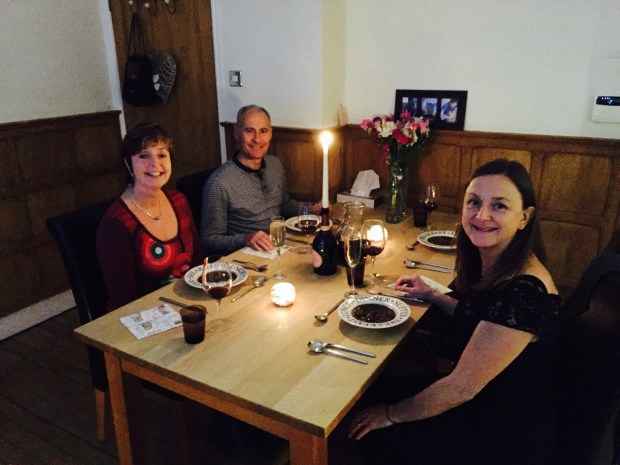
Italian cuisine is noted for its regional diversity, abundance of difference in taste, and is one of the most popular in the world. Italian cuisine is characterised by its simplicity, with many dishes having only four to eight ingredients. Italian cooks rely chiefly on the quality of the ingredients rather than on elaborate preparation. As you can imagine I was spoilt for choice in terms of recipes, making it extremely difficult to decide what to cook for this challenge. I considered Gnocchi, Pasta e fagioli (beans and pasta), Tortellini (filled pasta), Spaghetti Carbonara Ribollita (Tuscan soup with bread, beans and vegetables), Pizza alla napoletana (tomato, mozzarella & anchovy), Ossobucco (veal shanks braised with vegetables, white wine and broth), Arancini (deep-fried rice croquettes). However after our first visit to Milan in February this year and experiencing Risotto alla Milanese (risotto with saffron) – it had to be that! I also made my first ever Tiramisu, which even though I’m not known for my desserts, it was yum. We shared the evening with my sister and brother-in-law and we all loved the Risotto alla Milanese served in Parmesan baskets.

Rating: 10/10 for the Risotto & 9/10 for the Tiramisu

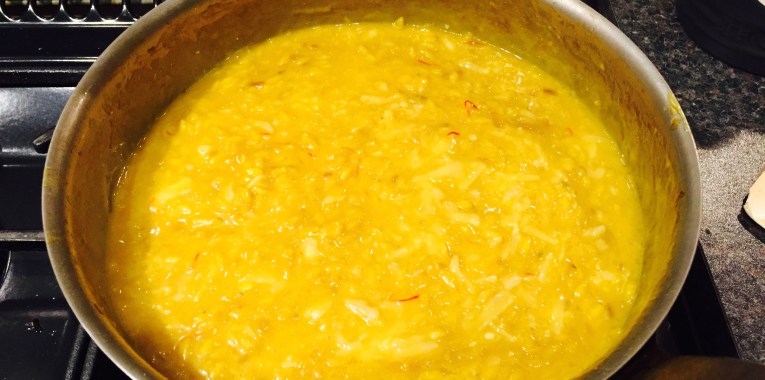
Risotto alla Milanese (served in Parmesan baskets)
Serves: 4
Prep time: 20 minutes
Cook time: 40 minutes
1 litre chicken stock
sea salt & ground black pepper
150g butter at room temperature
40g beef bone marrow or 2 tbsp olive oil
1 medium red onion, very finely chopped
300g risotto rice
1 tsp saffron threads soaked in a little stock
75ml extra dry white vermouth
175 Parmesan cheese, freshly grated

Parmesan baskets
4 cups of grated parmesan cheese

Heat a non stick frying pan over a medium – high heat
When it’s hot, sprinkle 1 cup of parmesan evenly over the pan
After 3 minutes, check the sides to ensure it’s melted
Using a slice, very carefully flip the cheese over and cook for a further minutes
Then place a small bowl in the centre of the cheese and turn it out upside down
Leave it on top of the bowl for 10- 20 seconds, using a kitchen towel to shape it, then turn it out on to a kitchen towel
Continue making the remaining 3 in the same way

To make the risotto
Heat the stock in a saucepan gently and check for seasoning, don’t let it boil
Melt 75g of butter and the beef bone marrow in a large heavy bottomed pan
Gently fry the onion until soft, 15 – 20 minutes
Add the rice and remove it from the heat, stirring so the rice is fully coated, it only takes a minute
Return to the heat, add 2 ladlefuls of hot stock and simmer, stirring until all the liquid has been absorbed
Add the saffron
Continue to add the stock, a couple of ladlefuls at a time, until it is aborbed
Each grain should have a creamy coating and be just al dente
Add the remaining butter in small pieces, the vermouth and parmesan
Stir very gently and serve immediately in the parmesan baskets

Tiramisu
Serves: 6-8
Prep time: 30 minutes + at least 4 hours chilling

568ml pot double cream
250g tub mascarpone
75ml marsala
5 tbsp golden caster sugar
300ml strong coffee, made with 2 tbsp coffee granules and 300ml boiling water
175g pack sponge fingers
25g good quality dark chocolate, chopped quite roughly
2 tsp cocoa powder

Put the cream, mascarpone, Marsala and sugar in a large bowl and whisk until the cream and mascarpone have completely combined and have the consistency of thickly whipped cream
Get your serving dish ready
Put the coffee into a shallow dish and dip in a few sponge fingers at a time, turning for a few secs until they are nicely soaked, but not soggy
Layer these into your dish until you have used half the biscuits, then spread over half of the creamy mixture
Sprinkle over half of the chocolate
Repeat the layers (you should use up all the coffee), finishing with the creamy layer
Cover and chill for a few hrs or overnight
To serve, dust with cocoa powder and sprinkle over the remainder of the chocolate


Armenia

Armenia is a sovereign state in the South Caucasus region of Eurasia in Western Asia. It has a population of approximately 3.2m, but there are more Armenians living abroad than in Armenia, estimated at around 5.6m.

A few interesting facts
Armenians have their own distinctive alphabet and language. The alphabet was invented in AD 405 by Mesrop Mashtots and consists of thirty nine letters
The Armenian capital, Yerevan, is one of the world’s oldest inhabited cities, constructed 29 years before Rome
It is home to the world’s longest non-stop double track cable car, the Tatev Aerial Tramway, which is 5,752 m (18,871ft) long
Chess is a compulsory subject in schools
It was the first nation to accept Christianity as a state religion, converting en masse in AD 301

Armenian cuisine belongs to the family of Caucasian cuisines, and has strong ties with Turkish cuisine, Georgian cuisine, Persian cuisine, and Levantine cuisine. The flavour of the food relies on the quality and freshness of the ingredients rather than on excessive use of spices. Typical dishes of Armenian cuisine include Khash (slow cooked beef or lamb feet), Harissa (porridge made with wheat and meat), Bozbash (mutton or lamb soup), Khorovats (grilled meat), Dzhash (meat and vegetable stew), Eetch (cracked wheat salad) and Yospov Apur (Lentil soup).
Soups are very popular so I decided to make Snkapur (mushroom soup), which was simple and had a good mushroomy taste!

Rating: 7/10

Serves: 4 as a starter
Prep time: 15 minutes
Cook time: 40 minutes

100g dried mushrooms (porcini, ceps etc)
200g fresh mushrooms, chopped finely
2 small onion, quartered
3 potatoes, peeled & chopped into cubes
2 tbsp oil
800ml water
1 vegetable or chicken knorr stock pot
50g butter, cut into small pieces
Salt & pepper

Preheat the oven to 190c
Roast the onion for 15 – 20 minutes
Soak the dried mushrooms in a little warm water for 10 minutes
Meanwhile heat the oil in a pan and fry the potatoes over a low heat for 15 minutes
Put the soaked mushrooms in a saucepan with the soaking liquid, remaining water, stock pot and bring to the boil then simmer for 10 minutes
Using a slotted spoon lift the out dried mushrooms and finely chop them
Add them back in the saucepan with the fresh mushrooms and season to taste
Chop the roasted onion and add to the pan with the potatoes and cook for 10 minutes
Add the butter, stir in and season again to taste
Remove from the heat and serve in hot bowls

fullsizeoutput_11f7
Ingredients for Snkapur (mushroom soup)
fullsizeoutput_11e2
Snkapur (mushroom soup)
img_3032
Snkapur (mushroom soup)
fullsizeoutput_1222
Snkapur (mushroom soup)
fullsizeoutput_1220
Family enjoying Snkapur (mushroom soup)
ruins-of-zvartnots-temple-armenia
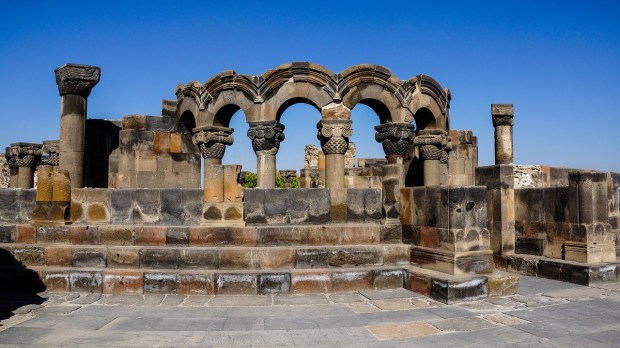
Ruins of Zvartnots Temple, Armenia
mount-ararat-armenia
Khor Virap monastery, Ararat, Armenia
yerevan-armenia
Yerevan, Armenia

South Sudan

With a 97% vote for independence, South Sudan became the world’s newest country in July 2011. It should be a country full of hope five years after gaining independence. Instead, it is in the grip of a massive, man-made humanitarian crisis. The Sudan People’s Liberation Movement, the ruling political party that originally led the way for independence, is now divided and fighting for power. Since the conflict began, 1 in 5 people in South Sudan have been displaced, more than 2.3 million citizens having been forced to flee their homes. Sudan, and what was then the semi-independent Southern Sudan, endured a brutal civil war for more than 25 years, which resulted in South Sudan’s independence in 2011. But the conflict in December 2013 reopened deeply-rooted political and ethnic tensions that hadn’t yet been reconciled.

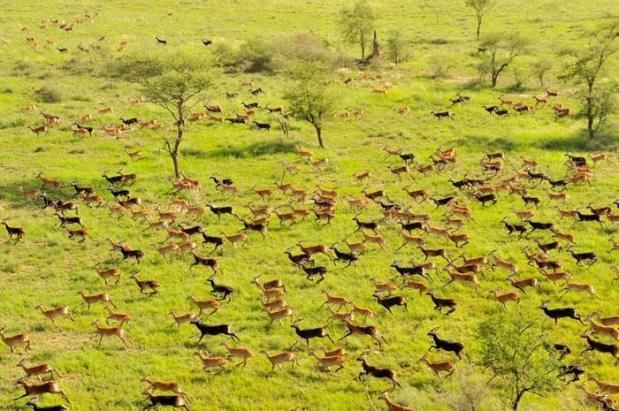
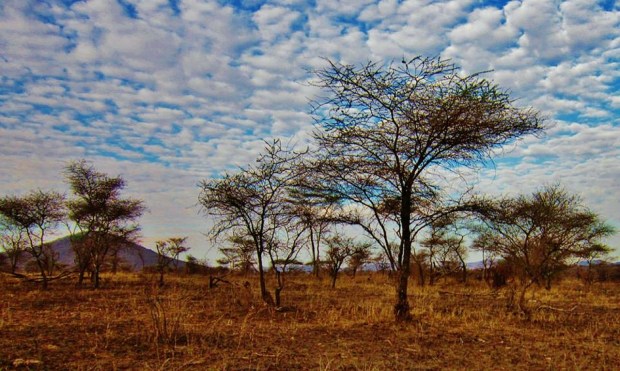
South Sudan’s protected area of Bandingilo National Park hosts the second largest wildlife migration in the world. Established in 1992, it is situated in a wooded area near the White Nile River and is over 10,000 square kilometres. South Sudan’s forest reserves are home to hartebeest, kob, topi, buffalo, elephants, giraffes, lions, bongo, giant forest hogs, red river hogs, forest elephants, chimpanzees, and forest monkeys.

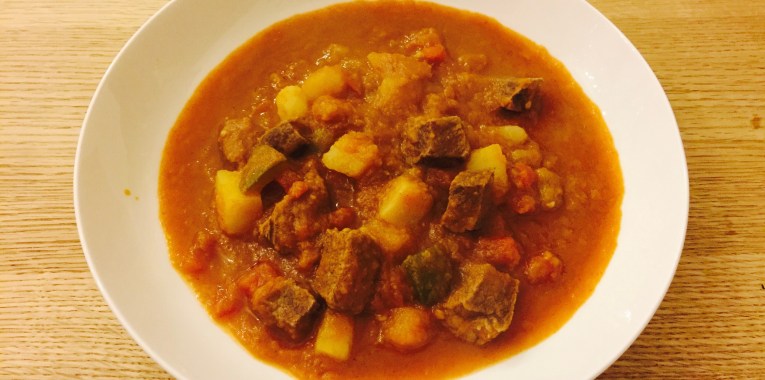
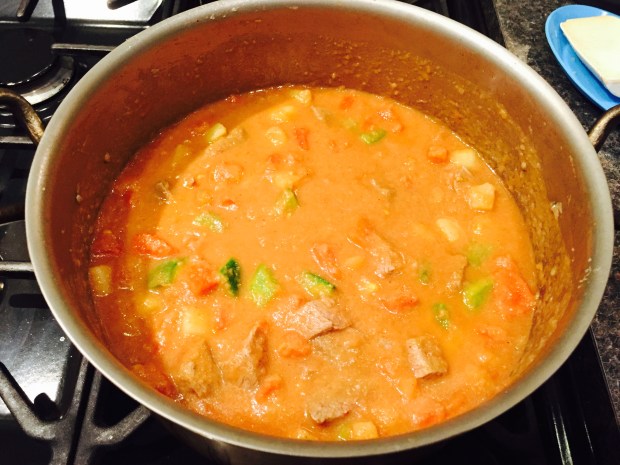
Recipes I came across for South Sudan include Kisra (flatbread), Goraasa be Dama (beef stew with flatbread), Fuul (stewed beans), Khodra mafroka (beef and spinach) and Tamia (deep fried chickpea balls). I opted to make Dama be Potaatas (beef stew with potatoes) which was a hearty stew with a pleasant flavour.

Rating: 7/10

Serves: 4
Prep time: 25 minutes
Cook time: 40 minutes

1/3 cup oil
6 onions, chopped
3 tomatoes, chopped
2 potatoes, peeled and cubed
3 cups water
500g beef steak
1/2 green pepper, chopped
1 tsp salt
1 tsp cardamom
1 tsp cinnamon
4 tbsp tomato paste
3 cloves of crushed garlic

Heat the oil in a casserole pot over a medium heat and add the onions
Add 1 cup of water, cover and leave to cook on medium heat for around 10 minutes until the water is almost evaporated
Fry the potatoes in a separate pan until golden then set aside
Lightly blend onions and return them to the casserole pot with the tomatoes
Chop steak into small pieces and add to the pot along with the green pepper, salt, cardamom and cinnamon
Cover and cook for 3 minutes
Add tomato paste, stir, adding water until smooth and runny
Add potatoes, cover and leave to simmer for 10 minutes adding more water occasionally
Stir in crushed garlic and serve

fullsizeoutput_121b
Ingredients for Dama be Potaatas (beef stew with potatoes)
fullsizeoutput_11b1
Dama be Potaatas (beef stew with potatoes)
south-sudan-flag-on-map
South Sudan flag on map
bandigalo-national-park-south-sudan
Bandigalo National Park, South Sudan
fullsizeoutput_11b2
Dama be Potaatas (beef stew with potatoes)
fullsizeoutput_11b3
Dama be Potaatas (beef stew with potatoes)

Laos

Lao People’s Democratic Republic is the only landlocked country in South East Asia. I visited Laos in 2002 and found it to be a beautifully scenic, peaceful and relaxed country. However it’s had its fair share of trouble. Laos remains one of the most corrupt countries in the world and it ranks 29th hungriest nation out of the list of the 52 nations with the worst hunger situations in the world. Along with China, Cuba and Vietnam, it is one of the world’s four (or five – South Korea is disputed) remaining socialist states that openly espouse Communism. The government of Laos has been accused of committing genocide, human rights and religious freedom violations against the Hmong ethnic minority within its own borders.

Laos has been named the world’s most bombed country. Over two billion tons of bombs (i.e. more than all of the bombs dropped on Europe during WWII) were dropped in Laos by the USA during the Vietnam War. The highest point in Laos, the Phou Bia, is unfortunately not open to tourists because it is filled with un-exploded ammunition.

The tourism sector has grown rapidly, from 80,000 international visitors in 1990, to 1.87 million in 2010. The official tourism slogan is “Simply Beautiful”. The main attractions for tourists include Buddhist culture and colonial architecture in Luang Prabang, gastronomy and ancient temples in the capital of Vientiane, backpacking in Muang Ngoi Neua and Vang Vieng, ancient and modern culture and history in The Plain of Jars region. My highlights include the trip down the Mekong, white water rafting in Vang Vieng and the chilled out vibe in Luang Prabang.

Grin khao “Eat Rice”, the staple food of Lao people is steamed sticky rice, which is eaten by hand. In fact, the Lao eat more sticky rice than any other people in the world. Popular dishes include Som Tam (green papaya salad), Kaeng jeut (vegetable and pork soup), Mok pa (fish steamed in banana leaf), Khao phat (Lao fried rice), Kai Aw (Lao chicken stew) and Khanom maw kaeng (coconut custard cake). I decided to make a famous Lao dish – Larb (marinated meat salad). It was simple, fresh and completely delicious.

Rating: 9/10

Serves: 4 as a starter
Prep time: 20 minutes
Cook time: 30 minutes

1/8 cup uncooked long grain white rice
450g skinless, boneless chicken thighs
1 tbsp groundnut oil
2 shallots, thinly sliced
2 cloves garlic, minced
1 tbsp minced galangal
1 small red chilli peppers, seeded and finely chopped
2 spring onions, finely chopped
1/8 cup fish sauce
1/2 tbsp shrimp paste
1/2 tbsp white sugar
2 tbsp chopped fresh mint
1 tbsp chopped fresh basil
1/8 cup lime juice

Preheat an oven to 175c
Spread the rice onto a baking sheet
Bake the rice in the preheated oven until golden, about 15 minutes
Remove and allow to cool. Once cooled, grind into a fine powder with a spice grinder or pestle and mortar
Meanwhile, grind the chicken thigh meat in a food processor until finely ground and set aside (or get the butcher to do this for you as I did!)
Heat the oil in a wok or large skillet over medium heat
Fry the shallots over a medium heat for 3 minutes until golden, then set aside
Stir in the garlic, galangal, chilli peppers, spring onions and cook until the garlic softens, about 2 minutes
Add the ground chicken meat and cook, stirring constantly to break up lumps, until the meat is no longer pink, about 5 minutes
Season with fish sauce, shrimp paste, and sugar
Reduce heat to medium-low, and simmer until the excess liquid has evaporated, about 5 minutes
Stir in the ground rice, mint, basil, and lime juice
Just before serving, stir in the fried shallots
Serve with lettuce leaves

laos-monks
Laos Monks
mekong-river-laos
Mekong River, Laos
luang-prabang-laos
Luang Prabang, Laos
patuxai-victory-monument-vientiane-laos
Patuxai Victory Monument, Vientiane, Laos

Brunei

Brunei, officially the Nation of Brunei, the Abode of Peace is a sovereign state on the north coast of the island of Borneo in Southeast Asia.
According to legend, Brunei was founded by Awang Alak Betatar, later to be Sultan Muhammad Shah, in the late 14th century. Upon landing he exclaimed, Baru nah (loosely translated as “that’s it!” or “there”), from which the name “Brunei” was derived. He was the first Muslim ruler of Brunei.
Hassanal Bolkiah, the current Sultan of Brunei is the second richest royal in the world, he has a collection of more than 5,000 cars. He was once the richest man in the world before being overtaken by Bill Gates in the 1990s. The IMF have ranked Brunei fifth in the world by GDP per capita at purchasing power parity and Forbes also ranks Brunei as the fifth richest nation, based on its petroleum and natural gas fields.

Most of Brunei is within the Borneo lowland rain forests ecoregion, which covers most of the island. It’s known for its beaches and biodiverse rainforest. It has 161 km of coastline on the South China sea, and it shares a 381 km border with Malaysia. The total population of Brunei is approximately 430,000, of which around 240,000 live in the capital Bandar Seri Begawan, which is home to the opulent Jame’Asr Hassanil Bolkiah mosque and its 29 golden domes. The Istana Nurul Iman palace, also in the capital, is the residence of the Sultan of Brunei.

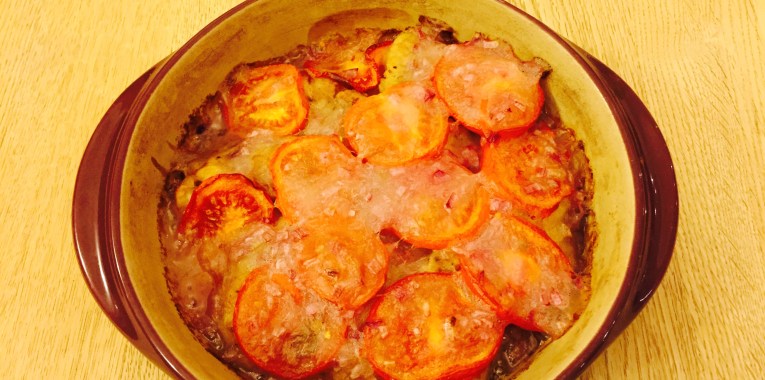
The cuisine of Brunei is similar to, and heavily influenced by the cuisine of neighbouring Malaysia, Singapore, and Indonesia, with additional influences from India, China, Thailand, and Japan. Recipes I came across were Ambuyat (a sticky ball of starch dipped into a sour fruit sauce sometimes called ‘edible glue’), Daging Masak Lada Hitam (spicy slow cooked beef with potatoes and beans), Udang Sambal Serai Bersantan (chilli prawns with coconut milk) and Serondeng Pandag (Fried chicken with garlic wrapped in pandan leaves). I opted to make Bruneian Fish curry, which unfortunately didn’t turn out very well. The addition of whole spices towards the end of cooking was the recipe’s downfall and rendered it inedible. If you do feel the need to give this recipe a try, I would pound the spices with the chilli and garlic and add at the same time.

Rating: 2/10

Serves: 3
Prep time: 15 minutes
Cook time: 25 minutes

500 grams white fish fillets (cut into 5cm pieces)
1½ cups coconut milk
1 tbsp tamarind pulp
¼ cup water
2 tablespoons ghee
3 onions (cut into wedges)
3 gloves garlic (pounded)
3-5 hot green chillies (pounded)
1 tbsp coriander seeds
2½ teaspoons cumin seeds
1½ cup chicken stock

Blend tamarind juice with ¼ cup coconut milk
Heat the oil in a pan, add the onions, garlic and chillies
Stir-fry till golden brown
Reduce heat, add remaining spices, stock and coconut milk
Boil gently till oil separates
Bring to rapid boil, add fish and tamarind mixture
Simmer 5 minutes, stirring carefully
Remove and serve hot with steamed rice

Tanzania

Tanzania is a large country in East Africa which includes the spice islands of Zanzibar, Pemba, and Mafia and also contains Africa’s highest point—Kilimanjaro, at 5,895 meters (19,340 feet).

A few facts
Tanzania’s Ngorongoro Crater is home to the world’s densest population of lions, wildebeest, elephants, hippopotamus, rhinoceros, zebra, leopards, and hyenas. There are approximately 25,000 animals in the crater of just 100 square miles
Lake Manyara National Park is home to the world’s only tree-climbing lions
The largest crab in the world – the coconut crab, can be found on Chumbe Island of Zanzibar
The world’s earliest human skull was found in the Olduvai Gorge in Tanzania by Louis and Mary Leakey
Freddie Mercury was born in Stone Town, Zanzibar

The cuisine of Tanzania has been influenced by Portuguese as well as Indian cuisine. The national dish of Tanzania is the humble Ugali, a simple porridge made with either maize, millet, or sorghum flour. Other dishes include Mandazi (deep-fried doughnut-like cakes), Kashata (coconut bars), Mkate wa kumimina (Zanzibari rice bread), Vitumbua (rice patties), Wali wa Nazi (rice in coconut milk) and coconut bean soup. I opted to cook Mshikaki (marinated meat) which was quite tasty, thanks to the overnight marinating.

Rating: 6/10

Serves: 2
Prep time: 15 minutes + overnight marinating
Cook time: 8 minutes

350g steak, cut into cubes
1 tsp ground coriander
1 tsp paprika
1/2 tsp ground cumin
1/2 tsp chilli powder
1/2 tsp turmeric
1/2 tbsp fresh ginger, grated
1 garlic clove, mashed
1 tbsp tomato puree
1 tbsp oil
1 tbsp lemon juice
Black pepper & salt

Mix all the ingredients in a large bowl and marinate meat overnight or for at least 4 hrs in the fridge
Skewer the meat on water soaked wooden skewers
Grill the meat skewers on an open coal BBQ, basting with marinate until cooked
Serve with pitta or wraps and salad leaves

mount-kilimanjaro-tanzania
Mount Kilimanjaro, Tanzania
serengeti-national-park-tanzania
Serengeti National Park
zanzibar
Zanzibar
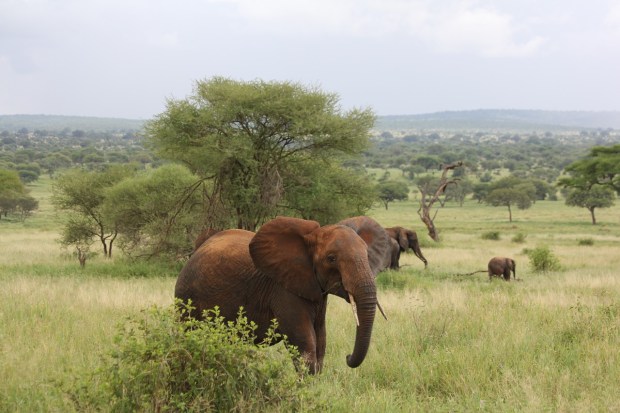
elephants-in-the-wild-tanzania
Elephants in the wild, Tanzania

Paraguay

Paraguay is a landlocked country between Argentina, Brazil and Bolivia. Due to it’s central location, it is sometimes referred to as Corazón de Sudamérica, “Heart of South America”.

Some interesting facts:
In Paraguay, pistol duelling is still legal as long as both parties are registered blood donors
Paraguay is the only country in the world whose national flag has different emblems on each side. The country’s Coat of Arms is on the front and its Treasury Seal is on the back with its motto, ‘Paz y Justica’ (Peace and Justice)
Following the Paraguayan War (1864–1870), the country lost 60-70% of its population through war and disease, and about 140,000 square kilometers (a quarter of its territory), to Argentina and Brazil, including the popular tourist site – Iguazu Falls
Paraguay is home to the world’s largest rodent called the Capybara, which is basically a giant guinea pig

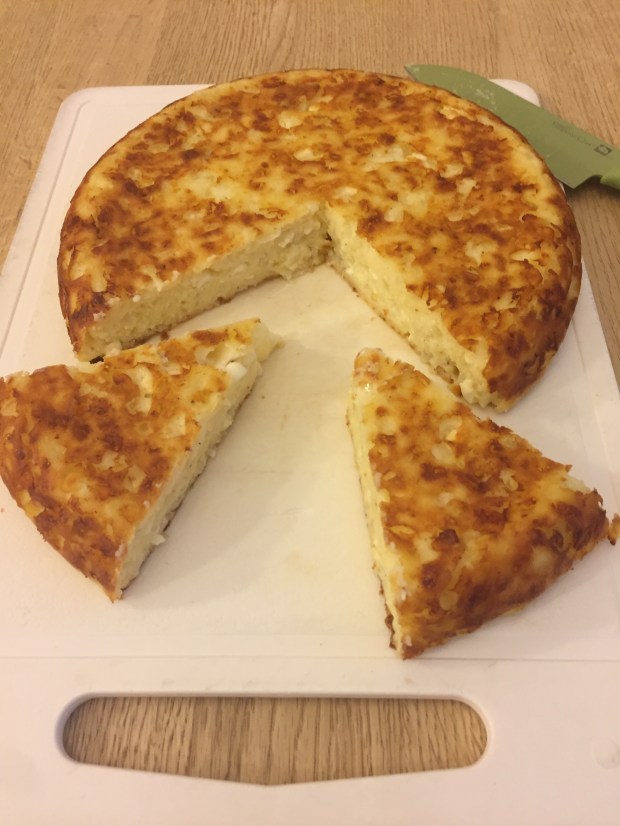
Staple foods in Paraguay are meat, corn, manioc, milk, cheese and fish. Common recipes include Chipa (Paraguayan cheese bread) which are found everywhere, Tapa de cuadril (Rump steak), Mbeju (starch cake), Guiso popó (stew made with chicken, rice, sweet peppers and garlic), Pira caldo (fish broth), Bori Bori (thick soup with dumplings, cheese, cornmeal and sometimes chicken) and Crema (custard dessert). I made Sopa Paraguaya (corn and cheese bread), which was delicious when we first had it and even better for second helpings a day later!

Rating: 10/10

Serves: Makes 6 large slices
Prep time: 15 minutes
Cook time: 45 minutes

350 ml cottage cheese
1 cup of mature cheddar or a combination of your favorite kinds of cheese
1 small onion, finely chopped
2 eggs
1/8 cup of oil
1/2 cup milk
3/4 cup white maiz flour (I used ‘Pan’ brand)

Preheat the oven to 190C
Combine all the ingredients and pour into a well greased round pan
Bake for 40-45 minutes
Serve warm or room temperature

img_2930
Ingredients for Sopa Paraguaya (corn and cheese bread)
img_2934
Making Sopa Paraguaya (corn and cheese bread)
img_2937
Sopa Paraguaya (corn and cheese bread)
img_2940
Sopa Paraguaya (corn and cheese bread)
img_2943
Sopa Paraguaya (corn and cheese bread)
rio-paraguay
Rio Paraguay
capybara
Capybara

Somalia

Somalia is a country located in the Horn of Africa and boasts the longest coastline on Africa’s mainland. It is one of the oldest sea-faring and trading nations in the world. Some of it’s ancient trading ports include Kismaayo, Berbera, Barawe, Merca, Las Qoray, Hobyo and historically the wealthiest being the 1,000 year old city of Mogadishu.

Some of the earliest known cave paintings in the African continent are Somalia’s Laas Geel’s rock art, estimated to date back to somewhere between 3,000–9,000 BC. Somalia is among the most probable locations of the fabled ancient Land of Punt, an ancient kingdom and trading partner of Egypt. It was known for producing and exporting gold, aromatic resins, blackwood, ebony, ivory, and wild animals.

Due to its proximity and geological similarity to the oil-rich Gulf Arab states such as Yemen, it is believed that Somalia contains substantial unexploited reserves of oil. An oil group listed in Sydney, Range Resources, estimates that the Puntland region in the northeast of Somalia has the potential to produce 5 to 10 billion barrels of oil. As a result of these developments, the Somalia Petroleum Corporation was established by the federal government. In the late 1960s, UN geologists also discovered major uranium deposits and other rare mineral reserves in Somalia. The find was the largest of its kind, with industry experts estimating that the amount of the deposits could amount to over 25% of the world’s then known uranium reserves of 800,000 tons.

The cuisine of Somalia varies from region to region and is a mixture of diverse culinary influences. It is the product of Somalia’s rich tradition of trade and commerce. All food is served halal. There are therefore no pork dishes and nothing that died on its own is eaten. Popular recipes include
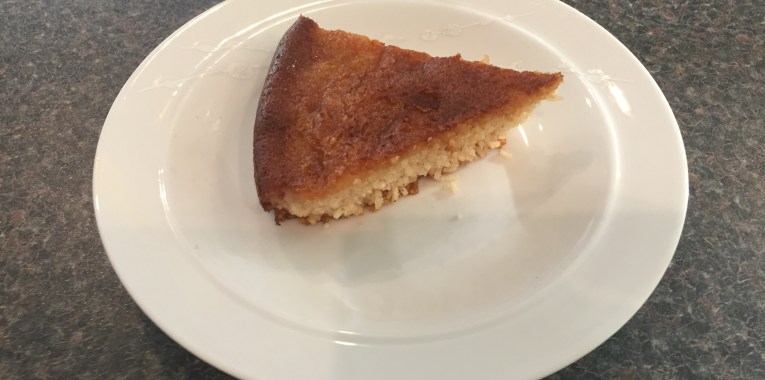
Quraa/Quraac (Somali Fried Dough), Muufo (flatbread) , Lahoh (pancake like bread) , Maraq (stew) , Busteeki (Steak), Gashaato (coconut confection) and Bajiye (savoury pastry snacks). I opted to make Macsharo (rice cake), which despite me following the recipe very strictly, was a total disaster. The rice wasn’t cooked at all so sadly, it was inedible. I think perhaps the oven needed to be at a higher temperature.

Rating: 0/10

Serves: Makes 10 – 12 slices
Prep time: 30 minutes
Cook time: 45 minutes

2 cups basmati rice (soaked in water overnight)
¾ cup coconut powder (Maggi brand ideally)
1 tbsp instant yeast
¾ cup sugar
2 tbsp plain flour
¼ tsp ground cardamom
1 – 1 ¼ cup water (substitute milk for water for a softer cake)

Blend all the ingredients together to a smooth batter
Add ¼ cup water if the mixture looks too thick. You need a pancake like consistency. Let the batter rest until it doubles in size. This should take about an hour or so
Preheat the oven to 180c
Brush oil over a baking dish and pour in the batter
Bake in a hot oven for 35-40 minutes or until golden brown at the top
Remove from the oven, cool and cut into pieces for serving

Equatorial Guinea

Equatorial Guinea is a small country on the west coast of Africa comprising the Rio Muni mainland. It is bordered by Cameroon to the north, Gabon to the south and east, and 5 volcanic offshore islands. Malabo, the capital is located on the north coast of Bioko Island and has a population of 187,000 inhabitants. It is the oldest city in the country with Spanish colonial architecture and is a hub for the country’s prosperous oil industry. Oyala is a planned city currently under construction, designed to replace Malabo as the capital. The planned city’s location which was chosen for its easy access and benign climate, is located in Wele-Nzas Province, near the town of Mengomeyen.

Since the mid-1990s, Equatorial Guinea has become one of sub-Saharan Africa’s largest oil producers. It is the richest country per capita in Africa, and its GDP per capita ranks 69th in the world. However, the wealth is distributed very unevenly and few people have benefited from the oil riches. According to the UN less than half of the population has access to clean drinking water.

Equatorial Guinea is the only sovereign African state in which Spanish is an official language. The country gained independence in 1968 after 190 years of Spanish rule. Between 1968 and 1979, autocratic President Francisco Macias Nguema virtually destroyed all of the country’s political, economic, and social institutions before being deposed by his nephew Teodoro Obian Nguema Mbasogo in a coup. President Obiang has ruled since 1979 and was re-elected in 2016.

According to Trip Advisor, highlights for the visitor include Catedral de Santa Isabel in Malabo, Arena Blanca beach in Luba, Pico Basilé (the tallest mountain of Equatorial Guinea) and Mbini (a town in Rio Muni, lying at the mouth of the Benito River).

The cuisine of Equatorial Guinea is a blend of the cuisines of the native tribes along with Spanish influence. As the wealthiest nation in west Africa, its cuisine incorporates various meats include game. A few recipes I came across were chicken in peanut sauce with rice, meat or fish grilled with crushed pumpkin seeds served in leaves and Banana Coconut Bake. I opted to cook Guinea Fowl Paella which we enjoyed with my parents. It was very flavoursome although it was fairly time consuming boning the bird and making the stock.

Rating: 8/10

Serves: 4
Prep time: 30 minutes – 1 hr 30 minutes (depending on if you need to de-bone the guinea fowl!)
Cook time: 40 minutes

500g guinea fowl breast and leg meat, cut into 3 cm strips
1 tbsp vegetable oil
1 medium onion, chopped
2 garlic cloves, minced
650ml chicken stock or stock from the guinea fowl bones
200g long grain rice
1 tsp dried oregano
1 tsp pimenton or paprika
1/2 tsp cayenne pepper
1/4 tsp salt
1/4 tsp ground pepper
1/8 tsp turmeric
400g tin chopped tomatoes
1 red pepper, de-seeded and cut into strips
1/2 tin or 250 g cooked black beans

Heat the oil in a pan and cook the guinea fowl strips until they are almost done, then remove the meat and set aside
Fry the onion and garlic and cook until the onion has softened
Add the rice and fry for a few minutes before adding the stock, oregano, pimenton, cayenne pepper, salt, pepper and turmeric
Bring to a boil then reduce to a simmer, cover and cook for 15 minutes
Add the tinned tomatoes, red pepper and beans
Stir, cover, and simmer for 5 more minutes, until the rice is tender
Add the meat, cook for a few minutes to heat the meat then serve

Argentina

Argentina occupies almost the whole of the southern part of the South American continent, sharing land borders with Chile across the Andes to the west, and extends from Bolivia to Cape Horn. It is the second largest country in South America, after Brazil, and boasts some of the Andes highest mountains. Areas such as San Miguel de Tucuman and Mendoza are subject to earthquakes and violent windstorms. Cerro Aconcagua is the Western Hemisphere’s tallest mountain, while Laguna del Carbon is the lowest point in the Western Hemisphere.

In 1816, the United Provinces of the Rio Plata declared their independence from Spain. After Bolivia, Paraguay, and Uruguay went their separate ways, the area that remained became Argentina. The country’s population and culture were heavily shaped by immigrants from throughout Europe, with Italy and Spain providing the largest number of newcomers from 1860 to 1930. Up until the mid 20th century, much of Argentina’s history was dominated by periods of internal political conflict between Federalists and Unitarians and between civilian and military factions.

Juan Domingo Peron served as President from 1946-1955. He created a political movement known as Peronism where he nationalised strategic industries and services, improved wages and working conditions, paid the full external debt and achieved nearly full employment. The economy, however, began to decline in 1950 because of over expenditure. His highly popular wife, Eva Peron, played a central political role. She pushed congress to enact women’s suffrage in 1947, and developed an unprecedented social assistance to the most vulnerable sectors of society. However, her declining health did not allow her to run for vice-presidency in 1951, and she died of cancer the following year. Peron went into exile in 1955 for 18 years. In 1973 he won the election with his third wife Isabel as vice-president, he died in July 1974 and was succeeded by his wife.

Buenos Aires is the large cosmopolitan capital, with the Plaza de Mayor being the central area, lined with stately 19th-century buildings including Casa Rosada, the iconic balconied presidential palace. Iguazu National Park covers an area of subtropical rainforest in Argentina’s Misiones province, on the border with Brazil. The renowned Iguazu Falls encompass many separate cascades, including the iconic Garganta del Diablo or “Devils Throat”. The surrounding park features diverse wildlife including coatis, jaguars and toucans, plus trails and viewing platforms.

Tango is possibly Argentina’s greatest contribution to the outside world, a steamy dance that’s been described as making love in the vertical position! Football remains one of the most popular Argentinian sports, around 90% of the population would consider themselves as fans of a club. One of the most famous teams is La Boca whose home ground is in Buenos Aires, but there are several very good teams within the country. Tennis is also quite popular and Argentina has produced some of the best names in the sport – Guillermo Vilas in the 70’s and 80’s, Sabatini in the 90’s and today, the likes of David Nalbandian and Guillermo Coria, nicknamed El Mayo (The Magician in Spanish).

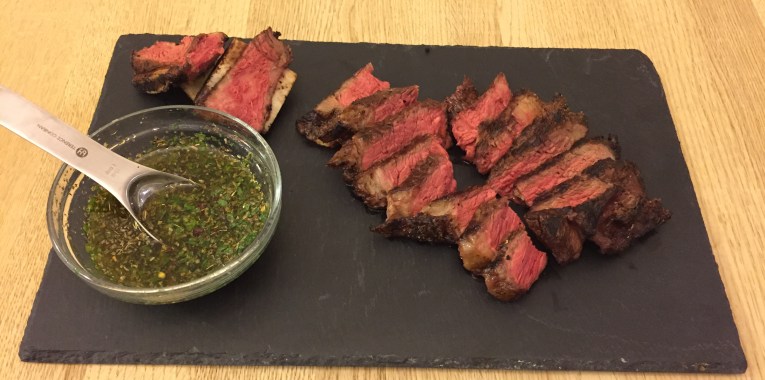
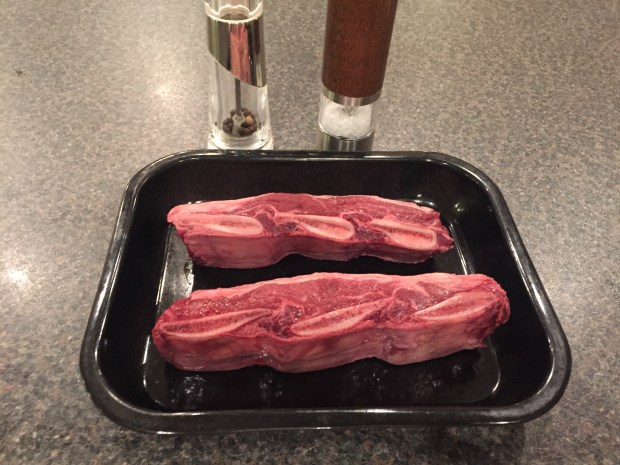
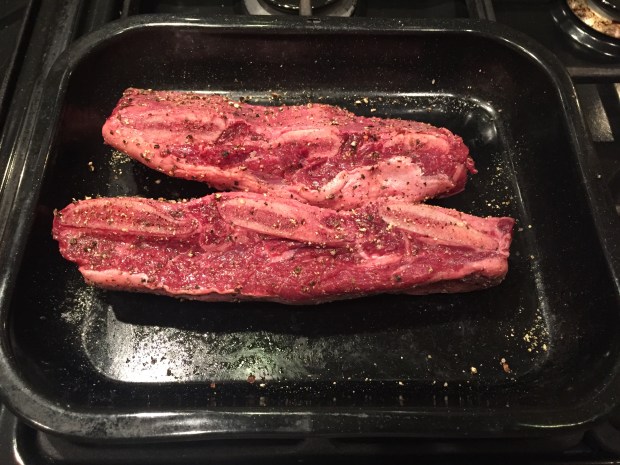
Steak is synonymous with Argentina and they are the fourth largest consumer of meat in the world, after Australia, the US and Israel. Asado is the name for the Argentine BBQ, meaning both the technique and the social event. An asado usually consists of beef alongside various other meats, which are cooked on a grill, called a parrilla, or an open fire. Some popular recipes I came across include Locro (meat, bean and vegetable stew), Choripán (chorizo sandwich), Empanadas (little pies), Sandwiches de miga (thin white bread with filling such as ham and cheese), Dulce de leche (their national spread used to fill cakes and pancakes) and Hojaldre (pastry covered with meringue). I made Asado de tira (BBQ short ribs) with chimichurri sauce, which we cooked on an open BBQ with hot coals. Despite buying the best ribs I could from the butchers, there were parts of the meat that were beautifully flavoured but other parts were a bit gristly.

Rating: 8/10

Serves: 2
Prep time: 15 minutes
Cook time: 10-15 minutes

900g beef short ribs
Salt
Freshly ground pepper

Chimicurri sauce
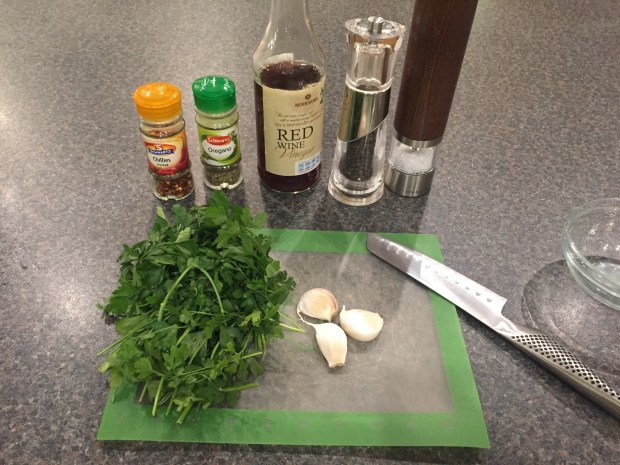
1/2 cup fresh parsley
2 medium cloves garlic, peeled
1 tbsp dried oregano
25ml extra-virgin olive oil
12ml cup red wine vinegar
1/2 tsp sea salt
1/8 tsp chilli flakes

Take the beef ribs out of the fridge and bring them to room temperature
Light the coals on your BBQ (not gas) and leave them until they are covered with grey ash
Season the ribs very liberally all over with salt and freshly ground pepper
Place the ribs directly over coals and cook, turning frequently, until charred on all sides, about 8 to 10 minutes total.
Insert a thermometer into thickest part of steak and they’re done when they register 125°F
Transfer to a cutting board, tent with foil, and let rest for 5 minutes
Serve with the chimichurri sauce

Chimicurri sauce
Place parsley, garlic, and oregano in to a mini food processor and pulse until finely chopped
Transfer to a bowl and whisk in oil, vinegar, salt, and red pepper flakes

img_2599
Ingredients for Asado de tira (BBQ short ribs)
img_2601
Beef ribs
img_2608
Cooking Asado de tira (BBQ short ribs)
img_2612
sado de tira (BBQ short ribs) with chimichurri sauce
img_2602
Ingredients for Chimichurri sauce
img_2604
Chimichurri sauce
iguazu-falls-argentina
Iguazu Falls
casa-rosada-buenos-aires
Casa Rosada, Buenos Aires
argentinian-tango-dancers
Argentinian Tango dancers

Marshall Islands

The Marshall Islands are a sprawling chain of volcanic islands and coral atolls in the central Pacific Ocean, between Hawaii and Australia. The Islands include the Ratak (sunrise chain) and Ralik (sunset chain), two parallel chains of 29 atolls, each made up of many small islets, and five single islands. The Islands of Bikini and Enewetak are former US nuclear test sites.The Kwajalein Atoll, with a huge central lagoon, is the largest coral atoll on the planet, also famous as a WWII battleground, and the US maintains a strong military presence here with a missile testing range. The island city of Ebeye is the second largest settlement in the Marshall Islands, after Majuro which contains the capital, and is one of the most densely populated in the Pacific.

Islands in the archipelago were first explored by Europeans in the 1520s with Spanish explorer Alonso de Salazar sighting an atoll in August 1526. Other expeditions by Spanish and English ships followed. The islands derive their name from the British explorer John Marshall, who visited in 1788. The islands were historically known by the inhabitants as “jolet jen Anij” (Gifts from the God).

In October 2011, the government declared that an area covering nearly 2,000,000 square km of ocean shall be reserved as a shark sanctuary. This is the world’s largest shark sanctuary, extending the current worldwide ocean area in which sharks are protected from 2,700,000 to 4,600,000 square km. In protected waters, all shark fishing is banned. However, some have questioned the ability of the Marshall Islands to enforce this zone.

For almost 40 years the islands were under US administration. In 1979, the Government of the Marshall Islands was officially established and the country became self-governing. In 1986, the Compact of Free Association with the United States entered into force, granting the Republic of the Marshall Islands its sovereignty. Under the terms of that agreement, the US would provide significant financial aid, that to date now exceeds $1 billion.

When it comes to recipes, this was one of the toughest I’ve found in terms of research. There’s virtually no information on the internet relating to authentic recipes from The Marshall Islands, so using common ingredients from the area and with a little help from other people doing a similar challenge, I opted to cook Coconut Fish with Roasted Sweet Potato. It was unusual in flavour, not unpleasant, but for a reason I cannot explain, I wouldn’t be rushing to have it again.

Rating: 7/10

Serves: 2
Prep time: 10 minutes
Cook time: 45 minutes

2 pieces white fish fillets, cleaned, filleted & de-boned (I used cod)
160ml coconut cream
1/4 onion, finely chopped
1/2 tsp salt
1 small red chilli, thinly sliced in rounds
1/3 tbsp cornflour
1/3 tbsp lemon juice
1 large tomato sliced
2 tbsp peanut oil
2 tbso flour
1/2 tsp salt
pinch ground white pepper
2 sweet potatoes

Mix cornflour to a paste with a little of the cold coconut cream
Put the coconut cream, chopped onion, 1 tsp salt, chilli, lemon juice, and the cornflour mix in a saucepan
Bring the mixture to a gentle boil, stirring all the time, don’t allow the sauce to boil hard as it will become lumpy
Simmer for 3 minutes, then remove from the heat
Heat oven to 160 C (300F)
Put your sweet potatoes on a baking tray and bake for 40 – 60 minutes (depending on the size)
Cut fish into even sized pieces (about 2 cm thick, 3cm wide & 6 cm long)
Mix flour, extra salt & white pepper in a sealable plastic bag
Place the fish in the bag and shake well until the fish is evenly coated with the flour mix
Heat the peanut oil in a frying pan
Brown fish rapidly & lightly on all sides in the hot oil
Place the fish in an ovenproof dish as it is browned
Evenly cover the fish with the tomato slices
Pour the coconut sauce over the top
Bake uncovered in the oven for 30 minutes or until the top begins to brown
Serve with the roasted sweet potatoes

China

China, the most populated country on the planet, with over 1.3 billion people is the world’s second largest country by land area. Despite its size, all of China is in one time zone. China had the largest economy in the world for much of the last 500 years but as of 2014, it is the world’s second largest economy by nominal GDP, after the US. It is the world’s largest exporter of goods.

A few random facts:
The PlayStation is illegal in China
Facebook, Twitter and The New York Times have been blocked in China since 2009, despite this there are still 95 million Facebook users in China
In China, you can major in Bra Studies
China has treatment camps for Internet addicts
China used more cement in 3 years (2011 to 2013) than the U.S. used in the entire 20th century
China is the world’s largest consumer of red wine
The first toilet paper reportedly was used by a Chinese emperor in 1391

China has the second highest volume of UNESCO world heritage sites in the world with 50 sites, behind Italy’s 51. With around 57 million international tourists each year, China is the fourth most visited country in the world after France, The US and Spain. The most popular tourist site is The Great Wall of China, with over 10 million visitors each year. It is the longest wall in the world and was continuously built from the 3rd century BC to the 17th century AD. Although the official length of the Great Wall is 8851.8 km, the length of all the Great Wall built over thousands of years is estimated at 21,196.18 km. The Northern West sections of the Great Wall are deteriorating so quickly due to demolishment by nature and human, it is believed that these sections may disappear within 20 years.

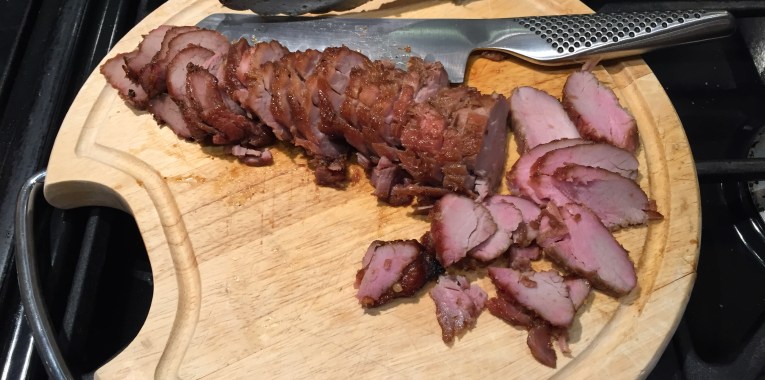
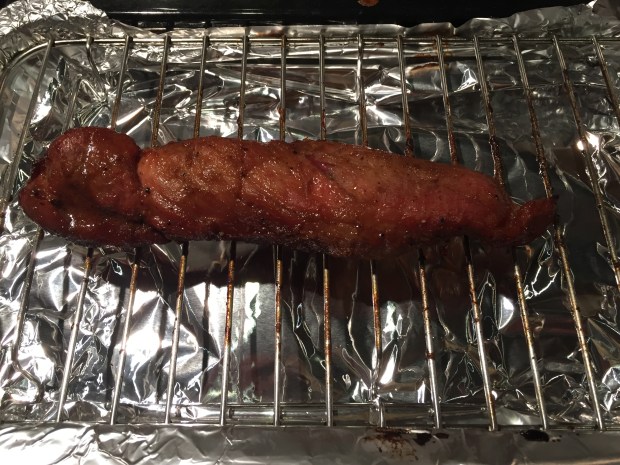
The history of Chinese cuisine stretches back for thousands of years. Each dynasty created new recipes and regional cuisine took off with the most influential being Cantonese, Shandong, Jiangsu (specifically Huaiyang cuisine) and Sichuan. Popular dishes include Tea eggs (egg boiled in tea), Suan La Tang (sour hot soup), Zhajiangmian (noodles with bean paste), Peking duck (roast crispy duck), Kung pao chicken (stir fry chicken with vegetables, chilli and peanuts), Dim Sum (bite size food steamed), Cha siu bao (steamed bun filled with pork), Har gow (shrimp dumplings), Phoenix claws (chicken feet) and Chao Fan (fried rice). I opted to make Char Sui pork (“Fork roast” – Cantonese barbecued pork) which you can use in Cha siu bao, Noodle soup, Chao Fan or indeed just gobble it up as it comes! The recipe is very simple and although marinating time is lengthy, it was totally worth the wait – utterly scrumptious!

Rating: 10/10

Serves: 2
Prep time: 15 minutes +
48 hours marinating time
Cook time: 30 minutes

400g pork fillet
2 garlic cloves, crushed and finely chopped
2 tbsp ginger, freshly grated
50ml light soy sauce
50ml rice wine (shaoxing)
1/2 tsp chinese five spice powder
3 tbsp brown sugar
1 tbsp hoi sin sauce
1 tbsp vegetable oil
Salt and freshly ground Black pepper
30ml honey

Cut slashes into the sides of the pork fillet and place in a sealable bag
Add all the other ingredients, only using half the honey and marinate the pork at least overnight, 48 hours is even better
Preheat the oven to 180C
Line a baking tray with foil or baking/parchment paper and place a rack on top
Remove the pork from the marinade, reserving the marinade
Place the pork on the rack and tuck the thin end of the the tenderloin underneath so the whole piece is roughly the same thickness
Brush the pork with the remaining honey
Roast for 25 minutes or until the internal temperature is 145 – 160F/ 65 – 70C
Around halfway through roasting, baste generously with the reserved marinade (dab it on so you get as much marinade on the pork as possible – this is key for getting the glossy glaze)
When the pork is cooked, switch the oven to grill.
Baste the pork very generously with the remaining marinade (again, dab rather than brush it on)
Grill the pork until it is nicely charred and caramelised – around 2 to 3 minutes, basting at least twice during grilling
Allow to rest for 10 minutes before slicing

img_2575
Ingredients for Char Sui Pork (Cantonese BBQ pork)

img_2577
Marinade for Char Sui Pork (Cantonese BBQ pork)

img_2579
Char Sui Pork (Cantonese BBQ pork)

img_2638
Char Sui Pork (Cantonese BBQ pork)

img_2647
Char Sui Pork (Cantonese BBQ pork)

the-great-wall-of-china
The Great Wall of China

mausoleum-of-the-first-qin-emperor
Mausoleum of the First Qin Emperor

li-river-guilin-china
Li River, Guilin, China

sichuan-giant-panda-sanctuary
Sichuan Giant Panda sanctuary

shanghai-china
Shanghai, China