Guatemala

Guatemala, meaning ‘place of many trees’, is a heavily forested and mountainous nation in Central America. The Maya civilization flourished in Guatemala and surrounding regions during the first millennium A.D. Today over half of Guatemalans are descendants of the indigenous Maya peoples with the majority living in the western highlands. After almost three centuries as a Spanish colony, Guatemala won its independence in 1821.

Guatemala’s highlands lie along the Motagua Fault, part of the boundary between the Caribbean and North American tectonic plates. This fault has been responsible for several major earthquakes in historic times, including a 7.5 magnitude tremor on February 4, 1976 which killed more than 25,000 people. Guatemala has 37 volcanoes, four of them active: Pacaya, Santiaguito, Fuego and Tacaná. Both Fuego and Pacaya erupted in 2010. In May 2010, an area of 65 ft (20 m) across and 300 ft (90 m) deep, collapsed in Guatemala City, swallowing a three story factory. The sinkhole occurred for a combination of reasons, including Tropical Storm Agatha, the Pacaya Volcano eruption, and leakage from sewer pipes.

Despite it having the largest economy in Central America, it is one of the poorest countries with over half the population living in poverty. Tourism has become one of the main drivers of the economy, worth $1.8 billion in 2008. There are many highlights for the visitor including the Mayan archaeological sites of Tikal, Quiriguá, Iximche and Guatemala City, Lake Atitlan (named by some as the most beautiful lake in the world) and the natural pools of Semuc Champey.

Guatemalan cuisine is based on Spanish and Mayan cuisine. Some popular dishes include Chicken Pepian (chicken in spicy pumpkin and sesame sauce), Chiles rellenos (stuffed chilli peppers), Caldos (stews), Tamales (filled corn dough) and Kaq ik (turkey stew). I decided to make Chicharrones (fried pork rinds), basically pork scratchings as we like to call them! It is a popular snack found across Latin America with different variations. In Guatemala they are usually eaten with tortilla, some salt, and maybe a pickled Jalapeño pepper. Although it was a lengthy process for what is just a snack, it was definitely worth the effort – the best pork scratchings you’ll ever taste!

Rating: 10/10
Serves: 2 as a snack

Prep time: 10 mins + 8 hours cooling
Cook time: 1 hour boiling + overnight drying in the oven

350g pork skin, trimmed of excess fat
Salt
Cayenne pepper
Black pepper
Plenty of cooking oil or lard (for frying)

Put your pork skin in a large pot and cover with water. Bring the water to a boil, cover the pot, and allow to cook for 1 hour
Boil until the skin is softened (but not falling apart) and the water is white
(To keep the skins submerged in the water, you may want to weigh them down by placing a heat-resistant plate on top of them as they boil)
Use tongs or a slotted spoon to remove your pork skin from the boiling water and lay it on a cooling rack set over a baking tray. Discard the cooking water
After 5 minutes, put the pork skin still on the cooling rack over the baking tray in the fridge for 8 hours
Use a spoon to remove any fat clinging to the bottom of the pork skin. The fat should separate from the skin easily. Be careful not to tear the skin, as it will be still be soft from cooking
Set the oven to its lowest setting. Aim for no higher than 93c. Place the skin on their cooling rack and baking sheet in the oven overnight
Remove from the oven and leave to cool
Cut the dried skin into long strips or small squares and sprinkle with a little black pepper and cayenne pepper (or you can just leave them plain if you prefer)
Heat a deep-sided pan over high heat. When it is hot, add lard or cooking oil. Fry the chicharrónes one or two at a time, prodding them until they puff up and start to float. When done, remove the chicharrónes to a paper-towel lined plate.
Sprinkle with a good amount of salt and serve (with a cold beer!)

Although it is a lengthy process, it’s not difficult so it may be wise to do double or quadruple this recipe as they will keep for a couple of weeks in a sealed container, if they last that long!

Volcan di Agua, Antigua, Guatemala
Lake Atitlan Guatemala
Lake Atitlan
Semuc Champey Guatemala
Semuc Champey
Tikal, Guatemala
Tikal, Guatemala

Malaysia

This is the 99th country I’ve cooked, so I’m officially half way through my challenge.

Malaysia is made up of Peninsula Malaysia and part of the island of Borneo, East Malaysia. Malaysia was formed in 1963 when the former British colonies of Singapore, as well as Sabah and Sarawak on the northern coast of Borneo, joined the Federation of Malaya. Singapore withdrew from the federation in 1965. The country is multi-ethnic and multi-cultural with half the population ethnically Malay and large minorities of Malaysian Chinese, Malaysian Indians, and indigenous people.

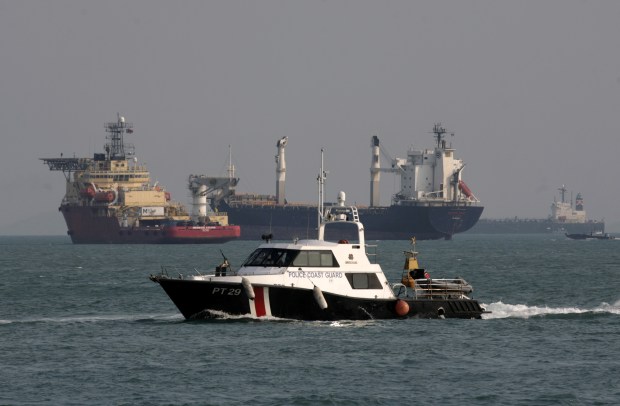
The Strait of Malacca, lying between Sumatra and Peninsular Malaysia, is one of the most important thoroughfares in global commerce, carrying 40 per cent of the world’s trade. Over 94,000 vessels pass through the strait each year. Piracy has been a problem with 25 attacks on vessels in 1994, 220 in 2000, and just over 150 in 2003 (a third of the global total). Regional navies stepped up their patrols of the area in July 2004 and attacks dropped to 79 in 2005 and 50 in 2006.

Sarawak contains the Mulu Caves, the largest cave system in the world, in the Gunung Mulu National Park. The Sarawak Chamber is 700 m (2,300 ft)) long, 396 m (1,299 ft) wide and at least 70 m (230 ft) high. It has been said that the chamber is so big that it could accommodate about 40 Boeing 747s, without overlapping their wings.

About two thirds of Malaysia is covered in forest, with some believed to be 130 million years old. The forests of East Malaysia are estimated to be the habitat of around 2,000 tree species, and are one of the most biodiverse areas in the world.

A few other interesting facts:
In 2015, Malaysia ranked in fourth position on the World’s Best Retirement Havens
The Borneo Island which is made up of Sabah and Sarawak, Brunei and Indonesia is the third largest island in the world, after Greenland and New Guinea
The largest roundabout in the world is located at Putrajaya, Malaysia and is 3.5km in diameter
According to a survey in 2010, Malaysians had the largest number of friends on Facebook, with an average of 233
The orang utans of Malaysia have arms that are unusually long, almost one and half times longer than their legs

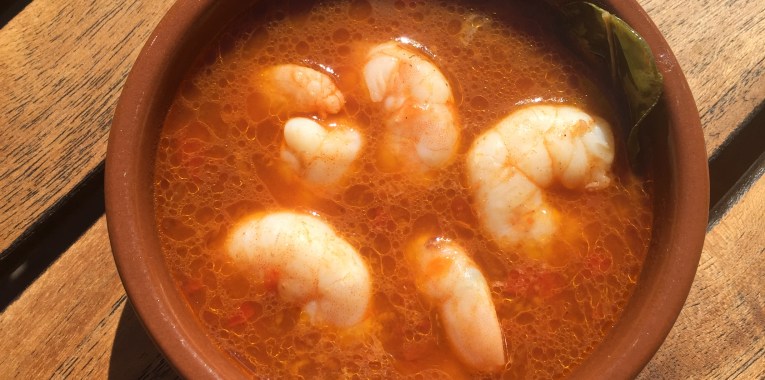
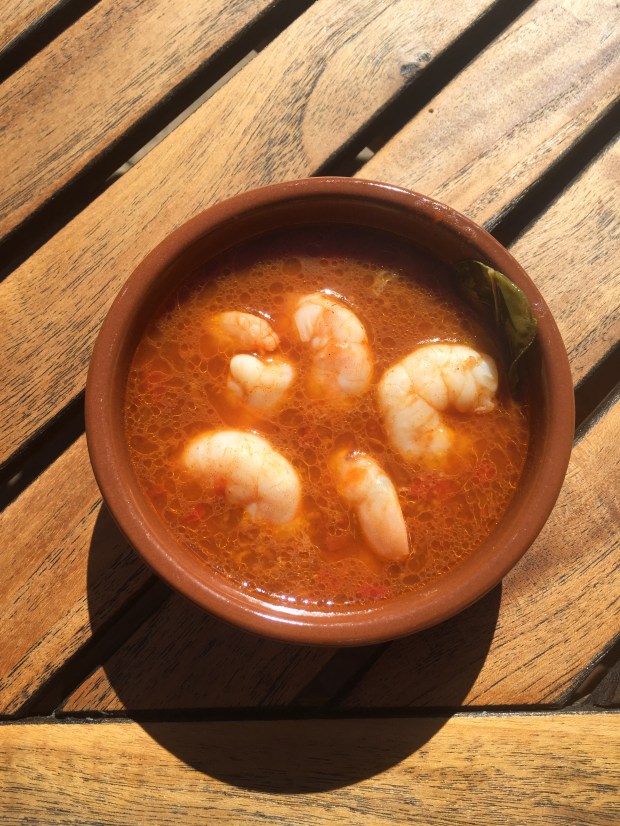
Malaysian cuisine is a melange of traditions from its Malay, Chinese, Indian, Indonesian and ethnic Bornean citizens. Malaysia shares culinary ties with Singapore and Indonesia and versions of dishes such as laksa, satay and rendang are shared. These are a few recipes I came across from the huge array I researched; Asam laksa (spicy mackerel noodle soup), Char kuey teow (stir fried noodles), nasi lemak (fragrant rice), Bak Kut Teh (pork rib soup) and Kuih dadar (sweet crepe). I made Sambal Udang (Sambal Prawns) which were vibrant and flavoursome.

Rating: 8/10

Serves: 2
Prep time: 20 mins
Cook time: 5-7 minutes

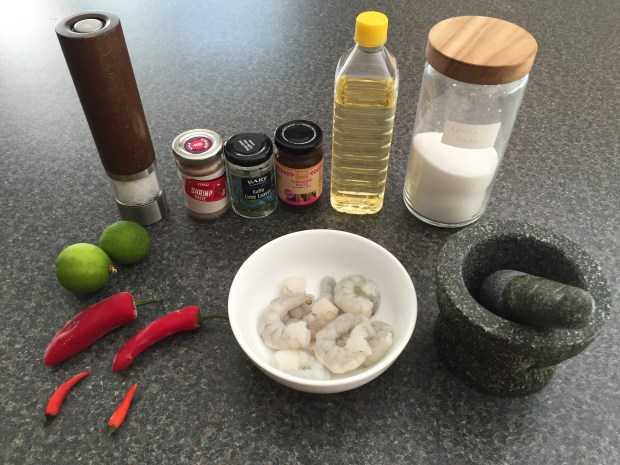
For the belacan sambal paste
1 tsp shrimp paste (available at tesco)
2 red jalapeno chilli peppers, seeds removed and chopped
2 red birdseye chillies, seeds removed and chopped
Juice from 1 lime

For the sambal udang
16 peeled raw king prawns
2 tbsp groundnut oil
1 & 1/2 tbsp tamarind paste (available at tesco)
2 kaffir lime leaves
1 & 1/2 cups water
2 tsp sea salt
2 tsp caster sugar

For the belacan sambal paste
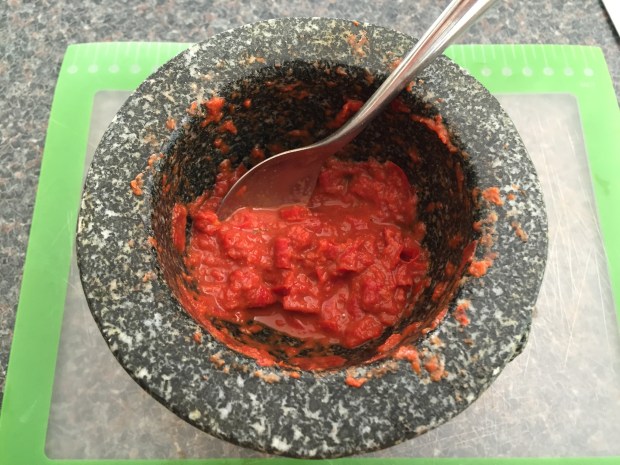
Put the shrimp paste and chillies into a pestle and mortar and pound to a paste or you can use a mini food processor
Put the paste in a glass jar and squeeze in the lime juice and shake well.

Heat up the oil in a wok. Add the sambal paste and stir-fry until aromatic, about 2 minutes
Add the prawns and continue to stir-fry for about 2-3 minutes
Add in the water, tamarind paste and bring it to a quick boil
Add in the kaffir lime leaves, salt, and sugar and continue to cook for 2 minutes
Serve with steamed rice

IMG_0634
Ingredients for Sambal Udang (Sambal Prawns)
IMG_0636
Sambal paste
IMG_0638
Sambal Udang (Sambal Prawns)
IMG_0643
Sambal Udang (Sambal Prawns)
Malaysian orang utan
Malaysia orang utans
Malacca strait
Police patrolling the Malacca strait

Bahrain

Bahrain, meaning ‘two seas’ in Arabic, although which two seas originally intended remains in dispute! Today, the two seas are generally taken to mean either the bay east and west of the island, the seas north and south of the island or the salt and fresh water present above and below the ground. Bahrain is an archipelago of 84 islands and island groups situated in the Gulf of Bahrain between Qatar and Saudi Arabia. It is 92% desert and dust storms transported by northwesterly winds from Iraq and Saudi Arabia are the main natural hazard. The King Fahd Causeway, 15 miles long, linking Bahrain to Saudi Arabia was completed in 1986 at a cost of $1.2 billion.

It was the first emirate where oil was discovered in 1932. Bahrain’s economic activity, has centred on the production of crude oil and natural gas and on refining petroleum products, making the country sensitive to fluctuations in the world oil market. It has however been more successful than some other states in the gulf in developing manufacturing and commercial and financial services. Before the discovery of oil, pearling was the economic mainstay of Bahrain. The quality and the abundance of the pearls in Persian Gulf waters are unsurpassed anywhere.

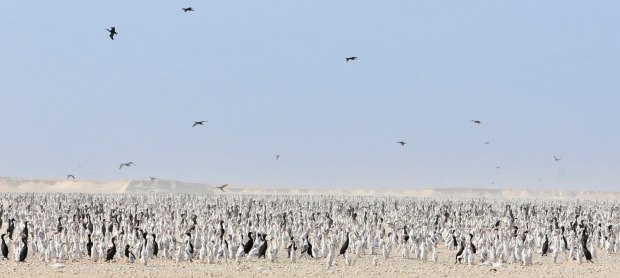
Bahrain has 4 protected marine environments; Hawar Islands, Mashtan Island, Arad bay and Tubli Bay. The breeding colony of Socotra cormorant (aquatic birds) on Hawar Islands is the largest in the world. In 2003, Bahrain banned the capture of sea cows, marine turtles and dolphins within its territorial waters.

Millions of tourists visit Bahrain each year and the highlights include Qal’at Al Bahrain or the Bahrain fort, which is a UNESCO World Heritage Site, the Bahrain National Museum, home to artefacts dating back to the island’s first human inhabitants some 9000 years ago, Beit Al Quran, meaning ‘House of Qur’an’ is a museum that holds Islamic artefacts of the Qur’an and the Tree of Life, a 400-year-old tree that grows in the Sakhir desert with no nearby water and is visited by approximately 50,000 tourists every year.

The cuisine of Bahrain is a mix of Arabic, Persian, Indian, Balochi, African, Far East and European food. Popular dishes include nekheh, bajelah and loobah (trio of spicy bean soups), Qoozi (lamb with rice), Khabees (date dessert) and Muhammar (sweet rice). I opted to cook their national dish, Machboos (spicy chicken and rice). It was relatively simple and quite tasty.

Rating: 7/10

Serves: 2
Prep time: 25 mins
Cook time: 1 hour 40 mins

1 medium onion, diced
1 tbsp ghee or unsalted butter
1 tbsp baharat (see below)
1/3 tsp turmeric
1 tbsp vegetable oil
400g chicken thighs, legs or breasts
1/2 hot green chilli, seeded and diced
1/2 tbsp fresh ginger, finely grated
2 large cloves or garlic, thinly sliced
5 cherry tomatoes, diced
2 green cardamom pods
1/2 cinnamon stick
1 tsp salt
1 cup chicken stock
3/4 cup basmati rice (soaked for at least 15 minutes, then rinsed and drained)
1 tbsp fresh coriander, chopped
1 tbsp fresh parsley, chopped
Rosewater for sprinkling (optional, but recommended)

For the baharat
1/3 tbsp black peppercorns
1/3 tbsp cumin seeds
2/3 tsp coriander seeds
1/3 cinnamon stick (about 2 inches long)
1/3 tsp whole cloves
seeds from 3 green cardamom pods
1/3 tbsp paprika powder teaspoon ground pinch nutmeg

For the Baharat:
Set the paprika and nutmeg powders aside. Place all remaining ingredients (whole seeds, cinnamon stick and cloves) in a small frying pan and dry roast over medium-high heat, tossing regularly to prevent burning, for 2 minutes or until very fragrant
Transfer to a spice grinder or pestle and mortar and let cool
Add the paprika and nutmeg and grind all the ingredients to a fine powder

Heat the oil in a casserole dish over medium-high heat and fry the chicken pieces on both sides until the skin is brown and crispy
Transfer the chicken to a plate and leave the remaining oil in the casserole dish
Add the ghee (or butter), reduce the heat to medium, and fry the onions until starting to brown, about 8 – 10 minutes
Add the ginger, garlic, and green chilli and fry for another 2 minutes
Add the baharat and turmeric and cook for another minute
Return the chicken pieces to the casserole along with the tomatoes, cardamom pods, cinnamon and salt
Add the chicken stock and stir to combine. Bring it to a boil, reduce the heat to low, cover and simmer for 40 minutes
Add the coriander, parsley and drained rice and stir to combine
Return it to a boil, reduce the heat to low, cover, and simmer for another 15-20 minutes until the rice is done and has absorbed the liquid
Transfer the chicken and rice to a serving dish (either leave the chicken pieces tossed in with the rice, or place the chicken on top of the rice), and sprinkling with 1-2 tablespoons of rosewater (optional)
Serve with a green salad and yogurt raita


Bahrain
Bahrain
Hawar Islands, Bahrain
Hawar Island, Bahrain
Tree of Life Bahrain
The Tree of Life, Bahrain
Bahrain sunset
Sunset in Bahrain

Senegal

Senegal is in Western Africa, bordering the North Atlantic Ocean, between Guinea-Bissau and Mauritania. It remains one of the most stable democracies in Africa and has a long history of participating in international peacekeeping and regional mediation. The landscape consists of mainly rolling sandy plains. It’s highest peak at 584m is found southwest of Kedougou and is unnamed. Senegal has a population of over 13.5 million with a wide variety of ethnic groups including the Wolof, Fula, Toucouleur and Serer.

The lively capital of Dakar was once the finishing point of the Paris-Dakar rally, which originated in 1978 when motorcycle racer Thierry Sabine got lost in the Ténéré desert whilst competing in the Abidjan-Nice rally. He realised that the desert would be a good location for a regular rally where amateurs could test their ability. In 1979, 182 vehicles started the inaugural race from Paris with 74 surviving the 10,000km trip to Dakar, Senegal. Cyril Neveu won the race on a Yamaha XT500. Due to security threats in Mauritania, which led to the cancellation of the 2008 rally, races since 2009 have been held in South America.

Saint Louis, founded in 1659 on an island in the River Senegal, this port town was once the capital of French West Africa. It is now host to the annual Saint Louis jazz festival, the biggest of its kind in Africa, bringing 500 musicians together to play in the central square of the historic quarter. In 2000 it was designated as a UNESCO world heritage site.

Wrestling is Senegal’s most popular sport and has become a national obsession. A type of folk wrestling traditionally performed by the Serer people, it is now the national sport. Adama Diatta and Isabelle Sambou will be competing in the freestyle wrestling category at the 2016 Olympics.

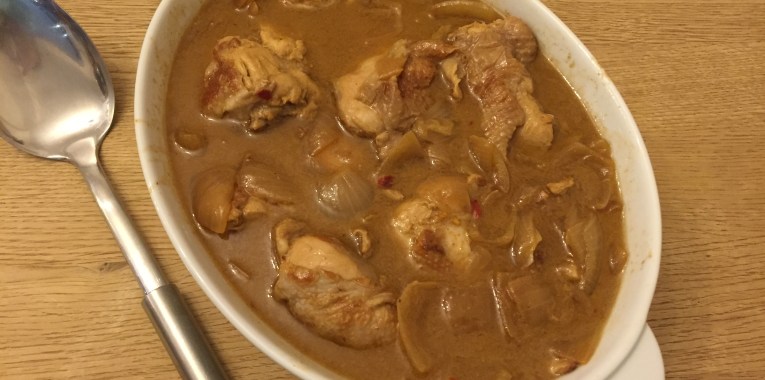
Sengalese cuisine takes influence from North Africa, France and Portugal, as well as its ethnic groups. Sengalese recipes I came across include Mafe (fish, chicken or lamb stewed with peanut butter sauce and vegetables), Thieboudienne (rice & fish), Sombi (sweet milk rice soup), Chere (cous cous) and Ndambé (spicy beans). I cooked Poulet Yassa (chicken marinated with onions and lemons), which is now popular across all of West Africa but it originated in Senegal. It was delicious! Traditionally it is served with rice or sweet potato, however I served it with a green salad of leaves, avocado and soya beans which complemented it very well.

Rating: 9/10
Serve: 4
Prep time: 20 mins + overnight marinating
Cook time: 1 hour

1 small chicken (1-2 kg) or 8 – 10 chicken pieces on the bone
French mustard
Lemon juice or 4 squished lemons
2 cubes of chicken stock
peanut or groundnut oil
1/2 tsp dried chilli flakes
4 onions
Salt and pepper
1 cup of water

Make the marinade sauce by mixing 2 tablespoons french mustard with 4 tablespoons of peanut or groundnut oil and 6 tablespoons of lemon juice
Cut the chicken into smaller pieces
Pour ¾ of the mix into a plastic bag with the chicken pieces and let it marinate in the fridge overnight or for at least 3 hours
Keep the rest of the marinade for the next day
Cut the onions in to large pieces and mix them with the rest of the marinade
Heat 2 tablespoons of peanut or groundnut oil in a large pan
Fry the chicken on high heat for 5 minutes so it browns, then remove from the pan and set aside
Reduce the heat, add the onions and the rest of the marinade and cook for around 10 minutes
Scrap any burnt bits from the bottom of the pan and stir well to blend in
Once the onions are soft, add the chicken pieces back into the pan, then add the chicken stock cubes, 2 cups of water, salt & pepper and chilli flakes
Let it cook for around 45 minutes, stirring occasionally
Taste to check if extra salt or pepper are needed
Serve with rice, sweet potato or a green salad with avocado and soya beans

Barbados

Barbados is situated in the Lesser Antilles. The west coast has white sandy beaches and calm waters and the east coast faces the Atlantic. Its location in the south east of the Caribbean region puts the country just outside the principal hurricane strike zone. On average, a major hurricane strikes about once every 26 years. The last significant hurricane to cause severe damage to Barbados was Hurricane Janet in 1955.

The Portuguese visited the island in 1536, but they left it unclaimed, with their only remnants being an introduction of wild hogs for a good supply of meat whenever the island was visited. Barbadians are extremely fond of pork.

Barbados has produced many great cricketers including Sir Garfield Sobers, Sir Frank Worrell and Sir Clyde Walcott. Also, Rihanna, the eight time Grammy Award winner was born here and in 2009 she was appointed as an Honorary Ambassador of youth and culture for Barbados by the late Prime Minister, David Thompson.

Barbados welcomes more than a million tourists including land based and cruise ship visitors annually. Highlights include Accra Beach, Barbados Wildlife reserve, Hunte’s Gardens, Harrison’s Cave and Historic Bridgetown and its Garrison, a Unesco world heritage site since 2011.

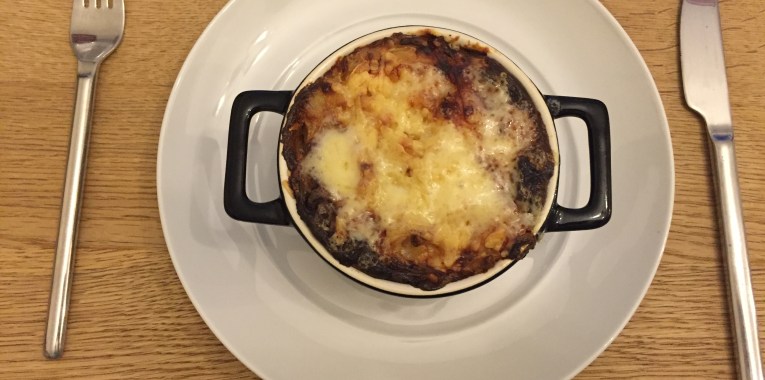
Popular dishes from Bajan cuisine include Pudding and Souse (pickled pork with spiced sweet potatoes) , the national dish of fried flying fish served with cou-cou (cornmeal and okra), Bajan black cake , Black Eye Peas and Rice and Samosas often made with Conch. I opted to cook a favourite of mine, Macaroni cheese, which they refer to as Macaroni pie. Whilst it had a good flavour, it was a little dry.

Rating: 6/10

Serves: 4 as a starter
Prep time: 10 mins
Cook time: 40 mins

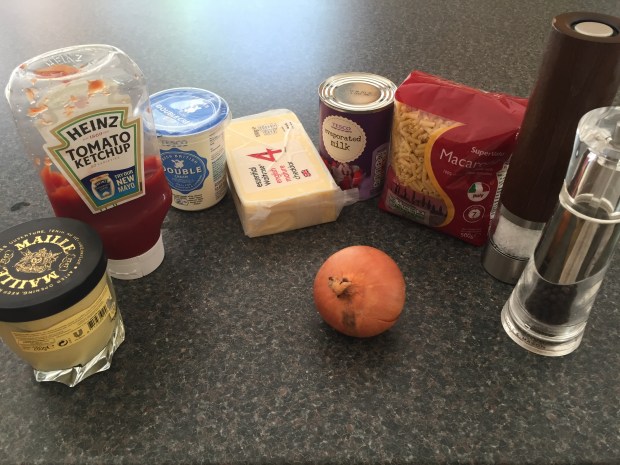
150g macaroni
1 and 1/2 cup cheddar cheese, grated
1/2 cup evaporated milk
1/3 cup water
1 tbsp ketchup
2 tsp dijon mustard
1/2 onion, sliced
pinch black pepper
2 tbsp double cream
Grated cheese for top

Bring some salted water to the boil, add macaroni and the onion to the boiling water and cook until the pasta is al dente
Preheat oven to 180c
Drain macaroni and onion quickly and put straight back into the pan, add 1 cup of cheese and put the lid on for 2 mins
Then add the evaporated milk, mustard, ketchup, pepper and cream and stir well to blend everything together
Transfer to 4 buttered ramekins and top each one with grated cheese
Bake for 20-30 minutes or until golden brown

IMG_0510
Ingredients for Barbados Macaroni pie
IMG_0512
Barbados Macaroni pie
IMG_0513
Barbados Macaroni pie
IMG_0523
Barbados Macaroni pie
IMG_0525
Barbados Macaroni pie
Barbados beach
Barbados beach
Bridgetown, Barbados
Barbados waterfall
Barbados waterfall

Pakistan

The Indus Valley civilization, one of the oldest in the world and dating back at least 5,000 years, spreads over much of what now constitutes Pakistan, officially the Islamic Republic of Pakistan. It is the only muslim country to have been created in the name of Islam. Initially a dominion, Pakistan adopted a new constitution in 1956, becoming an Islamic republic.

Pakistan is home to the 2nd largest peak in the world, K2, also known as the Savage Mountain. It reaches 8,611 metres (28,251 ft) above sea level and is the highest point of the Karakoram mountain range. There have been around 300 successful summits and 80 fatalities, about one person dies on the mountain for every four who reach the summit. The first successful summit was an Italian expedition, led by Ardito Desio and the two climbers who actually reached the summit were Lino Lacedelli and Achille Compagnoni on 31 July 1954.

Often known as the ‘Eighth wonder of the world’ the Karakoram Highway, runs through the northern areas connecting Pakistan with China and is the world’s highest paved international road at an elevation of 4,693 metres (15,397 ft) and approximately 1,300 km in length. It was started in 1959 and was completed and opened to the public in 1979. About 810 Pakistanis and about 200 Chinese workers lost their lives, while building the highway, mostly in landslides and falls.

More than 50% of the world’s footballs are made in Pakistan. Around 60 milion hand-stitched footballs are produced by small firms in Sialkot, Pakistan. In 2014, 42 million official ‘Brazuca’ footballs were exported to Brazil for the FIFA World Cup. Even NASA tested the football and declared it the best football ever made.

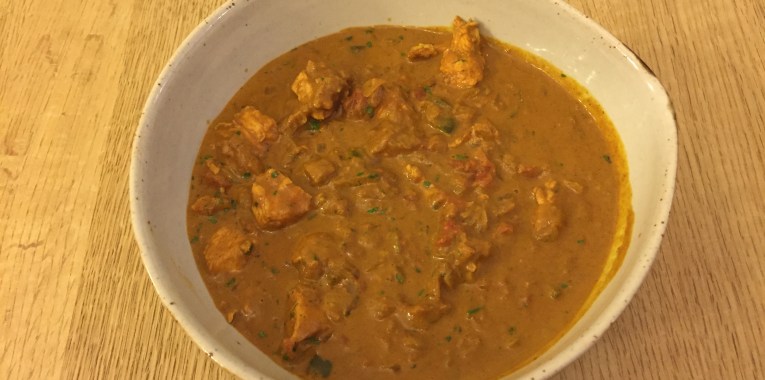
The cuisine of Pakistan is similar to that of Northern India with influences from Central Asia and the Middle East. The food varies across the different regions from Pashtun, Punjab, Sindh and Karachi. Some of the recipes I found were Aloo gosht (lamb with potatoes in gravy), Seekh kebab (beef kebab), Matar pulao (rice with peas) and Sindhi biryani (rice & meat). I made Chicken Lahori curry, well actually I made Butter chicken, then realised that it’s not from Pakistan. So two for the price of one! Both were very delicious and got 9/10.

Rating: 9/10

Chicken Lahori curry
Serves: 2
Prep time: 15 mins
Cook time: 25 – 35 mins

1 tbsp vegetable oil
1 black cardamom pods
2 green cardamom pods
1/3 teaspoon cumin seeds
1 bay leaf
1 onion, chopped
1/2 tbsp fresh ginger & garlic pounded into a paste
1/2 tin chopped tomatoes
1 heaped tsp red chilli powder
1 tbsp ground coriander
1/4 teaspoon ground turmeric
1 or 2 green chillies, chopped (depending on how hot you like)
400g chicken breast skinless and boneless cut into small pieces
2 tablespoons plain yogurt
140ml chicken stock or water
1 tbsp finely chopped coriander
1/2 tsp garam masala (optional)
Salt

Heat the oil in a wok and fry the whole spices with the bay leaves until they crackle
Add the onions and fry for a few minutes, until lightly browned
Add the ginger-garlic paste and fry for a minute, stirring well, then add the ground spices (except the garam masala), the green chillies and tomatoes
Cook for 3 minutes, stirring to blend
Add the chicken pieces with the yogurt, stock and salt to taste, and stir well
Simmer gently for 20-25 minutes until the chicken is cooked
If the sauce is too thick, add more stock
Stir in the chopped coriander leaves and garam masala
Serve with steamed rice


Butter chicken
Serves: 2 hungry people
Prep time: 15 mins
Cook time: 25 min

4 Tbsp oil
100g butter
2 tsp fresh ginger & garlic pounded into a paste
450g chicken, boneless cubes
300g tomatoes, blended
1 1/2 tsp red chilli powder
1 1/2 tsp turmeric
2 tsp curry powder
Salt to taste
2 tbsp dried fenugreek leaves
300g fresh cream
1 piece ginger, julienne
2 tbsp green coriander, chopped

Heat oil in a wok
Add ginger-garlic paste and chicken
Fry till chicken changes colour to golden brown
Add butter to chicken in the pan and then add blended tomatoes
Cook for 2-3 minutes whilst stirring
Add red chilli powder, turmeric, curry powder, salt and stir lightly till oil separates
Add fenugreek leaves
Slowly add cream and stir
Add ginger juliennes and cover with lid and cook gently for few minutes
Garnish with coriander and serve with steamed rice


Brazil

Brazil, the world’s fifth largest country and the largest in South America. With a coastline of 4,655 miles it borders all other South American countries except Ecuador and Chile.
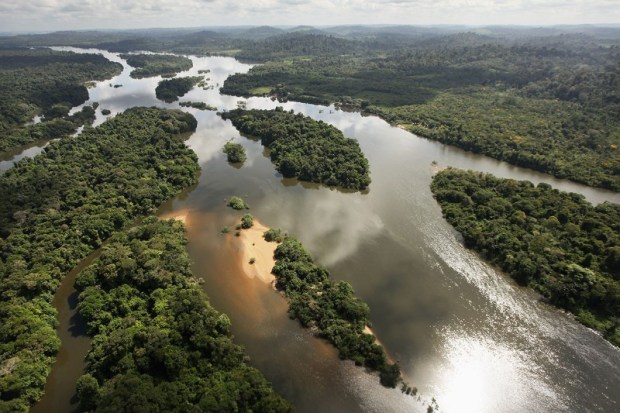
The Amazon rain forest is the world’s largest, recognised as having the greatest biological diversity in the world, containing one-fifth of the world’s freshwater reserves and producing one-third of the earth’s oxygen. About sixty percent of the Amazon lies in Brazil.

Some interesting facts:
Brazil has been the largest producer of coffee for the last 150 years
92% of all new sold cars in Brazil use ethanol as fuel, which is produced from sugar cane
Voting is mandatory in Brazil
Brazil has the third largest prison population in the world behind China and the US
Brazil is the only country in the world that has the equator and the Tropic of Capricorn running through it
Rio de Janeiro was once the capital of Portugal
Sex change surgeries are free under Brazil’s public health system since 2008 and almost 20% of Rio de Janeiro’s males are gay or bisexual

Rio de Janeiro will be the first South American city to host the Olympic Games and Paralympic Games. The 2016 Summer Olympics will take place from the 5th – 21st August. More than 10,500 athletes from 206 countries, including first timers Kosovo and South Sudan are due to take part. The games will feature 28 Olympic sports with 306 sets of medals, across 38 different venues.

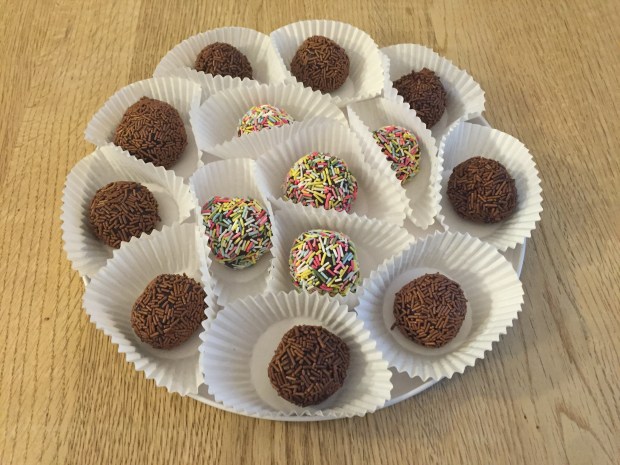
Brazilian cuisine varies greatly by region, developed from indigenous, European, and African influences. Recipes I came across include Moqueca (seafood stew), Feijoada (black beans stewed with pork), Salgadinhos (salty snacks), Pastel (filled pastry), Pão de queijo (cheese puffs), Galinhada (chicken and rice stew) and Churrasco (barbequed meat) . Having not cooked many sweet dishes during this challenge, I opted to make Brigadeiros (Brazilian chocolate bonbons), the national truffle of Brazil. There were a fair few tasting volunteers for these little sweet treats!

Rating: 9/10

Serves: Makes 20 – 28 (depending on size)
Prep time: 25 mins
Cook time: 5 mins

1 (397g or 14oz) can sweet condensed milk
4 tbsp cocoa powder, sifted
30g butter, plus a little more for rolling balls
pinch of salt
Good quality chocolate sprinkles

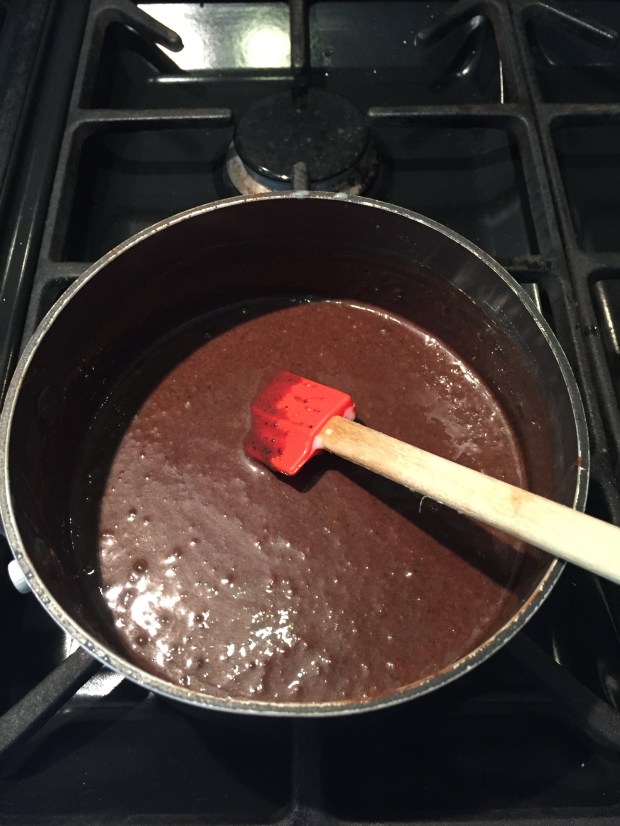
In a small sauce pan mix the sweet condensed milk, the cocoa powder, the salt and the butter
Bring the sauce pan to the stove and heat it over medium-low heat
Cook it, mixing constantly (this is important, otherwise it will burn!) until it thickens, about 5 minutes
Run your wooden spoon (or spatula) through the middle of the mixture. If it takes a while for the mixture to move, then your brigadeiro is ready
Let it cool to room temperature
In a plate or bowl, spread your sprinkles
Once cool, grease your hands with butter and roll the brigadeiros into little balls. Use half a tablespoon as measurement, but you can make your balls as big or small as you’d like!
Roll the brigadeiro balls into the sprinkles and place them in paper/foil candy cups
Enjoy!

IMG_0470
Ingredients for Brigadeiros (Brazilian chocolate bonbons)
IMG_0473
Brigadeiros (Brazilian chocolate bonbons)
IMG_0476
Brigadeiros (Brazilian chocolate bonbons)
Rio De Janeiro2
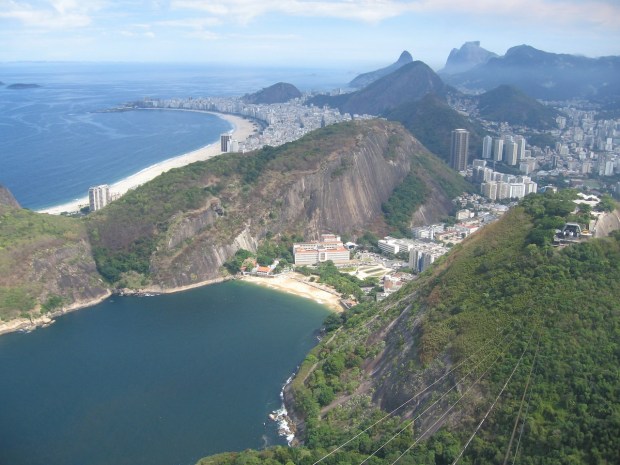
Rio de Janeiro, Brazil
Amazon rainforest
Amazon rainforest
Sancho Bay in Fernando de Noronha Archipelago, Tripadvisor worlds' best beach in 2014
Sancho Bay in Fernando de Noronha Archipelago, TripAdvisor world’s best beach in 2014


Australia

In 2002, I spent a few months travelling in Australia and had the pleasure of spending my 30th birthday in the small town of Broome in Western Australia. We rode camels on Cable beach, swam in the crystal clear water and ate Barramundi for dinner! Western Australia is less popular than the busy resorts on the eastern coast such as Byron Bay, The Whitsundays and The Gold Coast, but has so many beautiful places to explore. Just a few of my highlights include trying my hand at surfing (and failing epically) on Exmouth beach, tasting amazing wine in Margaret River, hiking in Kalbarri National park and dining out in the fabulous restaurants of Perth.

The Commonwealth of Australia is the world’s sixth largest country by land area and the world’s smallest continent. Inhabited by indigenous Australians potentially as far back as 125,000 years ago. It is the flattest and driest inhabited continent with the oldest and least fertile soils. The outback makes up by far the largest portion of land. Home to the Great Barrier Reef, the worlds’s largest coral reef system stretching over 2,300km which is visible from outer space. Quite surprisingly it has only the 6th longest coastline in the world at 25,760km, just pipping Norway at 25,148km. Canada has the longest at 202,080km.

Independent from the UK since 1901, it is one of the wealthiest countries in the world and 2nd highest on the human development index, which is measured by life expectancy, education, and income per capita. It generates its income from various sources including mining-related exports, telecommunications, banking and manufacturing. In terms of average wealth, Australia ranked second in the world after Switzerland in 2013.

A few facts:
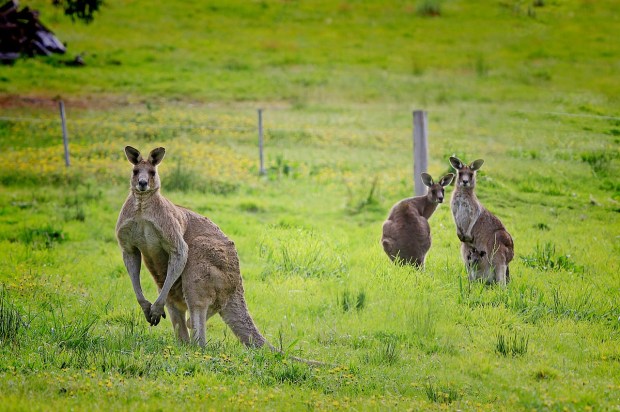
There are more kangaroos in Australia than people!
You could visit a different beach in Australia every day for over 27 years
The Argyle diamond mine in the Kimberley is the world’s biggest producer of natural diamonds and contributes approximately one-third of the world’s natural supply
The Australian wine industry is the world’s fourth largest exporter of wine. Only 40% of production is consumed domestically
Of the top 10 deadliest snakes, 5 of them can be found in Australia, including the most venomous snake in the world, the Inland Taipan

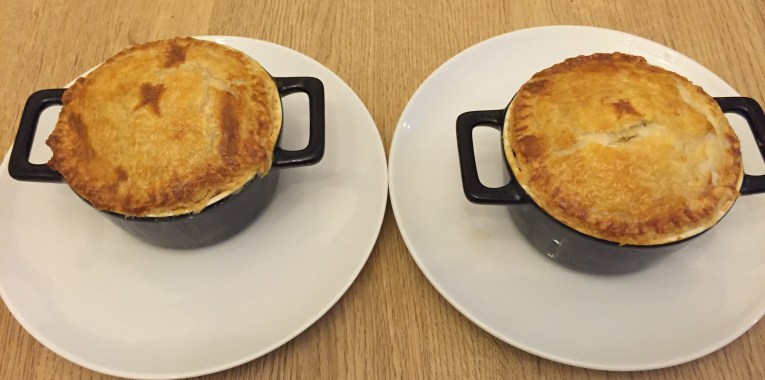
Fortunately for me (and my husband) Australian cuisine has come on a long way since it’s indigenous hunter gatherer diet of ‘bush tucker’, with influences from the British, Mediterranean and East Asian cuisine. Meat is a core component of the Australian diet and the production of meat has been a significant part of Australia’s agricultural economy. Some dishes that are considered traditional Australian fare include Barbecued meat, Chiko rolls (deep fried savoury roll), Anzac biscuits , Damper (soda bread), Lamington cakes and Pavlova. I decided to make Aussie meat pies, served with tomato ketchup, as is tradition. There is actually an annual competition for the ‘Great Aussie meat pie’ which has been going since 1990 and now has 14 different categories. We thoroughly enjoyed ours, but I’m not sure if they were worthy of a competition entry!

Rating: 9/10

Serves: Makes 4 pies

Prep time: 25 mins
Cook time: 1 hour 15 mins

500g beef rump steak, trimmed, chopped
1 tbsp olive oil
1/2 medium brown onion, finely chopped
2 rashers middle bacon, trimmed, chopped
1 tbsp tomato paste
1 tbsp plain flour
1 cup beef stock
1/2 tbsp fresh thyme leaves
2 sheets frozen ready-rolled shortcrust pastry
1 sheet frozen ready-rolled puff pastry
1 egg, lightly beaten
Tomato ketchup, to serve

Grease and line four 7.5cm round pie moulds with the shortcrust pastry, trimming any excess and put in the fridge
Using a food processor, blend the steak until it resembles mince
Heat oil in a large frying pan over medium-high heat
Add the onion and bacon and cook for 3 minutes, stirring occasionally
Add the mince and cook for 5 minutes stirring with a wooden spoon to break up the mince.
Stir in the tomato paste and flour and cook for 1 minute
Stir in the stock and thyme and bring to the boil
Reduce heat to medium-low and simmer for 15 minutes or until sauce has thickened and meat is tender
Season with pepper, remove from heat and let it cool for 10 minutes
Preheat oven to 200°C
Fill the chilled pies cases with the steak mixture and top with puff pastry, trimming any excess
Press the edges together with a fork to seal
Using a small sharp knife, cut a small cross in pie tops
Brush with egg and bake for 25 to 30 minutes or until golden
Serve with tomato ketchup


broome-cable-beach
Camel riding on Cable Beach, Broome
Australian outback
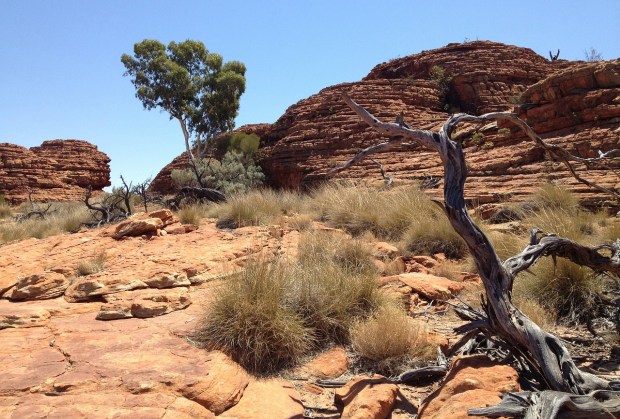
The Australian outback
Kangaroos
Kangaroos in their natural habitat
Great Barrier Reef
The Great Barrier Reef

Maldives

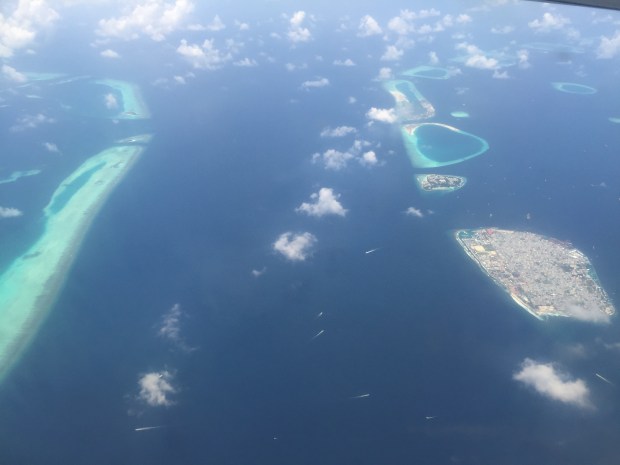
The Maldives, paradise on earth, the most beautiful place on the planet. Well it is in my opinion anyway! I’m extremely fortunate enough to have visited the Maldives several times and I hope to visit many more different islands. The Republic of Maldives is made up of a chain of 26 atolls spread over roughly 90,000 square kilometres. There are 1,192 coral islands in total and the island of Gan is the largest. It is the smallest Asian country in both land area and population. It is also the planet’s lowest country with a maximum and average natural ground level of 2.4 and 1.5 metres above sea level. The UN’s environmental panel has warned that, at current rates, sea level rise would be high enough to make the Maldives uninhabitable by 2100. The government has pledged to make it carbon-neutral by 2019.

The waters of the Maldives are home to 1100 species of fish, 5 species of sea turtles, 21 species of whales and dolphins, 187 species of corals, 400 species of molluscs as well as over 145 crab and 48 shrimp species.
Only 185 islands are home to its 300,000 inhabitants. The other islands are used entirely for economic purposes, of which tourism and agriculture are the most dominant.
On 26th December, 2004 the Maldives were devastated by a tsunami. Only 9 islands were reported to have escaped any flooding, 14 had to be entirely evacuated and 6 were destroyed. It left more than 100 people dead, 12,000 displaced, and property damage exceeding $400 million. The 2004 tsunami is the deadliest in recorded history.

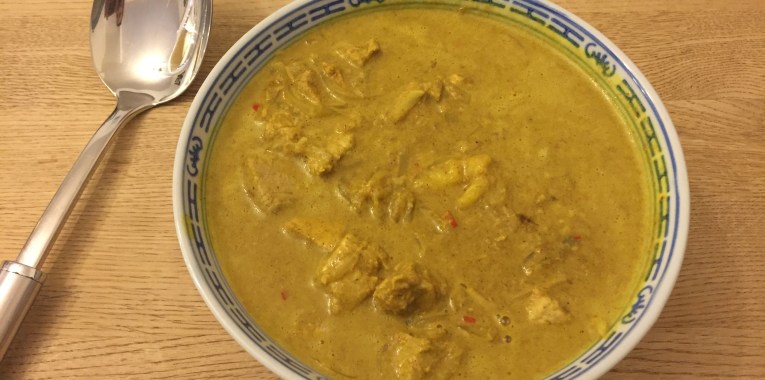
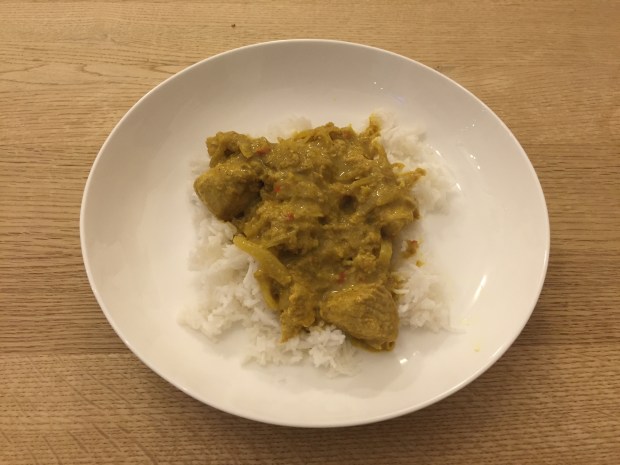
In terms of Maldivian cuisine, the local staple is fish, usually combined with coconut and rice. Popular dishes include Mas Riha (traditional Maldivian tuna curry), Hanaakuri Beef Hiki Riha (roasted beef dry curry), Kukulhu Riha (chicken curry), Mashuni (smoked tuna with coconut served for breakfast) and Kavaabu (fish fritters). I decided to make Dhon Riha (tuna curry) which we had with steamed rice. It had a delicate and tasty flavour.

Rating: 8/10

Serves: 2
Prep time: 20 mins
Cook time: 15 mins

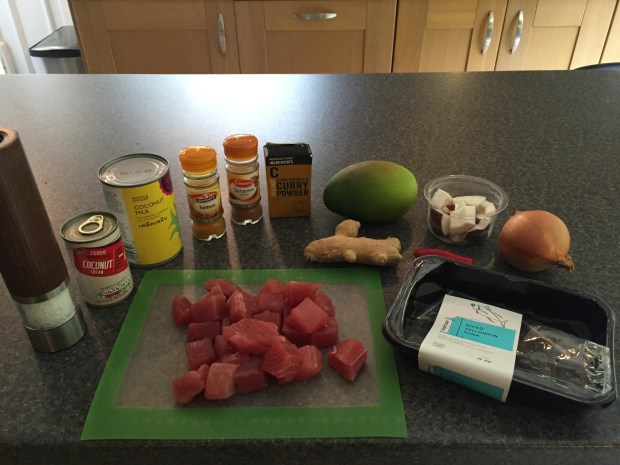
300g diced yellowfin tuna
¼ tbsp turmeric powder
1 inch finely grated ginger
Salt
1 tin coconut milk (don’t shake it!)
1 cup finely grated fresh coconut (either from a whole coconut or you can buy a small tub of coconut pieces which you can grate)
1 finely sliced onion
½ tbsp cinnamon powder
7 tsp mild or medium curry powder
2 pieces of raw mango skinned
½ red chilli pepper

Blend the turmeric powder, salt and grated coconut into a smooth paste
Carefully open your tin of coconut milk and separate the thick cream from the thin juice into different containers
Pour one cup of thick coconut milk and one cup of thin coconut milk into a small saucepan, keeping another cup of thick coconut milk aside
Mix together the cinnamon, ginger and onion in a bowl, then put half of this in the pan with the blended coconut milk
Bring this to boil on a low heat
In a separate bowl, mix the blended grated coconut with the rest of the cinnamon onion mix and stir in the diced tuna
When the coconut milk begins to boil, add the tuna mix, curry powder, chilli pepper, mango and salt
Stir while cooking over a low heat
When it begins to boil, add the other cup of thick coconut milk and let it cook for a few more minutes
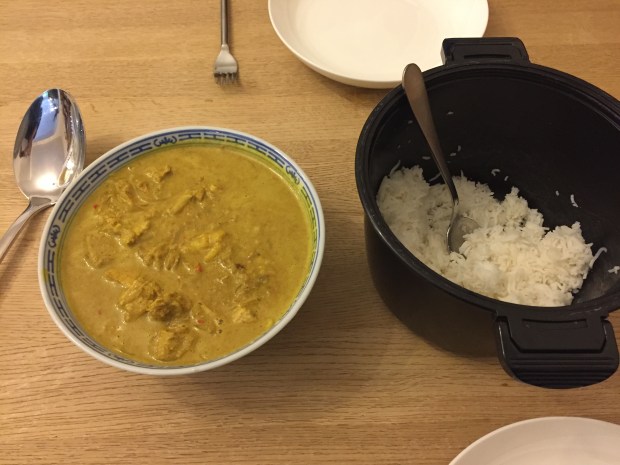
Serve with steamed rice

IMG_0400
Ingredients for Maldivian Dhon Riha (tuna curry)
IMG_0409
Maldivian Dhon Riha (tuna curry) with steamed rice
IMG_0412
Maldivian Dhon Riha (tuna curry) with steamed rice


IMG_5107
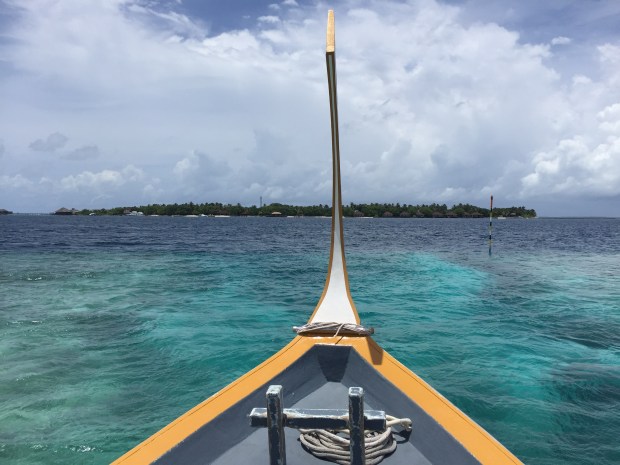
Approaching Lily Beach resort
IMG_5246
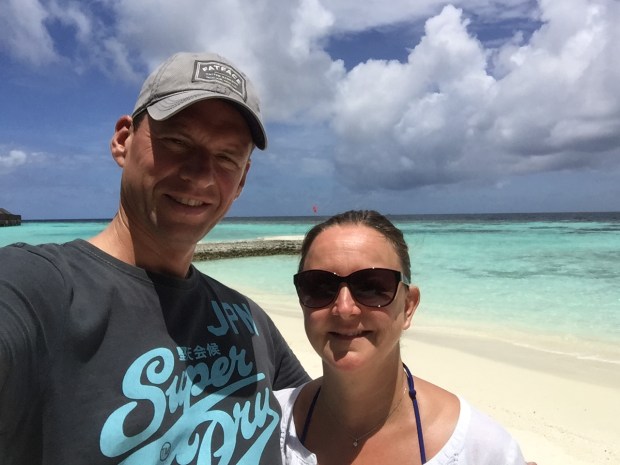
Bern and I at Lily Beach resort
IMG_5258
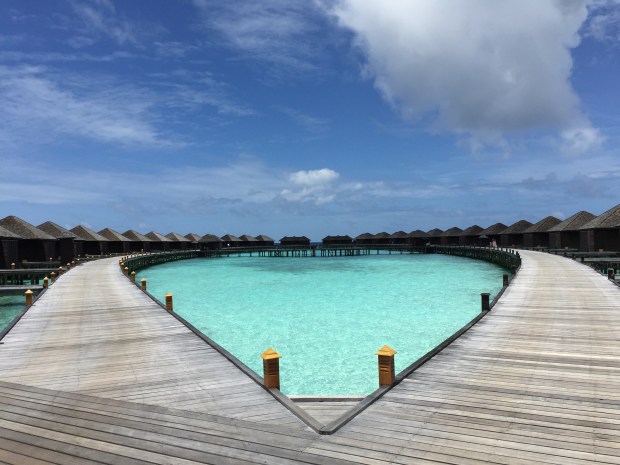
Lily Beach resort
IMG_5490
View from the seaplane
IMG_5636
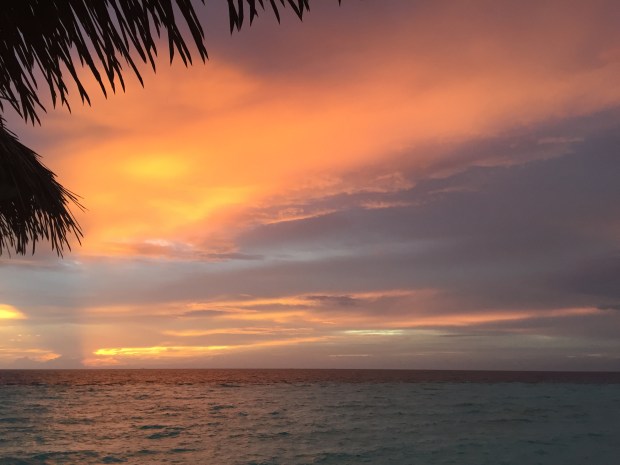
Maldivian sunset
IMG_5853
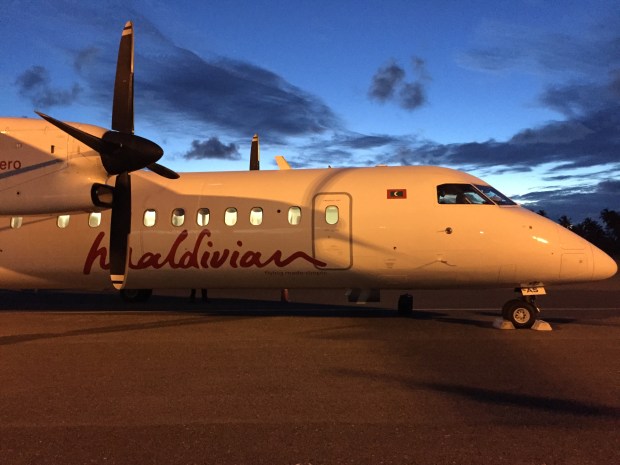
Seaplane
black tip shark, Maldives
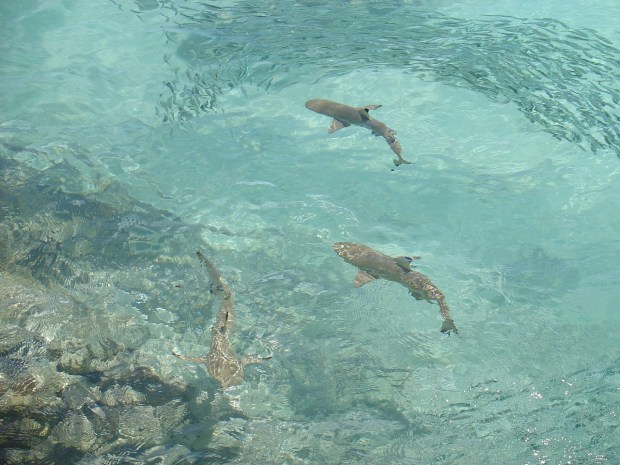
Black tip sharks
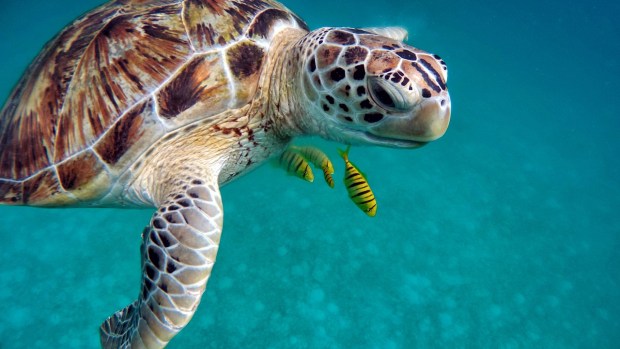
sea turtle
Sea turtle
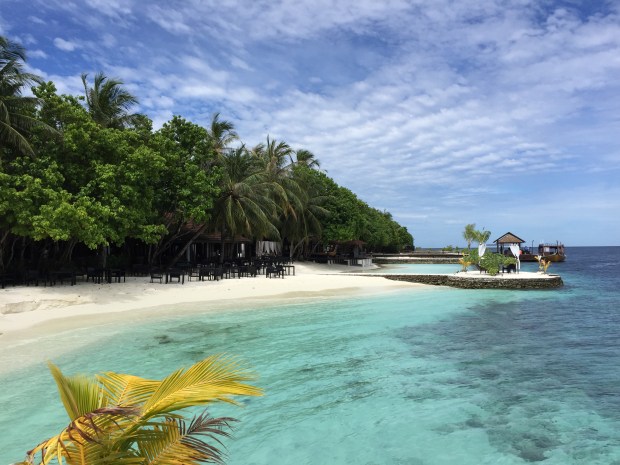
IMG_5205
Maldivian beach

Oman

I’ve always wanted to go to Oman, well actually, I’ve always wanted to go the Chedi hotel in Muscat. Pouring over glossy travel magazines, as is my want, I came across it’s magnificent white Omani architecture and calming pools many years ago. It just oozes luxury and zen like serenity. However at £230 per night for a sea view room or £450 for a club suite, I’ve not quite got there yet.

The Sultanate of Oman is a nation on the Arabian Peninsula, it is bordered by the United Arab Emirates to the northwest, Saudi Arabia to the west, and Yemen to the south and southwest, and shares marine borders with Iran and Pakistan. Oman is an absolute monarchy, meaning the monarch has unrestricted political power over the sovereign state and its people. The Sultan Qaboos bin Said al Said has been the hereditary leader of the country since 1970.

The largest dagger measured 91.50 cm (36.02 in) in length and 21.60 cm (8.50 in) at its widest point and was achieved by Oman Telecommunications Company (Omantel) in Muscat, Oman, on 12 November 2011. The dagger was produced as a gift to His Majesty Sultan Qaboos Bin Said, to celebrate his 40 years of accession. The dagger was a Khanja- a traditional Omani dagger and Oman’s national symbol. The dagger was made from wood and silver, with ornate carvings and mouldings.

Some of the top highlights for the visitor are Nizwa’s 17th century fort, Wadi Shab gorge, the port and capital city of Muscat, Sharqiya (Wahiba) sand dunes, Masirah’s picture perfect beaches and the Empty Quarter, the largest contiguous sand desert (erg) in the world.

Omani cuisine is rooted in a Bedouin culture of hospitality, using whatever is on hand to feed a wandering stranger or a crowd of friends. Dishes are often based on chicken, fish, and lamb, as well as the staple of rice. Common dishes include Machboos (rice flavored with saffron and cooked over spicy meat), Sakhana (thick soup), Djaj Fouq El-Eish (spiced chicken and rice) and Mishkak (skewered meat cooked over charcoal). I decided to cook the festival meal of Shuwa, which traditionally is covered with banana leaves and cooked in an underground sand oven for up to 2 days. As my husband wasn’t too keen on me digging a fire pit in our garden, I opted to cook it in the oven! It is served over a fragrant rice and we really enjoyed it.

Rating: 8/10

Serves: 4
Prep time: 20 mins + 24 hours marinating
Cook time: 3 hours 50 mins

1/2 leg of lamb, pierced in a few places with a sharp knife

For the marinade:
5 cloves garlic, crushed
1 tsp ground pepper
3/4 tsp ground cumin
1 tsp ground coriander seeds
3/4 tsp turmeric powder
1/2 tsp ground cloves
2 tsp red chili powder
2 tbsp cooking oil
1 1/2 tbsp white wine vinegar
Juice of 1 lemon

For the rice:
2 cups basmati rice
4 cups water
3/4 tsp cumin seeds
1/2 tsp pepper corns
2 cardamom pods
2 cloves
1/2 cinnamon stick
1 star anise
2 bay leaves
1 tsp turmeric
2 tsp salt

Thoroughly combine all the marinade ingredients
Put the lamb in a bag and pour the spice mix over the lamb leg, massaging it well inside the bag so it’s fully coated and the liquids get into the pierced holes
Place in the fridge for 24 hours

Preheat the oven to 150c
Put the lamb in a roasting tray and cover tightly with foil
Cook for 3 and a 1/2 hours, basting every hour
Remove the foil and cook for a further 20 mins
Put the lamb on a carving board, rest for 5 mins then carve

For the rice (start 20 – 30 mins before lamb is ready)
Soak the rice for 10 mins in water, drain and rinse
Heat a heavy bottom pan to a medium – high heat
Add oil
Add all the spices and fry for 30 seconds
Add the water
When water is boiling, add the rice
Cook until the water has all been absorbed, stir gently, then turn off the heat and cover with a lid
Let it steam until the lamb is ready


Wadi Shab, Oman
Wadi Shab gorge, Oman
Muscat Oman
Muscat, Oman
Chedi hotel Muscat
Chedi hotel, Muscat
Masirah beach Oman
Masirah beach, Oman

Libya

The state of Libya, formerly an Italian colony until independence in 1951 was an authoritarian socialist state under Muammar Qaddafi from 1969 to 2011. His backing of terrorism led to a US bombing in 1986 and UN sanctions in 1992. In 2003 Libya ended its international isolation and abandoned its weapons programs. Since September 2014 the UN has been working to reconcile the governments and encouraging them to form a national unity government.

Libya’s coastline is the longest of any African country bordering the Mediterranean. The Libyan Desert forms the northern and eastern part of the Sahara Desert and covers 95% of Libyan territory. It is one of the driest, harshest and most remote parts of the greater Sahara and in 1922 the highest temperature (58 °C) on earth was recorded here (however it was disqualified by the World Meteorological Organisation in 2013 as it was found to be invalid).

Libya has many sights including the Roman city of Leptis Magna (originally a Phoenician port), the ancient Greek city of Cyrene, the Saharan Ubari lakes and 12,000 year old rock art at Jebel Acacus. However you’ll have to wait a while as travelling to Libya currently is a total no no.

Libyan cuisine derives much from the traditions of Tunisia and Egypt. There are four main ingredients of traditional Libyan food: olives (and olive oil), dates, grains and milk. Some recipes I came across include Mubatan (fried potato stuffed with meat), Mhalbiya (rice pudding), Bureek (pastries), Bazin (bread dome served with lamb stew and eggs) and Khubs bi’ tun (bread with tuna fish). I made Khubzah bil Ashab (Libyan Herb Bread) which was very flavoursome.

Rating: 8/10

Serves: 6 – 8
Prep time: 25 mins + 1 – 1/2 hours resting time
Cook time: 25 – 35 mins

1 cup warm milk
1 cup warm water
1 tbsp dried yeast
1 tsp sugar
8 level tbsp cornflour
3 1/2 cups plain flour
40ml olive oil
4 tsp sugar
2 tsp salt
2 tsp baking powder
Bunch of thyme, chopped
Bunch of parsley, chopped
Green olives, chopped
1 tsp paprika

Add the dried yeast to 1/2 cup of warm water with a tsp of sugar
Measure 2 level tbsp into a cup and then fill to the top with plain flour then sieve into a bowl, repeat this 3 more times
Sieve the flour and cornflour 4 more times, then seive in the salt and baking powder
Add the warm water into the yeast and sugar and stir well
Add the liquid to the sieved flour gradually and bring into together to a soft dough
Stir in the herbs, olives and paprika into the dough
Stir in the olive oil
Cover the dough with a tea towel and leave it somewhere warm for 1 – 1/2 hours
Preheat the oven to 220 C.
Grease a loose base cake tin (about 20cm by 20cm)
Pour the dough and smoothen.
Brush generously with olive oil.
Put in the hot oven and cook for 25 – 30 mins or until golden
Use a skewer to ensure the dough is cooked
Remove from the cake tin and leave to cool on a wire rack
Cut into squares and serve with mint tea

Mexico

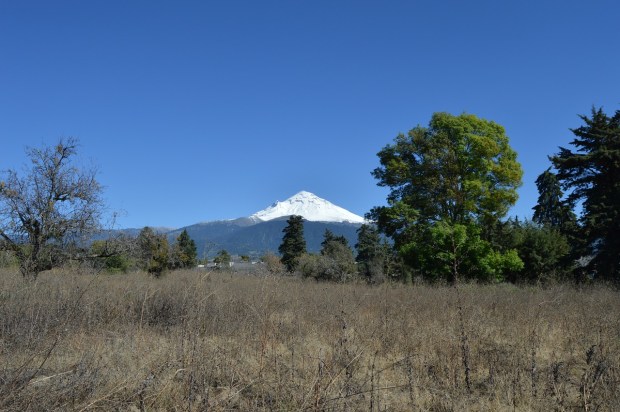
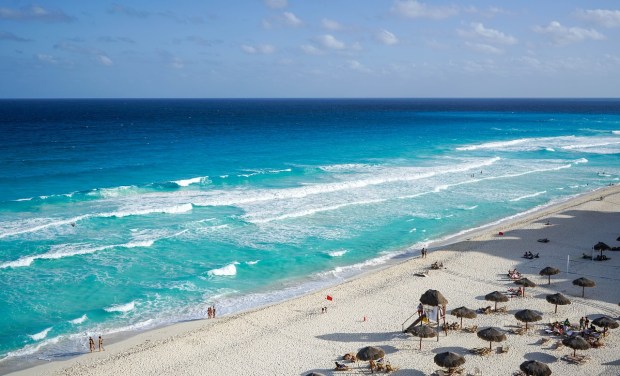
“Fa-heeeee-taaa”, as I am often known to say when thinking about Mexican food! Mexico is situated between the U.S. and Central America and is widely known for its Pacific and Gulf of Mexico beaches and its diverse landscape of mountains, deserts and jungles. With a population of over 122 million, it is the eleventh most populous country and the most populous Spanish-speaking country in the world. Mexico is located in the “Ring of Fire”. This area is one of the world’s most violent earthquake and volcano zones. The Ring of Fire, contains more than 450 volcanoes and has approximately 75% of the world’s active volcanoes. Popocatépetl is considered to be the most dangerous volcano in Mexico, located only 70 km southeast of Mexico City.

Mexico was home to several advanced Amerindian civilizations – including the Olmec, Toltec, Teotihuacan, Zapotec, Maya, and Aztec. Their presence is still felt at the famous sites of
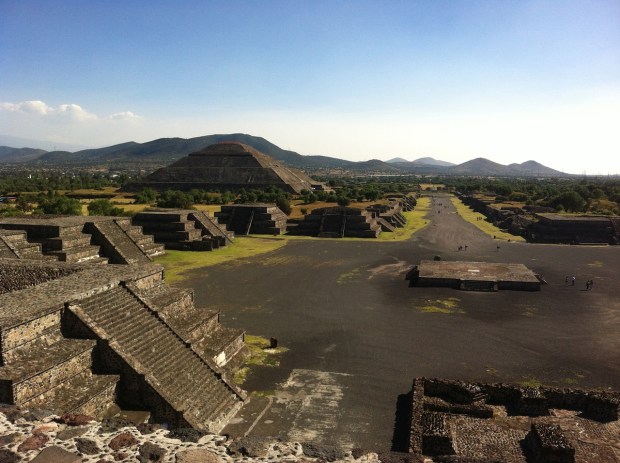
Calakmul (possibly the largest city during Mayan times), Tulum ruins, Monte Albán (Ancient Zapotec capital), Teotihuacán archaeological zone and of course, Chichén Itzá.
I think its safe to say that one wouldn’t get bored on a trip to Mexico. When you’re done with the ancient sites, you can take a road trip down Baja’s endless coast, hike to the peak of Pico de Orizaba, party your heart out in Mexico city and enjoy a well earned laze on the beaches of Puerto Escondido. Mexico has the 23rd highest income from tourism in the world.

Mexico has given the world hot chocolate (sacred drink of the Aztecs), the Habanero Chilli Pepper (packing a punch at 350,000 scovilles) and the Chihuahua, the world’s smallest dog breed. Mexico produces the most automobiles of any North American nation with General Motors, Ford and Chrysler having been in operation there since the 1930s.

Mexican food is know the world over with it’s staple ingredients of corn, beans, avocados, tomatoes, chilli peppers and rice. Mexican street food is one of the most varied parts of the cuisine, which includes tacos, quesadillas, pambazos (white bread), tamales (seasoned meat and maize flour steamed or baked in maize husks), huaraches (fried dough base with a variety of toppings) and alambres (grilled beef topped with chopped bacon, bell peppers, onions, cheese, salsa and avocado). I decided to make Chicken enchiladas, which may not sound overly adventurous given the plethora of options available, but sometimes the simplest dishes are the tastiest, which was certainly the case here!

Rating: 10/10

Serves: 2 hungry people
Prep time: 20 mins
Cook time: 40 mins

For the enchiladas:
1 tbsp vegetable oil
1/2 onion, peeled and diced
2 skinless chicken breasts, diced into small 1/2-inch pieces
salt and pepper
2 green chillis, diced
1/2 tin black beans (rinsed & drained) or 100g dried black beans, cooked according to the packet
4 large flour tortillas
1 1/2 cups grated cheese (I used a mix of cheddar and red leicester as I couldn’t get hold of monterey jack cheese)
1 batch of homemade red enchilada sauce (see below)

For the homemade red enchilada sauce:
1 tbsp vegetable or canola oil
1 tbsp all-purpose or gluten-free flour
2 tbsp ancho chilli pepper powder
1/4 tsp garlic powder
1/4 tsp salt
pinch cumin
pinch oregano
1 cup chicken or vegetable stock

For the homemade enchilada sauce:
Heat oil in a small saucepan over medium-high heat.
Add flour and stir together over the heat for one minute.
Stir in all the seasonings.
Then gradually add in the stock, whisking constantly to remove lumps.
Reduce heat and simmer 10-15 minutes until thick.
Use immediately or refrigerate in an air-tight container for up to two weeks.

For the enchiladas:
Preheat oven to 350 degrees F.
In large skillet, heat oil over medium-high heat.
Add onion and fry for 3 minutes, stirring occasionally.
Add diced chicken and green chillis, and season with salt and pepper.
Saute for 6-8 minutes, stirring occasionally, or until the chicken is cooked through.
Remove from heat and set aside.

To assemble the enchiladas, set up an assembly line with the tortillas, enchilada sauce, beans, chicken mixture, and cheese.
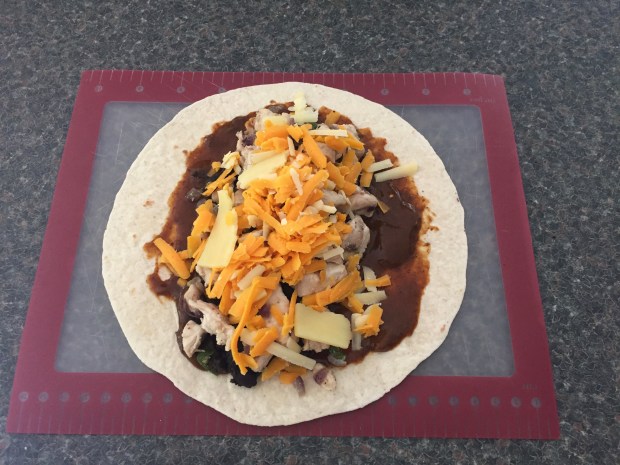
Lay out a tortilla, and spread 1 tablespoon of sauce over the surface of the tortilla.
Add beans in a line down the middle of the tortilla, then add in a spoonful of the chicken mixture, then sprinkle with 1/3 cup cheese.
Roll up tortilla and place in a greased baking dish.
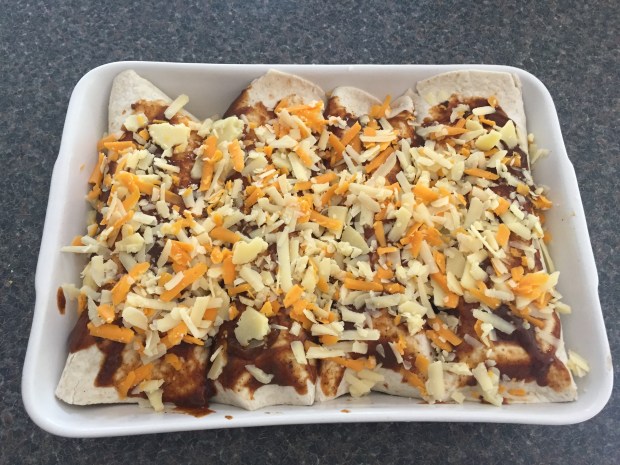
Repeat with the remaining ingredients. Then spread the remaining enchilada sauce on top of the tortillas, and sprinkle on the remaining shredded cheese.
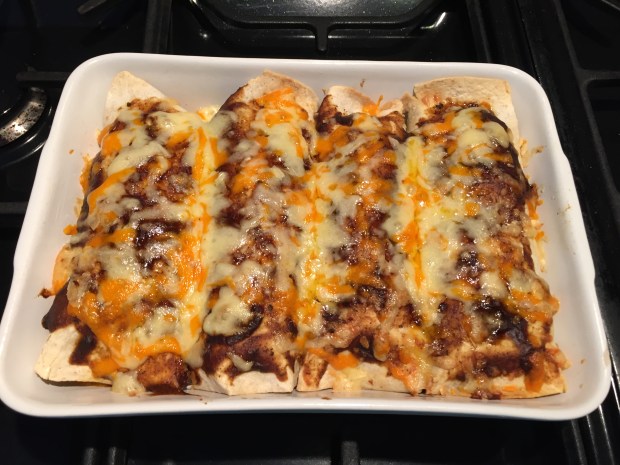
Bake uncovered for 25 minutes.
Remove from oven and serve immediately

IMG_0279
Ingredients for Chicken enchiladas
IMG_0281
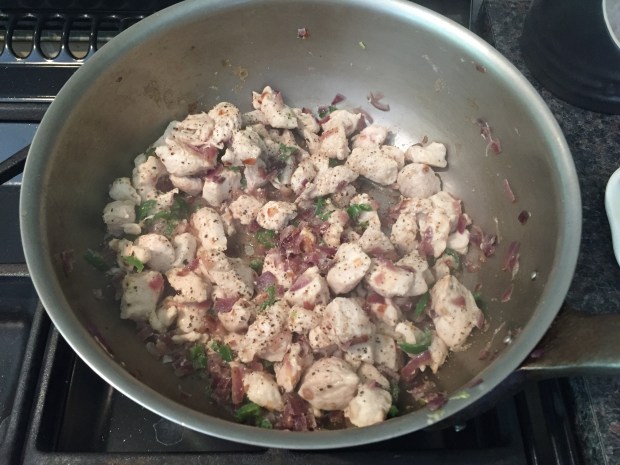
Frying the chicken
IMG_0280
Homemade enchilada sauce
IMG_0285
Making the Chicken enchiladas
IMG_0286
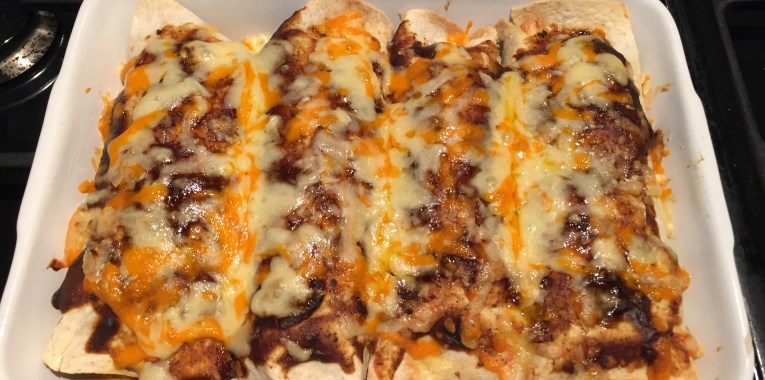
Chicken enchiladas
IMG_0288
Chicken enchiladas
IMG_0294
Chicken enchiladas
IMG_0298
Chicken enchiladas
Popocatépetl volcano, Mexico
Chihuahua puppy
Chihuahua puppy
Cancun beach, Mexico
large_Bond-Spectre-Gallery-Mexico
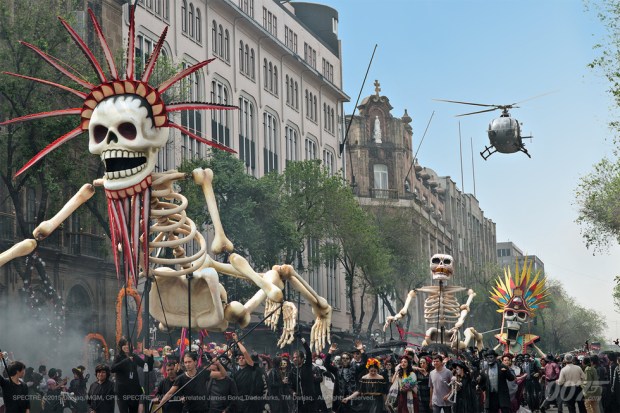
Filming the Bond film ‘Spectre’ in Mexico City
Teotihuacan, Mexico
Teotihuacán archaeological zone

San Marino

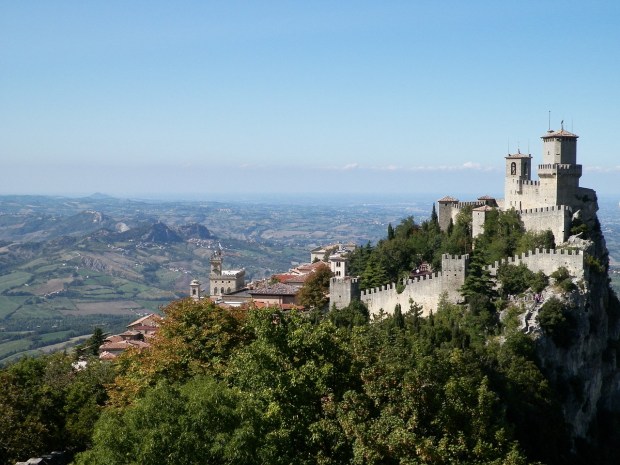
San Marino is an enclaved microstate surrounded by Italy between the regions of Emilia Romagna and Marche and is the fifth smallest country in the world. It claims to be the world’s oldest republic, where it is said that Saint Marinus, a Christian stonemason from Croatia, built a church perched on top of a mountain and founded the republic in 301 AD. Their constitution, a series of six books written in Latin in the late 16th century is the oldest still in effect. It has a population of 33,000 and a land area of just 61 sq km. It is the only country in the world with more vehicles than people.

San Marino’s Historic Centre and Mount Titano became part of the UNESCO World Heritage List in 2008 and it is host to 2 million tourists each year. According to Lonely Planet the top things to see include the Palazzo Public (the town hall and official government building), the coastal panorama atop Castello della Cesta (the highest of San Marino’s three fortresses), horrific torture devices at the Museo della Tortura and the relics of Saint Marinus inside the Basilica del Santo.

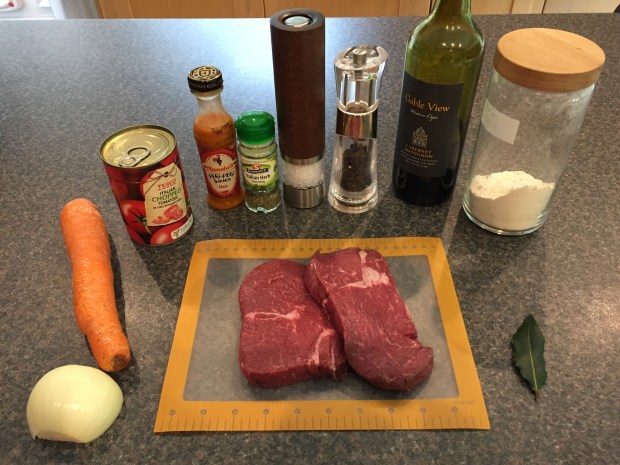
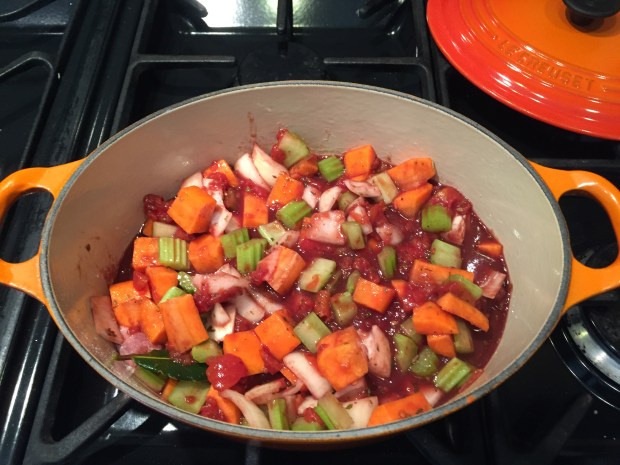
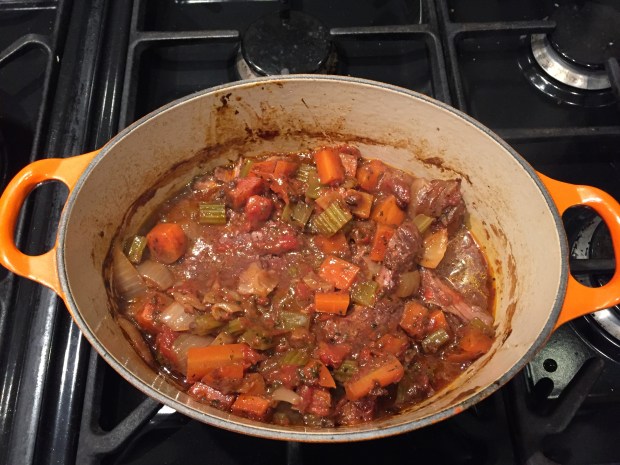
Sammarinese cuisine is very similar to Italian. Some of the recipes I came across were Piadina (savoury filled pitta), Nidi di Rondine “Swallow’s Nests” (baked pasta with cheese & ham), Roast rabbit with fennel and Fagioli con le cotiche (bean and bacon soup). Sweet dishes include Torta Tre Monti (“Cake of the Three Towers”), a wafer layered cake covered in chocolate depicting the Three Towers of San Marino, Bustrengo (cake made with raisins) and Cacciatello (a dessert similar to crème caramel). I decided to make Steak San Marino which was slow cooked with vegetables and red wine. It was quite spicy and I would be tempted to add some bacon to give it a touch of sweetness. I served it with some Thyme roasted potatoes.

Rating: 7/10

Serves: 2
Prep time: 15 mins
Cook time: 5 hours

2 rump beef steaks
Plain flour
1 tsp salt
1 tsp ground black pepper
1/2 tin chopped tomatoes
100ml red wine
1/2 medium onion
1 large carrot
1 stick celery
2 tsp dried mixed herbs
1 bay leaf
1/2 tbsp hot sauce

Preheat the oven to 150 degrees c
Peel and chop the onion and carrots into small chunks
Combine the flour and salt and pepper and coat the steaks with the flour mix
Coat the bottom of an oven proof pan with a little oil and place the steaks in the bottom
Mix the tomatoes, wine, carrots, onion, celery, mixed herbs, bay leaf and hot sauce in a mixing bowl and pour over the steaks
Cook in the oven for 5 hours
Once cooked, discard the bay leaf and remove the steaks to serving plates

IMG_0253
Ingredients for Steak San Marino
IMG_0255
Steak San Marino
IMG_0256
Steak San Marino
IMG_0258
Steak San Marino
IMG_0261
Steak San Marino
Mount Titano San Marino
Mount Titano, San Marino
2702_g
Palazzo Pubblico, San Marino

Romania

Romania is most famous for Transylvania and Count Dracula but has many other interesting features. It is situated in South Eastern Europe, bordering the Black Sea, between Bulgaria and Ukraine. It’s terrain is distributed roughly equally between mountains, hills and plains and has one of the largest areas of undisturbed forest in Europe, covering almost 27% of the territory.

Some interesting facts you may not know about Romania
The meaning of the word “Transylvania” is the land beyond the forest
The world’s largest salt mine museum can be found inside the old Turda Salt Mines (Salina Turda) located in Transylvania
The 3500-year old Scarisoara glacier, located in the Bihor Mountains is the second largest underground glaciar in the world
The jet engine used by modern airplanes was invented by Bucharest born inventor Henri Coanda
Romanian gymnast Nadia Comaneci was the first to achieve a perfect routine and get the first score of 10.00 in the history of gymnastics
Top Gear shot one of its episodes on Transfagarasan in 2009, naming it “the best road in the world”

The food of Romania has been greatly influenced by Ottoman cuisine from imperial Istanbul. Some of the recipes I came across were Sarmale (stuffed cabbage rolls), Ciorba de perisoare (soup with meatballs), Mucenici (cake) Prajitură cu afine (blueberry cheesecake), mămăligă (polenta) and Tochitură (pork stew). I decided to make Crema de zahăr ars (caramelized vanilla pudding). In the words of my mum, desserts are not my strong point and unfortunately, she is absolutely correct. It was a disaster as the puddings didn’t set at all, despite following the recipe to the letter. On reflection though, my mistake was to use skimmed milk and medium sized eggs so I have adapted the recipe below to rectify where I went wrong. I will try to make this again in the coming months as I was looking forward to tasting it.

Rating 0/10 (as it wasn’t edible)

Serves: 4
Prep time: 10 mins
Cook time: 1 1/2 hours

3 large eggs
150g sugar
500ml whole milk
dash of vanilla essence

Preheat the oven to 120 ℃
Put the milk in a pan and bring it to a simmer on very low heat
In the mean time, beat the eggs together with the vanilla essence.
Add the eggs to the milk and let it simmer for about 5 minutes while stirring.
In a pan, melt the sugar over a low to medium heat.
Pour the melted sugar into 4 ramekins, swirling it around so it covers the sides. Do this quickly or the sugar will harden. Pour the milk and egg mix on top of the sugar
Place the ramekins in a large metal baking dish filled with water (bain marie) and bake for about 1 ½ hours until the surface is golden brown.
Check with a toothpick to see if the cream is cooked all the way through.
Let it cool and then refrigerate for a few hours as this is to be served cool.
Place a small plate on top of the ramekin and turn out making sure that the plate is big enough for the caramelised liquid.

Tunisia

Tunisia is a North African nation bordered by Algeria to the west, Libya to the southeast, and the Mediterranean Sea to the north and east. It contains the eastern end of the Atlas Mountains and the northern reaches of the Sahara desert.

Independent from France since 1956, the country’s first president, Habib Bourguiba, established a strict one-party state. He dominated the country for 31 years, repressing Islamic fundamentalism and establishing rights for women unmatched by any other Arab nation. In 1987, Bourguiba was removed from office and replaced by Zine el Abidine Ben Ali in a bloodless coup. Street protests followed over high unemployment, corruption, widespread poverty, and high food prices, culminating in rioting that led to hundreds of deaths. In January 2011 Ben Ali dismissed the government, fled the country, and a “national unity government” was formed.

A state of emergency is currently in effect in Tunisia, imposed after a suicide attack on a police bus on 24 November 2015. It has been extended a number of times. On 20 June it was extended for a further month to 21 July. Until recently tourism had provided jobs for 11.5% of the working population with 6.2 million tourist visitors in 2013. Some of the main attractions are the ancient ruins of Carthage, Jerba’s El-Ghriba synagogue, Sfax Medina and the Mosque of Sidi Mahres in Tunis.

Tunisian cuisine uses a variety of ingredients in many different ways. Unlike other North African cuisine, Tunisian food is quite spicy. Harissa, a hot red pepper sauce is commonly used. Cous cous or Kosksi as it’s known, is the national dish of Tunisia. Recipes I came across include Koucha (slow cooked lamb), Felfel Mehchi (stuffed peppers), Lablabi (a thick soup made with chickpeas and garlic), Brik (a fried Malsouka dough stuffed with tuna and an egg) and Marqa (slow cooked stew).  As I was cooking Morocco and Tunisia on the same day, I decided to make Tunisian vegetable cous cous to serve with the Moroccan Mshermel chicken tagine. It was quick and easy to make and very tasty.

Rating: 9/10

Serves: 4
Prep time: 20 mins
Cook time: 30 mins

3 tbsp olive oil
1 red onion, chopped
1 carrot, chopped
1 courgette, chopped
1 red pepper, chopped
750ml vegetable stock
1 tbsp fresh coriander
1 tin chickpeas, drained
2 tomatoes, chopped
1 and 1/2 cups couscous
Salt & pepper

Heat the oil in large pot over medium-low heat
Add the onion, courgette and carrot and cook, stirring occasionally, until onions begin to soften and turn translucent, about 15 minutes.
Stir in the red peppers and cook for 5 minutes
Add the vegetable stock and coriander
Bring to a boil then reduce heat to low for 5 minutes
Stir in chickpeas and tomatoes and cook for 5 minutes
Slowly pour in the couscous and stir
Remove from the heat and cover the pan immediately
Let it stand, covered, for 5 minutes. Fluff the couscous with a fork and season to taste
Serve at slightly warmer than room temperature

Morocco

I have visited Marrakesh in Morocco a couple of times and found it to be a heart warming and fascinating city. The central Djemaa el-Fna square is a sight to behold morning, noon and night with snake charmers, orange juice sellers and the general hustle and bustle.

The Kingdom of Morocco is situated in the north-western corner of Africa and is the only African country that is not a member of the African Union. It is surrounded by the Atlantic to the west, the Mediterranean to the north and the Sahara desert to the south. Almost the entire population are Sunni Muslims. Arabic is the official language but Berber (another dialect) and French are also spoken widely.

The snow topped Atlas mountains are a visible and dominant feature of Morocco’s geography. Highlights for the visitor include Fes, the oldest of Morocco’s imperial cities, the quiet mountain town of Chefchaouen, where every house is painted blue, camel trekking in the Western Sahara and the Dades Gorges. You can indulge yourself in a hamman (bath house) or haggle for souvenirs in the souqs.

Moroccan food is a mix of Mediterranean, Arabic, Andalusian and Berber cuisine and is extremely diverse. Some of the dishes I came across include Makouda (deep fried potato balls) , B’stilla (pigeon pie), Khobz (semolina flatbread) and Mechoui (roasted lamb). I decided to cook the traditional Moroccan dish Mshermel chicken tagine, which I served with a Tunisian vegetable cous cous. My family were a little divided by the taste but overall found it enjoyable.

Rating: 8/10

Serves: 4
Prep time: 40 mins
Cook time: 90 mins

3 chicken breasts, cut into 3 pieces
3 chicken thigh fillets, halved
1 Preserved lemon
Handful of coriander and parsley
2 large garlic cloves
1 tsp ground paprika
1 tsp ground ginger
1/2 tsp ground cumin
1/2 tsp of pepper
4 tbsp of olive oil
2 onions, peeled and grated
A good pinch of saffron
Small tin of green olives
Salt

Finely chop the preserved lemon, garlic, cilantro, parsley and place in a bag with 2 tablespoons of olive oil, pepper, cumin, ginger, paprika
Place the chicken pieces into the bag and massage well. Marinade in the fridge for 6 hours
When ready to cook, heat 2 tablespoons of oil in your tagine pot
Add the onions and chicken and cook over low heat for 30 minutes
Soak the saffron threads in some warm water then add it to the tagine and cook for 30 minutes
Add the green olives and a teaspoon of salt and cook for a further 30 minutes
Serve with cous cous

IMG_0189
Ingredients for Mshermel chicken tagine
IMG_0190
Marinading the chicken
IMG_0222
Mshermel chicken tagine
IMG_0227
Mshermel chicken tagine
IMG_0240
Mshermel chicken tagine
IMG_0247
Mshermel chicken tagine served with Tunisian vegetable cous cous
View over Marrakesh
View over Marrakesh, Morocco
Fez Morocco
Fez, Morocco
Sahara Desert Morocco
Sahara Desert, Morocco


Kiribati

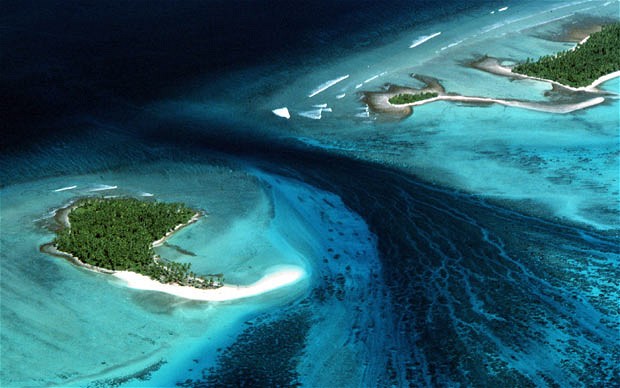
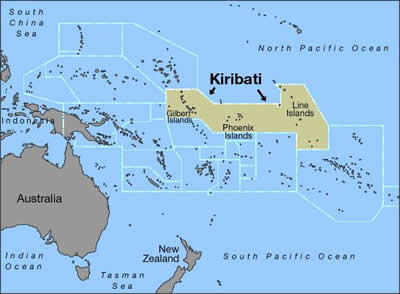
Kiribati, pronounced ‘Kiribas’, is formed of 33 atolls and 1 island, across the equator in the Pacific Ocean, which are dispersed over 3.5 million sq km. It has been independent of the UK since 1979 and over half the population live on Tarawa atoll and South Tarawa is the capital. It was previously named the Gilbert Islands, after the British explorer Thomas Gilbert who found the islands in 1788 and it then became the Republic of Kiribati after independence.

It is home to the Phoenix Islands, the 2nd largest marine protected area in the world, after the Chagos Archipelago in the Maldives. Christmas Island, otherwise known as Kiritimati, is part of this island group and is the world’s largest coral atoll. Nuclear tests were conducted on and around Kiribati by the UK in the late 1950s, and by the US in 1962. During these tests islanders were not evacuated. Subsequently British, New Zealand, and Fijian servicemen, as well as local islanders have claimed to have suffered from exposure to the radiation from these blasts.

The native people of Kiribati are called I-Kiribati and they speak an Oceanic language called “Gilbertese”, although English is also an official language, it is not often used outside the island capital of Tarawa. It has the 3rd highest prevalence of smoking with 54% of the population reported as smokers.

When it comes to the cuisine of Kiribati, most commonly available ingredients include coconut, breadfruit, chinese cabbage, pumpkin, tomato, watermelon and cucumber. Rice and fish also form an important part of the diet. Palu sami (a coconut cream curry powder taro leave seaweed concoction) is a Kiribati specialty. I have to be honest and say that I struggled to find an authentic recipe and I sought help from a fellow round the world cook, Sasha Martin. I hope you don’t feel that I cheated when I tell you that I bought a cooked lobster, as I had to ‘deal’ with it in order to get to the tasty flesh! I made Lobster with coconut curry dip, which I served as a canapé.

Rating: 9/10

Serves: 4 as a canapé
Prep time: 30
Cook time: 10 mins

1 cooked lobster
1 400g tin coconut milk
2 tsp homemade spice mix
1 tsp honey

For the homemade spice mix
1/2 tsp black peppercorns
1/2 tsp ground turmeric
1/2 tsp coriander seeds
1/2 tsp ground ginger
1/4 tsp fenugreek seeds
1/4 tsp cumin seed
1/8 tsp fennel seed
1/8 tsp cayenne
seeds from 2 cardamom pods
1 whole clove

For the spice mix
Toast the spices over a medium low heat until fragrant and you see a few wisps of smoke. This should only take a minute or two. Keep the spices moving so they do not burn.
Put them into a grinder or pestle and mortar and grind until smooth.

Prepare the lobster as per the instructions on the packet – ensuring you remove all the meat from the tail and claws.
Place the coconut milk into a pan over a medium heat and whisk in the spice mix. I added a tsp of honey to give a little bit of sweetness to the dip.
Serve hot with the lobster.

Kiribati_1990462bkiribati_map

Lithuania

I read an article about Lithuania a few years ago, about a small town on the coast called Palanga, which has an 18km long sandy beach. According to legend there is a pagan shrine in Palanga where a beautiful priestess named Birute used to tend. Hearing of her beauty, Kestutis, the Grand Duke of Lithuania wanted her to become his wife but she did not consent as she had promised the gods to remain a virgin. He forced her to marry him in a lavish wedding in his home town of Trakai. Kestutis was later murdered and Birute returned to Palanga serving the shrine until she died. Legend claims that she was buried in the hill which is now named after her. I’ve not managed to visit Palanga as yet but it’s still on my bucket list.

Lithuania or Lietuva to the locals is one of the three Baltic states. In the 14th century the Grand Duchy of Lithuania was the largest state in Europe, including most of present day Belarus and Ukraine along with parts of Poland and Russia. On 1 January 2015, Lithuania adopted the euro as the official currency and became the 19th member of the Eurozone.

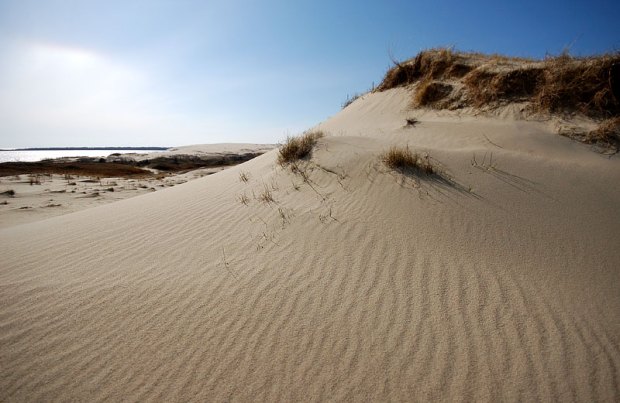
Vilnius is the capital with a population of 543,000 is well known for it’s Unesco inscribed medieval old town, the largest in Eastern Europe. Other highlights include Vilnius Cathedral, Palace of the Grand Dukes of Lithuania and the Museum of Genocide victims (dedicated to thousands of Lithuanians who were murdered, imprisoned or deported by the Soviet Union from WWII until the 1960s). Another highlight is The Curonian spit, a 98km curved sand dune spit separating the Curonian Lagoon from the Baltic Sea which was formed about 3rd millennium BC.

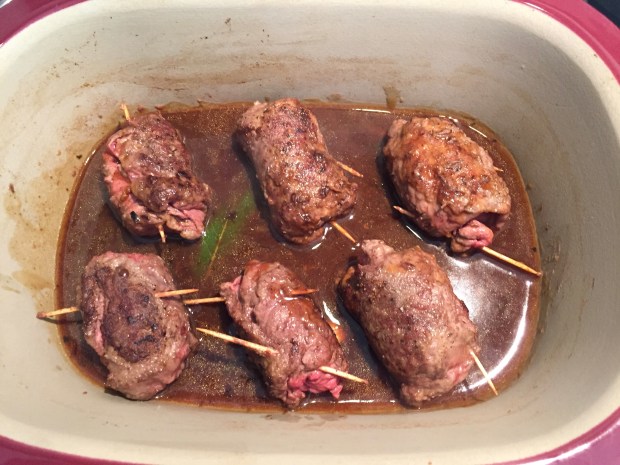
Lithuanian dishes feature pork, potato, berries, mushrooms and dairy products among other ingredients. The cuisine takes influence from its Baltic neighbours as well as Polish and Ukrainian food. I came across recipes for Kugelis (potato pudding), Cepelinai (potato-based dumplings), Blynai (crepes), Pyragas (Lithuanian style cakes) and Šaltibarščiai (cold borscht soup). I decided to make Suktiniai or Zrazai (stuffed beef rolls) which we had with mash potato. It took a little bit of effort bashing out and rolling up the beef, but the result was really tasty, especially the sauce that accompanies it.

Rating: 9/10

Serves: 2
Prep time: 40 mins
Cook time: 50 mins

1⁄2 cup dried mushroom, porcini preferred
1 tbsp butter
1 small onion, finely chopped
4 oz button mushrooms, chopped
1⁄4 cup fresh rye breadcrumbs
1⁄4 tsp salt
1⁄4 tsp freshly ground pepper
350 – 400g steak (I used 2 bavette steaks)
freshly ground pepper
salt
4 tbsp flour
1 tbsp butter
1 tbsp vegetable oil
1/2 cup chicken stock
1 bay leaf
2 tbsp sour cream

Rinse the dry mushrooms and place in a small bowl. Cover with boiling water and let stand for a few hours
Preheat oven to 175 c
Remove the dried mushrooms with a slotted spoon. Chop the mushrooms. Strain and reserve the soaking liquid
Melt the butter in a large skillet. Add the onions and both types of mushrooms and fry over medium high heat, until the liquid released by the mushrooms start to evaporate, about 10 minutes.
Remove to a bowl, add the breadcrumbs, salt and pepper, and mix well. Set aside. (You can prepare to this point, and refrigerate until you are ready to complete the dish).
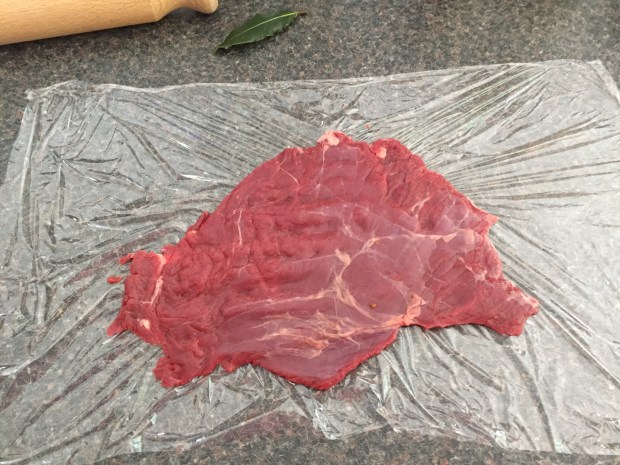
Cut the steaks into 6 pieces and place them individually in between clingfilm and bash to 1cm thick. Salt and pepper both sides.
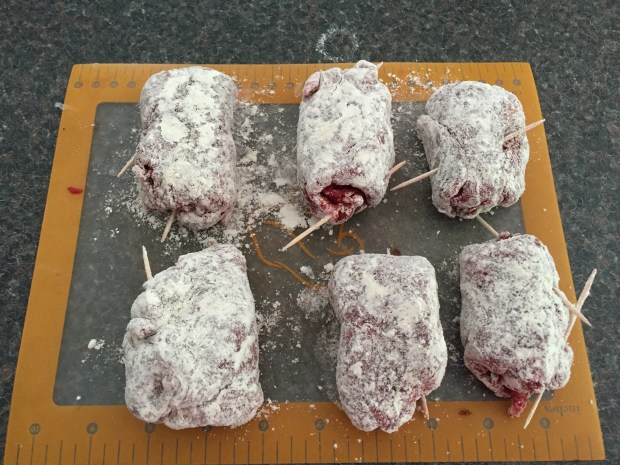
Place a spoonful of the filling at one end, and roll it up, tucking in the sides. Use toothpicks to secure the rolls
Heat the remaining butter and oil in a large skillet over medium high heat. Dredge the rolls in flour, tapping off the excess, and brown on all sides in the skillet for 5 mins
As the rolls finish browning, remove them to a Dutch oven or similar covered casserole dish, keeping them in a single layer.
Reduce the heat to medium, add 1/2 cup chicken stock to the skillet and heat, scraping and mixing in with the pan juices. Add the mushroom soaking liquid and cook for 5 mins
Pour the juices over the rolls, add the bay leaf, cover tightly and place in oven, for about 45 minutes. Test with a knife – the roll should pierce with no resistance.
Remove the rolls to a serving dish, removing the toothpicks and place in the oven to keep warm
Put the juices into a saucepan and heat for a few mins, then take off the heat and add the sour cream, mixing well
Serve with mash

IMG_0163
Ingredients for Zrazai (Beef rolls)
IMG_0164
Bashing out the Zrazai (Beef rolls)
IMG_0165
Making the filling for Zrazai (Beef rolls)
IMG_0166
Zrazai (Beef rolls)
IMG_0172
Zrazai (Beef rolls)
IMG_0183
Zrazai (Beef rolls) with mash
Nidos_kopos_2008
Curonian Spit Lithuania
Vilnius Cathedral
Vilnius Cathedral
Baltic Sea Lithuania
Baltic Sea, Lithuania

Samoa

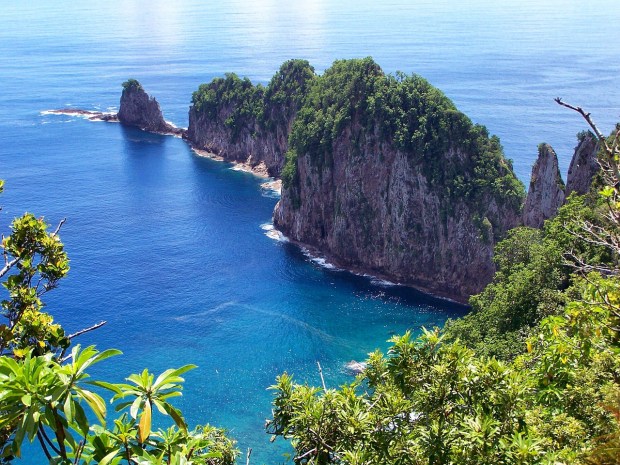
The Independent State of Samoa made up from two entities; Independent Samoa (or Western Samoa) and the US territory of American Samoa. The two main islands are Savai’i and Upolu. The Samoan Islands share a history of being one of the strongest cultural forces in the Pacific and were the first small island country in the Pacific to become independent in 1962. Ongoing scientific research suggests that Samoa’s history dates back 3,000 years. It is located south of the equator, about halfway between Hawaii and New Zealand.

At the end of December 2011, Samoa jumped forward by one day, omitting 30 December from the local calendar, when the nation moved to the west of the International Date Line. This aimed to help the nation boost its economy in doing business with Australia and New Zealand. Before this change, Samoa was 21 hours behind Sydney, they are now three hours ahead.

The famous Scottish writer Robert Louis Stevenson brought his family to live on Upolu in 1890 and built a large home in the foothills above the city of Apia, where he spent the last five years of his life. His home was destroyed in the cyclones of the early 1990s but was rebuilt and opened as a museum in 1994 on the centenary of his death.

Samoa has all the attributes of island paradise; white sand, blue lagoons and jade jungles, but without the glitz and flashiness of mega tourist resorts. With an average temperature of 26.5 degress, it is a very appealing destination for travellers seeking both serenity and adventure.

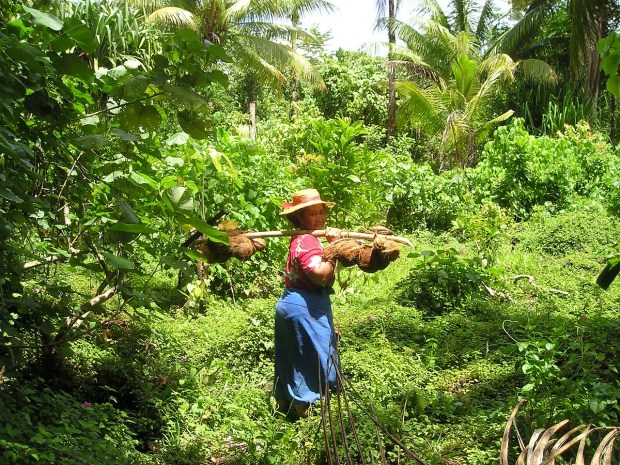
Popular food in Samoan cuisine are rice, fish, roasted chicken and pork, yams, taro, fresh fruit and coconut. Dishes I came across include umu (oven-pit-baked meat), sapasui (chop suey), puligi (pudding) and oka (raw fish in lime juice and coconut milk). I cooked Chicken Kale Moa (Samoan chicken curry) which had a subtle flavour but a little lacking in umph. I made 2 versions, one with potatoes, one without (as I’m not a big fan of potato in curry) and we preferred the one without potato. I would be inclined to use hot curry powder next time.

Rating: 6/10

Serves: 2
Prep time: 20 mins
Cook time: 40 mins

1 medium onion, chopped
2 garlic cloves, minced
1 tsp grated fresh ginger
2 tbsp oil
1 tbsp curry powder (use hot curry powder if you like heat)
350g chicken breast, cubed
1 cup water
2 cups coconut milk
2 medium potatoes, chopped into cubes
1 large carrot, chopped
1 stick celery, chopped
1 tbsp cornflour mixed with 3 tbsp water
salt and pepper

Heat the oil in a large saucepan, then fry the onion gently for 5 minutes until it is translucent
Add the garlic, ginger and curry powder and fry for about a minute stirring well.
Add the chicken, 1 cup of water and 2 cups of coconut milk. Bring to a boil then lower to a simmer and cover.
Simmer for 10 – 15 minutes.
Add the vegetables and bring to a boil again. Turn down heat and cover again. Simmer for 20 minutes or until soft.
Add the cornflour mix and turn the heat up to medium, stirring until thickened.
Season well with salt and pepper.
Serve with boiled rice.

IMG_0143
Ingredients for chicken kale moa (Samoan chicken curry)
IMG_0147
Chicken kale moa (Samoan chicken curry
IMG_0152
Chicken kale moa (Samoan chicken curry
Samoa
Samoa
Harvesting coconuts in Samoa
Samoan beach
Samoan beach

Malta

Malta is an archipelago in the central Mediterranean between Sicily and the North African coast and only the three largest islands – Malta (Malta), Gozo (Għawdex) and Comino (Kemmuna) are inhabited. Malta has a very long history dating back to 60 A.D. when St Paul the Apostle was shipwrecked on the island while on his way to Rome.

Until 1800 Malta depended on cotton, tobacco and its shipyards for exports. It is now classified as an advanced economy by the IMF. Film production is a growing contributor to the Maltese economy as the Maltese government introduced financial incentives for filmmakers in 2005.
It is also a popular tourist destination with 1.6 million tourists each year. There are three Unesco world heritage sites – Valetta, Hal Saflieni Hypogeum (underground temple) and Megalithic Temples. I visited Malta with my mum 8 years ago and my highlights would be the Mdina (the walled city in Valetta), St Julian’s Bay and the view from the Valetta waterfront. Having now read more about Malta I would love to go back to visit the historical sites, the Blue Lagoon at Comino, San Blas Bay and the harbour of Wied iż-Żurrieq. Valetta has been named as the Capital of Culture 2018 so maybe a trip is in order.

The cuisine of Malta takes influence from nearby Sicily as well as England, France and Spain. Traditional dishes include Fenkata (stewed or fried rabbit), Laħam fuq il-fwar (steamed slices of beef), Lampuka (fish) and Pastizz (savoury pastry). I made Maltese Ravjul (ravioli), which I filled with ricotta, as I couldn’t get hold of Gozitan cheeselets. It is quite time consuming making and filling fresh pasta, but I enjoyed it so it was worth the effort.

Rating: 8/10

Serves: 2 as a main course or 4 as a starter
Prep time: 1 – 1 ½ hours
Cook time: 20 mins

Dough:
200 g semolina
200 g flour
1 egg
100 – 120ml water
Salt

Filling:
25 g ricotta cheese
75g grated parmesan cheese
1 egg
1 tbsp chopped parsley
Salt and pepper

Tomato sauce:
1 tbsp olive oil
2 garlic cloves, bashed unpeeled
200ml passata
Chicken (or vegetable) stock powder or cube
Black pepper

Sieve the flour, semolina and salt into a bowl, add the egg and stir with a knife. Gradually adding enough water to make a dough
Knead the dough for about 5 mins and then wrap in clingfilm and put in the fridge for a couple of hours
To make the sauce, put the oil in a saucepan over a medium heat, add the bashed garlic and cook for a few minutes, taking care not to let it burn. Remove the garlic and add the passata, stock and pepper. Simmer for 15 mins

Place greaseproof paper on 2 baking sheets and sprinkle with flour
When ready to make the ravioli, mix the filling ingredients together
Cut the dough into 4 and using a pasta machine (if you don’t have one use a rolling pin), roll out the dough into long thin strips (up to setting 6 on the pasta machine).
Place the rolled out dough strips on to a floured surface whilst you continue to roll out the rest
Place a tsp of filling on the pastry strip with intervals of about 4 cm/1 ½ inch
Brush the edges of the strip with water and then place a rolled out dough strip on top, pressng down gently to seal and remove any air
Use a round pastry cutter to make round raviolis or a knife to cut into squares
Put the raviolis on to the baking sheet, whilst you make the rest (approx 24 raviolis)
Put a large pan of salted water on to boil and cook the raviolis in 2 separate batches for 6 minutes each, drain and drizzle a little oil over the first batch so they don’t stick to each other
Serve with a few spoonfuls of sauce over the top, chopped parsley and parmesan