Denmark

Denmark is an archipelago made up of 406 islands and 7,314 miles of coastline, which is longer than the Great Wall of China.  No place in Denmark is more than 30 miles from the sea.


The Danish monarchy is the oldest continuing monarchy in the world and has existed for over 1,000 years.  Queen Margarethe II is the current head of state.


Denmark has more than twice the amount of bicycles (4.2 million) than cars (1.8 million). Copenhageners pedal more than 1.13 million km on their bicycles each day.


Salaries in Copenhagen are the third highest in the world – only surpassed by Zurich and Geneva.  The UN World Happiness Report has rated Danes as the happiest people on earth two years in a row.


With its palaces and gardens, Copenhagen hosts more visitors than any other Nordic city.  The name Lego® is an abbreviation of two Danish words leg godt, meaning “play well.” The company was started in 1932 by Ole Kirk Christiansen. Lego began producing its iconic bricks in 1958. For more than 60 years, over 320 billion Lego bricks have been sold worldwide—nearly 60 bricks for every human on the planet.


The Danes are certified foodies. They are the fifth largest exporter of food in the world, despite their small population.  Copenhagen has more Michelin-starred restaurants than any other city in Scandinavia.  Some of their traditional dishes include Æblekage, (apple charlotte) , Hakkebøf (ground beef steak), Stegt flæsk med persillesovs (pork slices with potato and bechamel sauce) and Klipfisk (dried cod).  I decided to cook Frikadeller (pan fried meatballs) with Danish brown gravy.
I was skiing in France when I cooked this dish for 18 people!! (I quadrupled the volume of ingredients).  It was generally well received, although some felt the gravy was a little too vinegary.
Rating overall 7/10


Serves 4 hungry people
Prep time: 45 minutes
Cook time: 15-25 minutes


For the Frikadeller:
275g ground pork
275g ground veal
½ tsp salt
½ tsp pepper
1 large onion
2 tbsps flour
1 small egg


Chop the onion into fine pieces, and mix meat and onions together.
Add egg and mix again.
Add flour and remaining ingredients.
Form mix into 6-8 balls.
Melt butter in frying pan and cook for 10 min on each side over a medium heat.
(If you are doing this for a large volume of people you can brown the meatballs in the frying pan and then transfer to the oven for about 15 minutes or until the meatballs are cooked through)


For the brown gravy:
4 tbsps Danish butter
4 tbsps flour
3 cups beef stock
3 tbsps white vinegar
Salt and pepper
3 tbsps sherry
Colouring to darken the gravy (optional)


Melt butter over low heat in a pot.
Add flour and stir until smooth.
Add half of the meat stock slowly while constantly stirring.
Add the rest of the stock with vinegar and boil slowly, while constantly stirring.
Add salt and pepper.
Add sherry at the very end, just before removing from heat.
Remove from heat, allow gravy to cool for 4-5 minutes while stirring constantly.


I served the dish with buttered tagliatelle.


IMG_8337
Danish dinner for the skiers!!

Republic of the Congo

Republic of the Congo, not to be confused with the Democratic Republic of the Congo is situated in Central Africa.  Sadly neither country have ‘the Conga’ as their national dance (which originated in Cuba!).  The capital, Brazzaville, is located on the Congo River, in the south of the country, immediately across from Kinshasa, the capital of the Democratic Republic of the Congo.  This is the only place in the world where 2 capital cities are situated on the opposite banks of a river within sight of each other.
The current president, Denis Sassou Nguesso, has ruled for 26 of the past 36 years.  He first became president in 1979 after the previous incumbent was forced from power.  Sassou aligned the country with the Eastern Bloc and signed a twenty-year friendship pact with the Soviet Union.  Pascal Lissouba became Congo’s first elected president from 1992 to 1997.  In mid 1997, civil war broke out and Lissouba and Sassou fought for power.  During the 4 month conflict much of Brazzaville was destroyed or damaged and it caused tens of thousands of civilian deaths.  In October 1997 the Lissouba government fell and soon thereafter, Sassou declared himself president once again.  In 2015 a referendum to change the constitution was approved, allowing Sassou to run for a third consecutive term in office.  The opposition claimed the government’s ‘approval’ statistics were false.
Tourism is still relatively in its infancy in the Republic of Congo despite it’s diversity.  It boasts beautiful landscapes characterised by undulating virgin rainforest, waterfalls, lagoons, river rapids and swamps.  The highlights include Nouabalé-Ndoki National Park (home to elephants, apes, gorillas, chimpanzees and bongo forest antelopes), Basilique St. Anne in Brazzaville, Conkouati-Douli National Park and The Gorges of Diosso, spectacular cliffs formed by the erosion of the sea.
Congolese cuisine incorporates French, Asian and Arabic influences into more starchy, traditional African fare.  Some of the specialities include Mwamba (stew of chicken, beef or lamb), Chickpea salad and Muamba Nsusu (chicken soup).  I opted to cook Mbisi Ye Kalou (fish stew) which I served with little roasted potatoes (not very Congolese I know, but my lovely Irish husband wouldn’t be too keen on fufu or cassava).
Rating: 6/10.  Even though it had chilli, it was quite bland in flavour.
Serves 4
Prep time: 10 minutes
Cook time: 40 minutes
4 firm white fish fillets
1 large onion, sliced
1 green pepper, seeded and sliced
4-6 tablespoons butter or oil
1 red chilli or 1 tsp crushed chilli flakes
250g baby spinach
1 cup water
In a medium saucepan, fry the onion and green pepper in 2 tbsps of the oil or butter.
Add chilies, spinach and water. Cover it and simmer for about 10 minutes.
Add 2-4 tbsps of oil or butter and the fish.
Continue to simmer, covered for about 20 minutes or until fish flakes easily.

United Arab Emirates

The United Arab Emirates (UAE) is a federation of seven emirates established in 1971 – Abu Dhabi (the capital), Ajman, Dubai, Fujairah, Ras al-Khaimah, Sharjah, and Umm al-Quwai.
Once a quiet Bedouin backwater, now an astonishing blend of Arabian tradition and economic innovation.  The UAE’s oil reserves are the seventh-largest in the world and as such is one of the wealthiest countries in the Middle East.
In 2013, the UAE’s total population was 9.2 million, of which 1.4 million are Emirati citizens and 7.8 million are expatriates.   Dubai is the most populated Emirate with about 36% of the UAE population.
The climate of the U.A.E is subtropical-arid with hot summers and warm winters. The hottest months are July and August, when average maximum temperatures reach above 45 °C on the coastal plain.  In 2004, there was snow in the UAE for the very first time.
According to Lonely Planet there are 186 sights in the UAE.  The top picks include Sheikh Zayed Grand Mosque in Abu Dhabi, Dubai museum, Al Jahili Fort in Al Ain, Deira Souqs and Emirates Palace.  The Burj Khalifa, in Dubai, was completed in January 2010 and became the world’s tallest building at 2,716 feet (828 meters) and 160 stories. It contains the world’s fastest elevators and 20.7 acres of glass.
The Telegraph states that the most expensive hotel room in Dubai is the Royal Suite in Burj Al Arab Jumeirah, priced at up to £12,000 per night.  This is a snip in comparison to the Royal Penthouse Suite at the President Wilson Hotel in Geneva which would set you back £53,000 per night!!
When it comes to the food, they have adopted most of their foods from other West and South Asian countries including Iran, Saudi Arabia, Pakistan, India and Oman.  Seafood is popular along with meat and rice.  Alcohol is only allowed to be served in hotel restaurants, bars and nightclubs.  Although one may consume alcohol, it is illegal to be intoxicated in public.  Recipes I came across include Machboos (spicy stew with rice) , Harees (dumplings) , Shawarma (kebab) , Khanfaroush (cookies) , Chicken Salona (stew) and Chabab (bread).  I opted to make Khameer bread, which is traditionally served at breakfast with cottage cheese or fruit, however I served it as a starter with dips.  It was a little sweet, but enjoyable none the less.
Rating: 7/10
1 cup plain flour
1 cup wholemeal flour
1/2 tbsp instant yeast
1/4 cup milk powder
1/4 cup sugar
1/2 tsp saffron
1/2 tsp cardamom powder
3/4 cup warm water
2 tbsp toasted sesame seeds
Add both flours, yeast, milk powder, saffron, cardamon powder and sugar in a large bowl and whisk well to combine.
Slowly add water and knead to make a soft dough. When the flour holds together as a dough (you may not need to use all the water), place it on a flat surface and knead for 5 minutes to get a smooth dough.
Let the dough rest for 1 hour in a warm place.
Divide the dough into 6-7 portions. Roll each portion into a disc of 4-5 inches.
Heat a non stick fying pan or griddle and when it is medium hot, place one of the rolled out discs into the pan.
It will start to puff up, flip after a minute and cook the other side, spread a tsp of oil on top, sprinkle toasted sesame seeds and flip and cook for a few seconds.
Remove it on serving plate and repeat with the other discs.
Serve warm.

Serbia

Serbia is a land locked country situated in the central part of the Balkan Peninsula.  Bordered by 8 countries; Hungary, Romania, Bulgaria, Macedonia, Albania, Montenegro, Croatia and Bosnia and Herzegovina.
Nearly half of Serbia is mountainous, with the Dinaric Alps on the western border, the North Albanian Alps (Prokletija) and the Sar Mountains in the south, and the Balkan Mountains along the southeast border.
Serbia had previously been a dominant state within Yugoslavia.  Serbia’s brutal war in the southern province of Kosovo, started in 1998, causing Montenegro to distance itself from Slobodan Milosevic and his Yugoslav government. On February 4, 2003, the name “Yugoslavia” passed into history, replaced by the union of “Serbia and Montenegro.”  Serbia became a stand-alone sovereign republic in the summer of 2006 after Montenegro voted in a referendum for independence from the Union of Serbia and Montenegro.  The two republics had been united in one form or another for nearly 90 years.
Some interesting facts:
Serbia is the largest exporter of raspberries in the world, contributing 30% to the international market.
‘Vampire’ is a Serbian word and is known the world over.
Serbia is ahead of the Swiss in clock making. They started this almost 600 years before the Swiss took over the industry.
Nikola Tesla was Serbian and there has been a museum in his name in Belgrade since 1952.
I came across many different meat dishes when researching Serbia namely; Ćufte u paradajz sosu (meatballs in tomato Sauce) , Đuveč (stewed vegetables and pork or chicken similar to pilaf) , Paprikaš (pork or chicken and pepper stew), Ćevapi u lepinji sa kajmakom (kebabs in flatbread with kaymak) and Podvarak (roast meat with Sauerkraut).  I decided to cook Pljeskavica (a ground beef/pork patty).
Rating: 6/10 – I felt there was too much paprika which overpowered the flavour for me.  I would halve the quantity if I made them again.
Serves 6
Prep time: 10 minutes + 8 hours fridge time
Cook time: 10 – 15 minutes
450g ground beef chuck
225g ground pork
225g ground lamb
2 cloves garlic, finely chopped
1/2 cup finely chopped onions
1 1/2 tsp salt
1 tbsp sweet or hot paprika (I would use half this amount)
Mix together all ingredients until thoroughly combined and refrigerate for several hours for flavours to meld and mixture to firm.
Heat griddle pan.
Using slightly dampened hands, divide meat mixture into 6 portions.
Form into thin patties, 20 cm x 1cm, or about the size of a small dinner plate.
Pan fry pljeskavica about 5 minutes per side.

Serve in a pitta bread with salad.

IMG_8087
Pljeskavica mix
IMG_8105
Pljeskavica
IMG_8107
Griddling the Pljeskavica
IMG_8119
Pljeskavica


river-882718_1280
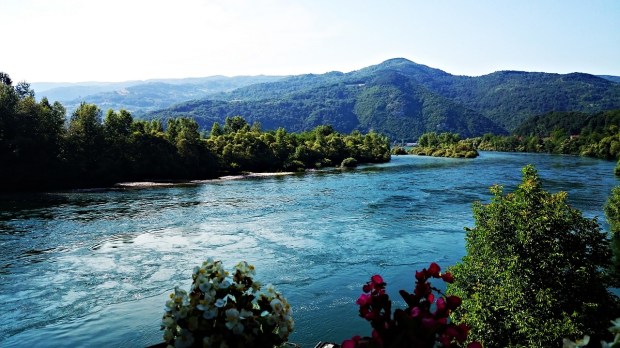
Serbian river
belgrade-466173_1280
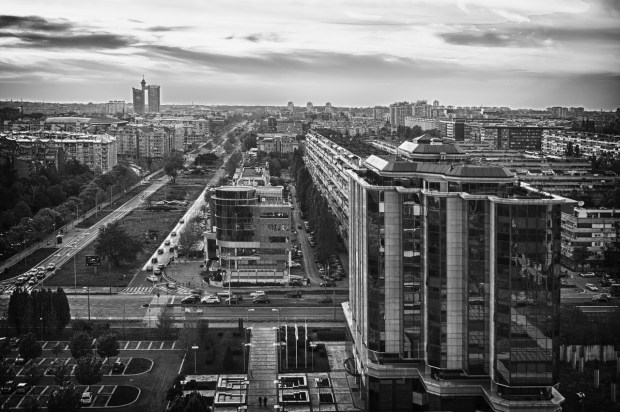
Belgrade, Serbia

Uzbekistan

Dominated by the Qizilqum desert, Uzbekistan is Central Asia’s most populous country.  About 80 percent of the country is flat desert, with mountain ranges rising in the far southeast and northeast.  The world’s largest open-pit gold mine is at Muruntau in the Qizilqum desert.
The oldest cities of Uzbekistan are more than 2,750 years old, and the most famous of them – Samarkand, is one of the oldest cities in the world.
Uzbekistan, along with Liechtenstein, is one of the only two doubly landlocked countries in the world.
Tashkent, the capital, has a metro station featuring chandeliers, marble pillars and ceilings, granite, and engraved metal. It has been called one of the most beautiful train stations in the world.  Along with Tashkent, some of the key highlights of Uzbekistan include The Ark at Bukhara (a royal town within a town dating back to the 5th century), the turquoise-tiled Kalta Minor Minaret, the desert citadels of Khorezm and Samarkand’s Registan Square, one of the world’s great architectural feats.
Under Soviet rule there was intensive production of cotton and grain leading to overuse of agrochemicals and depleted water supplies.  The land has been left degraded and the Aral Sea and certain rivers half dry.  Since it’s independence in 1991 the country is seeking to gradually lessen it’s dependency on cotton, while developing mineral and petroleum reserves.
Bread and noodles are of significant importance in the cuisine of Uzbekistan, thanks to much grain farming.  Mutton is the most popular meat choice due to a large sheep population.  Recipes I came across include Plov (pilaf of rice, meat, carrots & onions), shorpa (soup of mutton & vegetables), dimlama (stew) and manty (dumplings).  I opted to cook Samsas (savoury filled pastry, similar to samosas).
Rating: 7/10 – even though I thought I’d filled them well, I might be tempted to make less and fill them more!
Makes 8 small samsas
Prep time: 30 minutes
Cook time: 30 minutes
225g ground meat (I used ground lamb, but you can use a mixture of beef & lamb)
1 medium sized onion, chopped
2 cloves of garlic, chopped
1 tbsp ground cumin
1/2 tsp cumin seeds
1 tsp coriander
1/2 tsp salt
1 sheet of ready rolled puff pastry dough
1 egg yolk
1 tablespoon olive oil
In a medium frying pan, cook the onion and garlic with 1 tablespoon of olive oil on a low heat until the onion is soft.
Add the ground meat to the frying pan, and cook the meat until browned about 5 minutes and take it off the heat.
Add the coriander, salt, ground cumin, and rub the cumin seeds between your fingers.
Let the meat & spices cool for 30 minutes (or more) before forming the samsas.
Preheat the oven to 200 degrees.
Line a baking sheet with parchment paper.
Roll the puff pastry so it is slightly thinner and cut into 8 equally sized pieces.
Mix the egg yolk with a few drops of water in a bowl.
Divide the meat into 8 portions.
Put one portion of the meat onto half of each piece of pastry. Brush the edges with the beaten egg mix.
Fold the dough in half and push the ends of the dough together to close the pastry.
Coat the tops of the pastry with beaten egg mix.
Cook for about 25-30 minutes until the dough is brown.
Let them cool a little and serve warm.

Cape Verde

Situated off the west coast of Africa, Cape Verde is made up of 10 volcanic islands and 5 islets.  It was discovered by the Portuguese mariners in 1456.  Half of the population live on the largest island, Santiago.  The combined area of all the islands is 1,557 square miles.  It forms part of the Macronesia group of islands, which also includes the Canaries and the Azores.  Cape Verde’s best beaches are found on the islands of Boa Vista and Sal.  Although Sao Pedro on São Vicente is also worth a visit.

Cape Verde is home to the Mediterranean monk seal, the northern bald ibis, the green sea turtle, and the hawksbill turtle, all of which sadly, are endangered.

Mussolini the Italian dictator bought the rights to build an airport on Sal, Cape Verde as he needed to refuel his aircraft on the flights between Europe and South America. Portugal bought the airport back off him in 1945.

Corn is the staple food of Cape Verde. The national dish, cachupa, is a stew of hominy, beans, and whatever meat or vegetables may be available.  Other recipes I came across were Buzio (fish stew), Bol de cus-cus (corn & sugar cake) , Cado de Peixe ou Caiderado (vegetables cooked with fish) and Canjo (soup). I decided to cook Gufong (fried pastry) and served them with a chocolate sauce.

Rating: 6/10

2 cups water
1 cup sugar
1 cup semolina flour
1 cup plain flour
Pinch of salt
Pinch of baking powder
Vegetable oil for frying

In a saucepan combine the water and sugar and bring to a boil.
Once it is boiling add in the semolina flour until it is well mixed then add the plain flour.
Add a dash of salt and baking powder and continue mixing until everything is well combined.
Let the mixture cool.
Once the mixture is cool, take a small piece of the dough and roll them into small finger sized logs on a floured surface.
Heat up your oil in a frying pan or you can use a deep fryer
Cook until golden brown.
Drain on a paper towel
Serve warm with coffee or tea and if you would like drizzle some chocolate syrup and powdered sugar to taste.

Ireland

As I had my mother in law staying with us from Ireland and the kids were also here, it felt only right to cook Ireland on St Patrick’s Day!
So, The Emerald Isle, my husband’s homeland .. the pressure’s on!!
I’ve been to Ireland several times and have had the pleasure of visiting Cork, Dublin and Galway.  All very different and yet delightful in their own unique way.  Beautiful beaches and sea views in Cork, great food, shopping and bars in Dublin and stunning scenery in Galway.
The land of potatoes, guinness, shamrocks and leprechauns has a very long and interesting history.  The first people arrived in Ireland in around 7000 BC and lived by farming and fishing.
In 432 a man named Patrick arrived in Ireland from Western England.  He had been captured by Irish pirates, brought to Ireland as a slave and was forced to work as a herdsman.  He managed to escape back to England but had a vision in which he read a letter asking him to come to Ireland, so he returned to become a missionary and the first bishop of Ireland.  He is said to have died on 17th March 461.
The Great Famine was a period of mass starvation, disease, and emigration in Ireland between 1845 and 1852.  The famine was caused by potato blight.  One third of the population was dependent on the potato for a range of ethnic, religious, political, social and economic reasons and therefore impacted Ireland significantly.  During the famine, approximately 1 million people died and a million more emigrated from Ireland causing the island’s population to fall by between 20% and 25%.
A few quick facts:
Ireland’s top tourist attraction is the Guinness storehouse in Dublin, where over 1 million people visit every year.
In 2010, Dublin was designated UNESCO City of Literature, one of only four in the world (the others are Edinburgh, Iowa and Melbourne).
James Hoban, designer of The White House was Irish.
Rotunda Hospital in Dublin is the longest continually operating maternity hospital in the world.
The Titanic made it’s last port of call in Cobh (then called Queenstown) on 11th Feb, 1912.
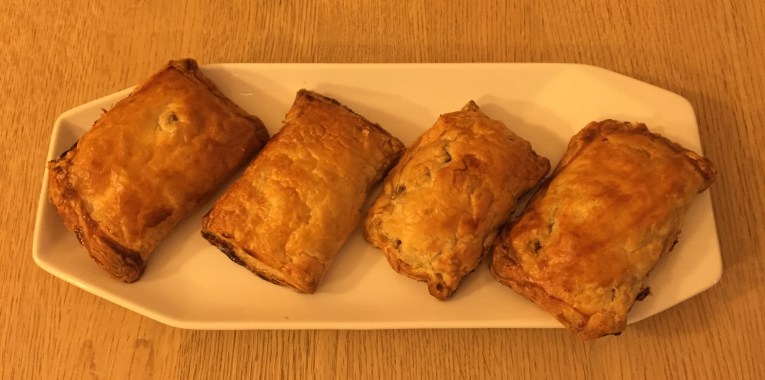
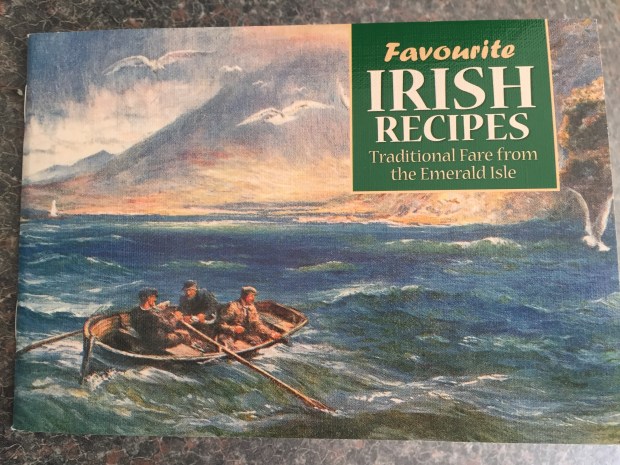
When it comes to Irish food, there was a lot to choose from.  A few years ago, my mother in law had given me an Irish recipe book which came in very handy!  Some obvious options I considered were Irish stew, Colcannon and a full Irish breakfast!  However, I opted for Scallop pie and Soda bread.  Thankfully both went down extremely well.
Rating: 9/10
Recipe for Scallop pie:
Prep time: 1 hour

Cook time: 45 minutes

IMG_7961


Recipe for Soda bread:
Prep time: 10 minutes
Cook time: 40 minutes (longer than the recipe states)
IMG_8022


IMG_7962
Irish cookbook
dublin-1049403_1280
The Ha’penny Bridge, Dublin
cliff-of-mohar-324746_1280
Cliffs Of Moher, County Clare
cobh-cove-285147_1280
Cork
ireland-531137_1280
Guinness
IMG_8021
Family fun on St Patrick’s Day 2016

Eritrea

Eritrea is bordered by Sudan to the north and west, the Red Sea to the north and east with Ethiopia and Djibouti to the south.  Eritrea literally means “red”, and gets its name from the Red Sea.  Much of the country is mountainous. It’s narrow Red Sea coastal plain is one of the hottest and driest places in Africa. The cooler central highlands have fertile valleys that support agriculture.The Dahlak Islands, within the Red sea contain untouched sea reefs.


Eritrea only has one political party: People’s Front for Democracy and Justice. Isaias Afewerki is the first and the current President of Eritrea. He assumed office on May 24, 1993 after declaration of independence from Ethiopia.  After independence, Eritrea entered into a war over Red Sea islands with Yemen and then a more devastating border war with Ethiopia in 1998, causing an estimated 100,000 casualties. A peace agreement in 2000 established a UN-patrolled buffer zone along the Eritrean-Ethiopian border.


Eritrea were subject to a social media hoax earlier this year regarding supposed new marriage laws – “Due to the recent troubles in our country, we are experiencing a serious shortage of men, and an abundance of woman. Men are now legally required to take at least two wives, and any that fail to do so will face strict punishment.”  When the hoax went viral the Government took to twitter to dispel the rumour – “the media frenzy to parrot this ludicrous, fabricated and trite story… on mandatory polygamy is appalling”.


Some Eritrean recipes I came across were: Zigini (spicy beef stew) with injera (flatbread),   Gored gored (raw beef dish), Fata (spicy tomato bread salad with yoghurt).  I opted to cook Tsebhi Dorho (spicy chicken) which involved making Berbere (a spice blend) and Tegelese Tesmi (herbed butter).
Rating: 8/10
Serves 4-5 with rice & bread on the side
Prep time: 1 hour + 30 mins marinating time

Cook time: 30 mins for the Tegelese Tesmi & 1 hr 15 mins for the Tesbhi Dorho


For the Tesbhi Dorho:
3 medium onions, finely chopped
3 tbsp Berbere spice – see below
3 tbsp Tegelese Tesmi (herbed butter) – see below
1 tsp fresh ginger, chopped
1 tsp garlic, chopped
2 tbsp lemon juice
2 tbsp tomato paste
2 tsp salt
1 tin chopped tomatoes
500g chicken breast or thigh meat, cut into serving pieces
Salt & black pepper to taste
Hard boiled eggs, sliced (optional)
For the Berbere spice mix:
1 tsp (level) crushed chillies
1 tbsp paprika
1/2 tbsp salt
1/2 tsp ground ginger
1/2 tsp ground onion powder
1/4 tsp fenugreek
1/4 tsp ground cardamom
1/4 tsp ground coriander
Pinch ground nutmeg
Pinch garlic powder (not salt)
2 small cloves ground in pestle
Pinch ground cinnamon
Pinch ground allspice

For the Tegelese Tesmi:
100g unsalted butter
50ml water
1 small onion very finely chopped
1 cloves of garlic, crushed
1 tsp fresh ginger, finely grated

For the Tegelese Tesmi:
Put the butter and the water in a frying-pan and heat them until the butter has melted.
Add the other ingredients and simmer the mixture on a low fire for 30 minutes, until the mixture stops skimming and the butter is clear.
Do NOT stir the mixture.
Sieve the butter and allow to cool down in a well closed jam jar.

For the Berbere spice blend:
Mix all the spices together and put in a closed jar until you need to use them.

For the Tesbhi Dorho:
Sprinkle chicken with lemon juice and salt and allow to marinate for about thirty minutes.
In a skillet, sauté onions in a small amount of water.
Add Berbere spice and cook for about 2 minutes.
Add Tegelese Tesmi and cook an additional 5 minutes.
Add tomatoes, tomato paste, garlic, ginger and simmer for 20 minutes.
Add chicken and 1/2 cup water and simmer for about 45 minutes, or until the chicken is tender and fully cooked.
If you are using eggs, add them and cook for a couple of minutes.
Serve with cooked basmati rice and plain nan.


Guyana

Guyana situated on the northern mainland of South America is the only English speaking country in the continent.  It gained independence in 1966 and officially became a republic within the British Commonwealth of Nations in 1970.
It is a member of the Caribbean community (CARICOM), which has it’s headquarters in Guyana’s capital, Georgetown.
Guyana means “land of many waters”.  80% of the country is made up of rainforest.  Kaieteur Falls is the world’s widest single drop waterfall, located on the Potaro River in the Kaieteur National Park and is about four times higher than the Niagara Falls.

90% of the population lives in a narrow coastal strip, which makes up approximately 10% of the nation’s total land area.

In 1973,  Jim Jones, founder of ’The People’s Temple’, leased some land in the Guyanese jungle and set up the Jonestown compound.  Hundreds of People’s Temple members flew to Guyana and moved in to the compound.  It was meant to be utopia, but it was overcrowded and cabins were segregated by gender, meaning married couples were forced to live apart.  It was run like a prison encircled with armed guards.  On Nov 18th 1978,  Jim Jones congregated the group and urged them to commit ‘revolutionary’ suicide.  Cyanide and valium were mixed with a flavoured powder to make the lethal drink.  The Jonestown massacre resulted in the deaths of 912 people, 276 were children.  Jones himself died from a single gunshot wound to the head – it is unclear if he did this himself.
The cuisine of Guyana is diverse, taking influence from Africa, Creole, Indian, Portugese and Chinese among others.  Popular dishes are curry, cookup rice (rice & peas), Pepperpot (Guyanese spicy stew) and black cake.  I decided to make Roti (flatbreads).
Rating: 10/10

As Mum & Dad were joining us for dinner, I served the Rotis alongside the South African sosaties, Lebanese tabbouleh and salad & raita.  Overall the meal was rated 9/10.

Makes 6 rotis
Prep time: 10 minutes + 45 minutes standing time for dough
Cook time: 40 minutes

175g self raising flour
350g plain flour
315ml water
1/4 tsp salt
3/4 cup oil
1/4 cup melted butter

Mix flours, salt and water to form a soft dough. Knead until smooth and let sit for 15 mins.
Roll dough into a rectangular shape about 1/8 inch in thickness.
Place oil and butter together in a bowl. Spread oil and butter mixture liberally over the dough, making sure entire surface of dough is oiled.
Starting from the longer side, roll up the dough tightly.
Slice into six pieces. Scrunch the oily ends of the dough together (like making a pork ball) and then tuck them in so you end up with a round ball.
Place on a tray with the joined side down.
Let them sit for at least half hour.
Place a crepe or omlette pan over a medium heat.
While the pan heats up roll out the dough to a flat, thin circle, one at a time.
Place the dough into the ungreased pan and cook for 1 minute, then flip.
Liberally brush the oil mixture on the roti and after 30 seconds, flip again.
Now brush the other side of the roti with the oil mixture and flip again.
Cook for an additonal minute, then take off the heat and place in a covered bowl.

Shake in covered bowl vigoruously.
This will make the roti fluffy and should reveal the layers.
Continue this process until all the roti is cooked.

South Africa

The Republic of South Africa is Africa’s largest and most developed economy.  It’s main exports are gold, diamonds, metals, minerals, cars & machinery.  It is an extremely diverse nation, home to hippos, penguins, zebras, dolphins and of course ‘the big five’ (African lion, African elephant, Cape buffalo, African leopard, and White/Black rhinoceros).  It hosts four of the seven fastest mammals in the world, namely the wildebeest, the African lion, the springbok and the cheetah.
A turbulent political history, dominated by apartheid from 1948 to 1994.  Racial segregation had been in place for centuries but a new policy, started in 1948 made it stricter and more systematic.  The people of South Africa were divided by their race and were forced by law to live apart from each other.  In 1990 President Frederik Willem de Klerk began negotiations to end apartheid.  The multi-racial democratic elections in 1994 were won by the African National Congress, led by Nelson Mandela and he became the first President of South Africa and also the first black president.   Nelson Mandela won the Nobel Peace Prize for his leadership of anti-apartheid activism in 1993.  The apartheid system was banned in 1994.
There are many inviting tourist highlights for visitors to South Africa; The Cape of Good Hope, Table Mountain, Kruger National Park, The Garden Route, Cape Town, Johannesburg to name a few!
South Africa’s Garden Route is the longest stretching wine route in the world.  Route 62 is 850 km long from Cape Town to Port Elizabeth.  There are over 560 wineries in the Cape area.
It also has the highest commercial bungee jumping bridge in the world at Bloukrans, which is 216 metres long.  It’ll set you back £39.50 for the privilege.
When it comes to the food, again it is very diverse with influences from the Dutch, French, Indians and Malaysians.  Some of the recipes I came across were
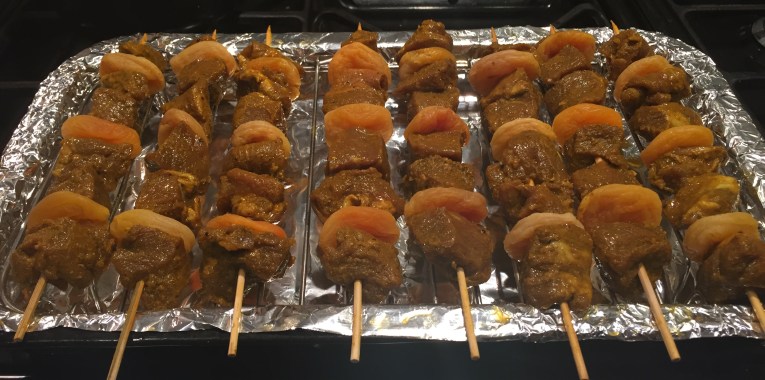
Bobotie (meatloaf with egg based topping), Chicken Curry Potjie, Buttermilk pudding and Koeksisters (sweet twisted pastries).  I decided to cook Sosaties (grilled lamb kebabs).
Rating: 8/10.
Prep time: 40 minutes + 24 hours marinating time
Cook time: 15 – 20 minutes
Sosaties:
500g trimmed lamb leg cut into chunks
200g dried apricots
8 metal or wooden skewers
Sosatie Marinade:
1 tbsp apricot jam
2 tbsp soft brown sugar
1 tbsp crushed garlic
6 cloves
3 bay leaves
2 tbsp curry powder
2 tbsp malt vinegar
2 tsp salt
1 tsp ground black pepper
1 tsp fresh ginger
2 tsp turmeric
2 tsp ground cumin
2 tsp ground coriander
1/4 cup water
Place all the marinade ingredients in a bowl and mix well together.
Add the lamb to the marinade and mix well.
Cover and leave in the fridge for 24 hours (or more). Stir the lamb 3 or 4 times during the marinating process.
If using wooden skewers, soak in water for a couple of hours before using.
Soak the apricots in warm water until they plump up.
Remove the lamb from the bowl and thread it on to the skewers alternating pieces of lamb and apricots.
Reserve the marinade.
Preheat the grill or BBQ and cook the sosaties for 10 – 15 minutes, turning regularly so they don’t burn.
Meanwhile pour the marinade into a saucepan and heat until almost boiling.
When serving pour the hot marinade over the sosaties and serve.
IMG_7738
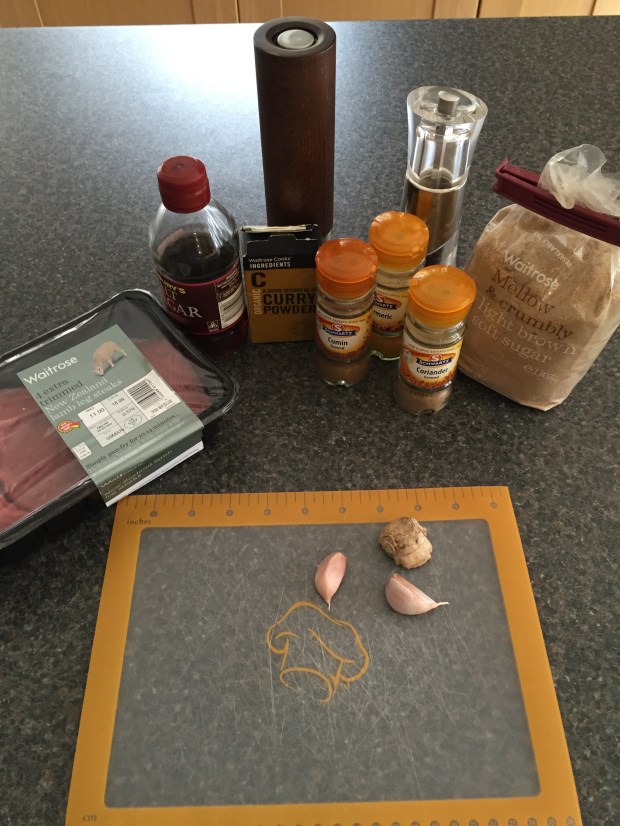
Sosatie ingredients
IMG_7740
Lamb marinating in sosatie marinade
IMG_7823
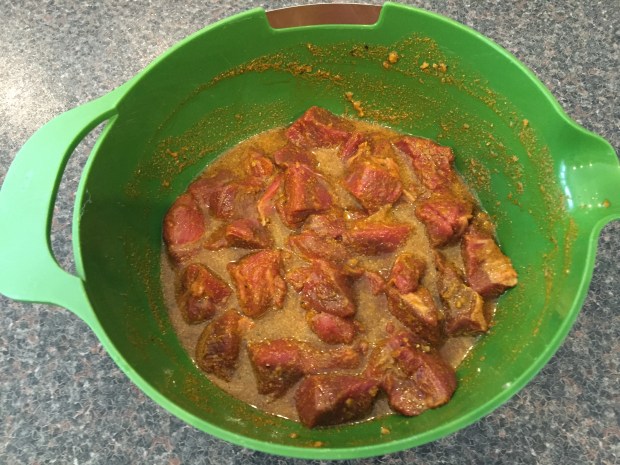
Marinated lamb in sosatie marinade
IMG_7830
Lamb Sosaties
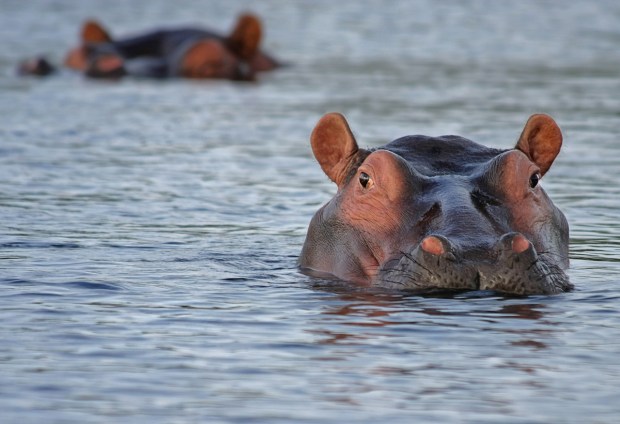
hippo-515027_1280
Hippo
cape-of-good-hope-1219192_1280
The Cape of Good Hope
cape-town-997521_1280
Cape Town
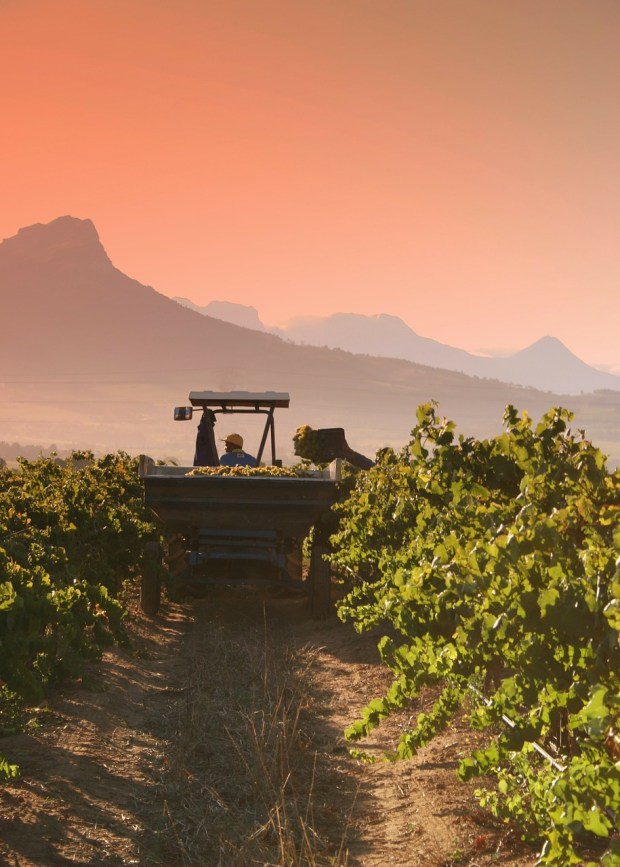
chardonnay-227786_1280
Stellenbosch

Uruguay

Uruguay is situated on the east coast of South America, sharing borders with Brazil and Argentina.
Often called the Switzerland of South America for it’s stable democracy and social benefits such as free education.
Uruguay is ranked first in Latin America for democracy, peace, lack of corruption and quality of living.  It boasts one of the highest literacy rates in the world with 98.1% for adults.  The Economist named Uruguay “country of the year” in 2013.  It is regarded as one of the most liberal nations in the world and most socially developed.  In December 2013, Uruguay became the world’s first country to legalise the marijuana trade.
Uruguay is the only country that keeps track of 100 per cent of its cattle, of which, apparently there are 3 to every person!
The Uruguay national football team has won the FIFA World Cup on two occasions – at the inaugural tournament in 1930 and again in 1950.  It has also won gold for football at the 1924 and 1928 Olympics, which are the only gold medals they have ever won so far.
“Liberta o Murte” is Uruguay’s motto – “freedom or death”.
Thanks to it’s relatively temperate climate and stretches of beaches, it attracts many tourists each year.  Highlights include Montevideo, it’s culturally rich capital city, idyllic fishing villages such as Cabo Polonio, gaucho cowboys and tasty Parillas (steakhouses).
Beef is a major part of Uruguayan cuisine with Asado being very popular (a BBQ of different types of beef).  Also empanada (a meat filled turnover), Ñoquis (gnocchi which is traditionally eaten on the 29th of each month as years ago they only had flour & potatoes left at the end of the month!)

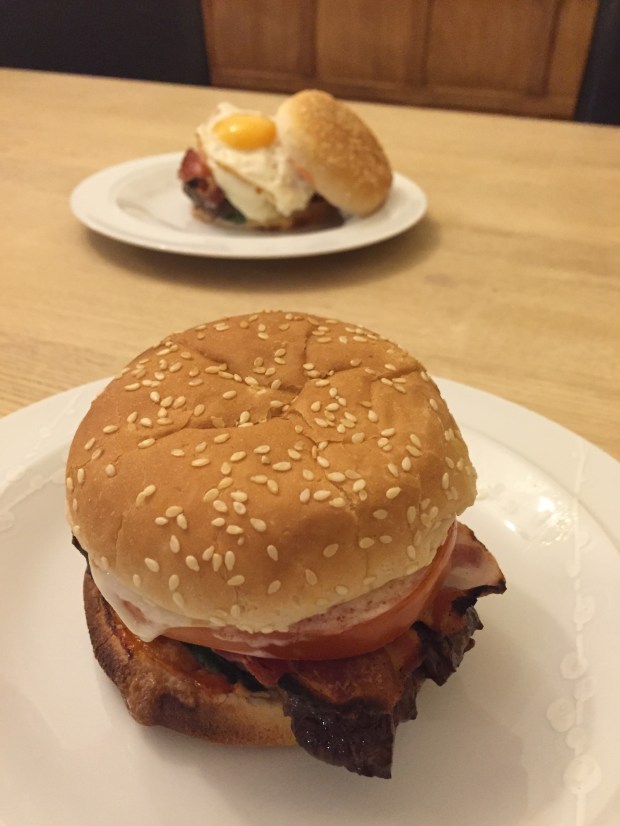
I opted to cook ‘Chivito’, Uruguay’s national sandwich!

Rating: 9/10.  It would’ve been a 10/10 if I had chosen a better bun like ciabatta.  It is important that you buy quality ingredients for this recipe.  Don’t scrimp on the steak, bacon or mozzarella!
Prep time: 20 mins
Cook time: 10 mins
2 burger buns or ciabatta (or your preferred type of bread roll)
2 beef fillet steaks
2 pieces of bacon
2 slices of deli ham
2 tomato slices
2 slices of mozzarella cheese
2 eggs
1-2 tablespoons butter
Lettuce
Mayonnaise
Ketchup
Salt and pepper to taste

Place a large skillet over medium heat and cook the bacon slices until crispy. Set aside on paper towels to cool.
Drain the excess bacon fat out of the skillet.
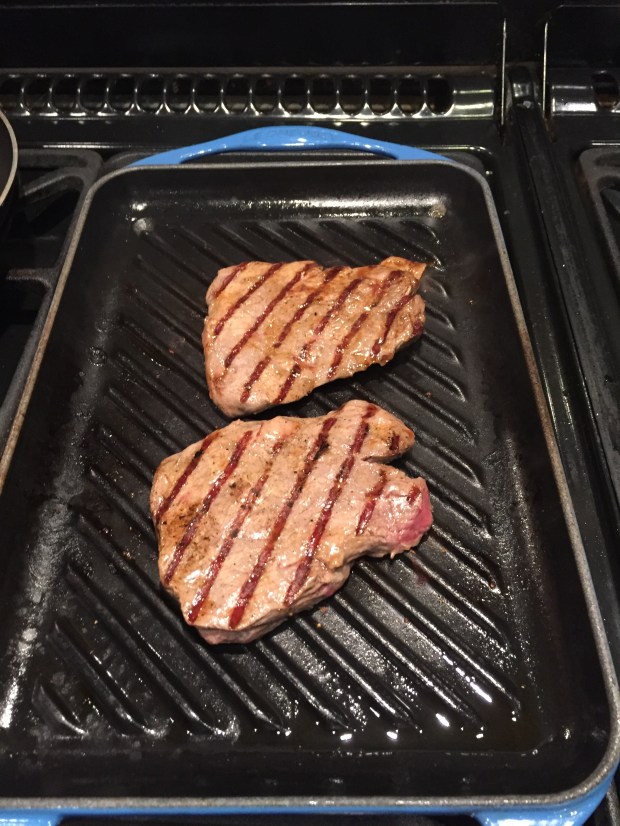
Sprinkle each steak with coarse salt, and use a mallet to pound the steaks. Heat the skillet over medium high heat until hot, and place steaks on the skillet.
Cook for about 1 and a half minutes per side, or until desired doneness.
Set aside on paper towels to rest.
Wipe the skillet clean. Melt the butter over medium heat, and fry eggs sunnyside up until desired doneness.
Preheat the grill.
Assemble sandwiches: Spread the inside of buns with ketchup and mayonnaise.
Place lettuce slices over bottom half of buns.
Top with a slice of beef, 2 bacon slices, a slice of ham, a slice of tomato, and a slice of mozzarella.
Place sandwiches (uncovered) under the grill briefly (keeping a close eye on them) to melt the cheese.
Remove from the grill and add the fried egg over the cheese, then top with the other half of the bun.
Serve immediately.

IMG_7753
Ingredients
IMG_7756
Cooking the steak
IMG_7759
Seared steak
IMG_7765
Chivito
IMG_7766
Chivito
IMG_7776
Chivito
fair-1122376_1280
Asador cooking Asado
canelones-91226_1280
Uruguayan beach

Lebanon

Lebanon, officially the Lebanese Republic is a sovereign state in Asia.  It is bordered by Syria to the north and east and Israel to the south

The earliest evidence of civilisation in Lebanon dates back more than seven thousand years in Byblos, where it is said the first alphabet was created.  The country’s name is known to be the oldest in the world and has remained unchanged for over 4000 years.  There are 4.5 million Lebanese in Lebanon and around 18 million living outside Lebanon.

Lebanon’s recent history is one of conflict and suffering. In 1975 civil war broke out, lasting 16 years, eventually ended by a Syrian backed initiative. During the civil war, in 1982 Israel invaded following PLO attacks. Hezbollah (The Party of God), a pro-Syrian Shia military/political movement, with financial backing from Iran, was formed in the 80s to primarily harass the Israeli occupation. It has significantly grown in strength over the years.  Tensions still continue and Lebanon’s borders with Syria and Israel remain unresolved.

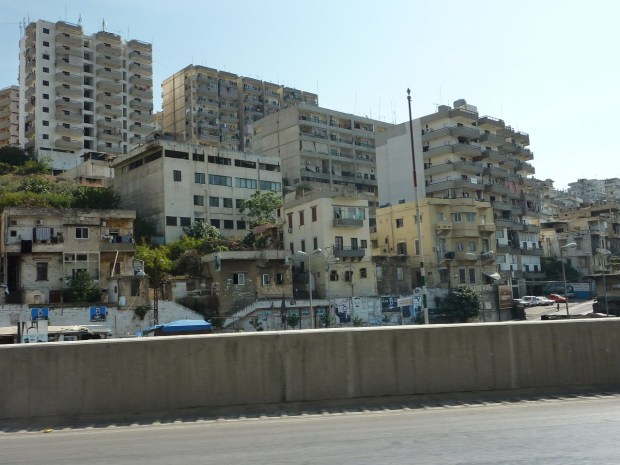
Despite the decades of civil war, invasions and terrorist attacks, it is a country that is home to stunning ancient ruins, beautiful mountain vistas and Mediterranean coastline beaches.  Top things to see according to Trip Advisor include the Temples of Baalbek, National Museum of Beirut and the Crusader Castle in Byblos.

The food of Lebanon is considered some of the Mediterranean’s best food – mezze (small dishes), kibbeh (spiced minced lamb in a fried bulgar wheat shell), dhourba bi kousa (courgette & milk soup), daoud Pasha (meatballs with pine nuts).  I decided to make one of their most famous dishes – tabbouleh (bulgar wheat salad).

Rating: 8/10
Prep time: 15 minutes + 40 min for bulgar to soak
Serves: 2-3

1/2 cup bulgar wheat
1 cup boiling water
220g tomatoes roughly chopped
1/2 medium onion finely sliced
1 tbsp chopped fresh parsley
1 tbsp chopped fresh mint
3 tbsps olive oil
Juice of 1 large lemon
Salt & pepper
1/2 cup black or green olives (optional)

Put the bulgar wheat in a bowl with the boiling water and a little salt. Leave to soak for 40 minutes, then drain.
Take a salad bowl and add the bulgar wheat, tomatoes, onion, parsley & mint. Mix well.
In a separate bowl or jug, beat the oil with the lemon juice and season with salt & pepper.
Pour it over the salad & mix thoroughly.
Put the olives on top and then chill the salad in the fridge for 2 hours.
Add a sprinkling of parsley to garnish and serve.

img_7742
Ingredients for tabbouleh
img_7751
Tabbouleh
baalbeck-710599_1280
Temples of Baalbek
beirut-452164_1280
Beirut

Lesotho

Lesotho (pronounced le-soo-too) is a mountainous country surrounded by South Africa.  Originally called Basutoland, it was renamed the Kingdom of Lesotho upon independence from the UK in 1966.  “Lesotho” roughly translates to “the land of the people who speak Sesotho”.

80% of the country is greater than 1,800 m above sea level.

It’s principal exports are manufactures (clothing, footwear, road vehicles) wool & mohair.  Water is Lesotho’s major natural resource. Completion of a large hydropower plant in 1998 helps the economy expand through the sale of water to South Africa.
Some of the top things to do in Lesotho, according to trip advisor, include the AfriSki Ski and Mountain Resort in Buthe Buthe, Katse Dam in Maseru and the Maletsunyane Falls in Semonkong.
I struggled to find recipes that appealed to me, as I’m not a fan of porridge and ‘mealie pap’, a maize porridge is a very common dish in Lesotho.
They also have stews (oxtail) and curries.  However I came across a bread that they cook in the mountain regions of Lesotho called Borotho.  They cook it over a coal fire in a cast iron pot.  I opted to cook it in a copper pot in the oven.
Rating: 4/10.
The bottom of the buns were a bit too crunchy for our liking and the dough was quite dense.  Perhaps they’d be lighter if I’d used just strong white flour rather than a mix.
Prep time: 30 minutes + 1hr 30 minutes proving time
Cook time: 35 minutes
Makes: 12 buns
Ingredients
15g dried yeast
1 tsp sugar
1/2 pt tepid water
225g strong white flour
225g wholemeal bread flour
1 tsp salt
veg oil

Add the yeast & sugar to the water, stir and leave it to stand for 5 minutes.
Sift the flour & salt on to a clean worksurface or bowl.
Make a well in middle and add most of the liquid.
Gradually stir the flour into the liquid so you start forming a gluey paste and then a dough.
Knead the dough for 10 minutes and then place in a bowl with a tea towel over the top and put it in a warm place for at least 1 hour.
Remove the dough on to a lightly floured work surface and gently knead it for a couple of minutes.
Put it back in the bowl, covered with a tea towel and leave it to prove again for at least 30 minutes.
Preheat the oven to 200 c.
Put a tbsp of veg oil in a lidded oven proof dish (ideally copper or cast iron) and put in the oven to heat for 5 minutes.
Remove the dough from the bowl and make 12 round buns with your hands, placing them in a circle around the edge of the dish with a couple in the middle.  Leave a little bit of space around each one.
Put the lid on the dish and cook for 35 minutes.
Serve for breakfast with butter & jam or your preferred spread.

Côte d’Ivoire

The Ivory Coast or Côte d’Ivoire is considered the cultural hub of West Africa.  It has two official capitals. Yamoussoukro is the political and administrative capital, while Abidjan serves as the economic capital of the country. Abidjan is often called the “Paris of West Africa,” and much of its beauty derives from its setting on the rim of a lagoon at the edge of the ocean.
A few interesting facts …
Ivory Coast is one of the largest producers and exporters of coffee, cocoa beans, and palm oil.
The Basilica of Our Lady of Peace in Yamoussoukro is the largest church building in the world with an area covering 323,000 sq ft.
The trade in ivory which gave the country its name had almost died out by the 18th century.
The Ivory Coast national football team is nicknamed “Les Eléphants” (the elephants).
Côte d’Ivoire (which is the country’s preferred name for itself) is an anagram of “erotic video”.
According to Lonely Planet some of the highlights include surfing at Assinie beach, the rainforest of Parc National de Taï and hiking to the summit of Mt Tonkoui for a view of 3 countries.
Some recipes I came across for Côte d’Ivoire – Maafe (meat in peanut sauce), Attiéké (grated cassava) and poulet bicyclette (guinea fowl).  I opted to cook Kedjenou (slow cooked chicken) with rice.  It was very simple and pleasantly tasty.
Rating 7/10
Prep time: 10 minutes
Cook time: 1.5 hours
Serves 2-3
4 chicken drumsticks & 2 chicken breasts
1 medium onion
1 spring onion
1/2 fresh red or green pepper
1 can of tomatoes
1/2 tablespoon bouillon (1 maggi cube)
1/2 tablespoon ginger paste
1/2 tablespoon garlic puree
1 fresh sprig thyme
1 bay leaf
1/2 teaspoon smoked paprika
1/2 habenero chilli pepper
Salt and pepper


Preheat the oven to 170.

Remove the skin from the drumsticks and trim off excess fat, pat the chicken dry with a kitchen towel and sprinkle with salt.
Slice the onion, spring onion and pepper.
Add all the ingredients to an oven proof casserole dish with lid and stir until everything is mixed together.
Seal the dish with aluminum foil and then cover it with the lid.
Place in the oven and shake the pot once or twice during cooking without removing the lid.
Cook for 1 & half hours.
Let it stand for 5 minutes, then remove the chicken from the bones and serve with rice.

Ghana

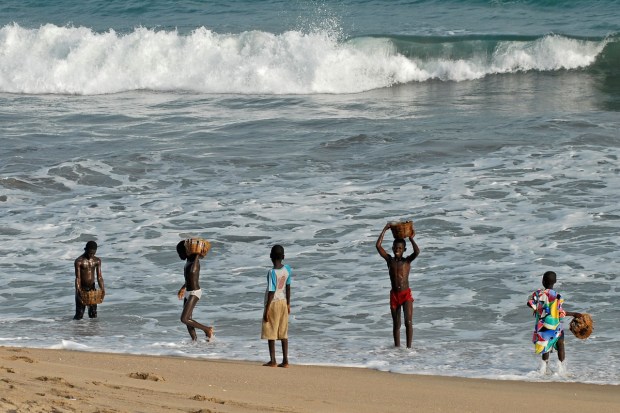
Situated in West Africa on the Gulf of Guinea, covering an area of 92,100 square miles.  Home to the largest man made lake in the world – Lake Volta. The word Ghana is known to mean Warrior King, Ghana’s former name was “Gold Coast” after the large amount of gold that colonizers found in the country.  It’s biggest exports are cocoa (the world’s second largest producer) and gold.

Top of the things to see and do would include: searching for elephants in Mole National Park, strolling along the beach at Princess town and overlooking the Atlantic from the 18th Century castle of Elmina, a UNESCO World Heritage Site.

The travel operator, Viator, has a plethora of different tours to explore Ghana.  You can take an 3 day private tropical forest hike in Togo & Ghana from £277 or a 12 day wildlife & cultural tour of Northern Ghana from £1,400 (without flights).

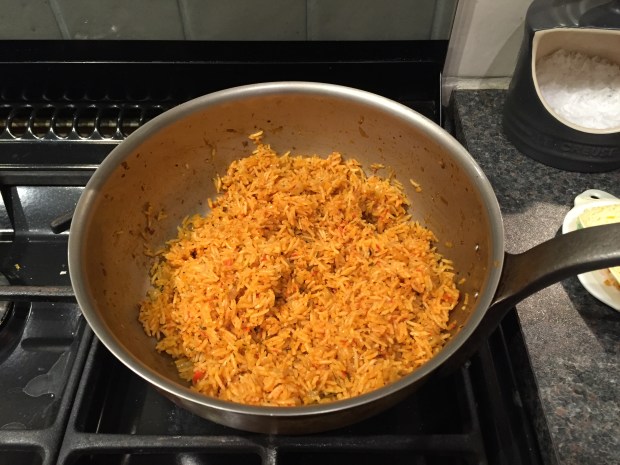
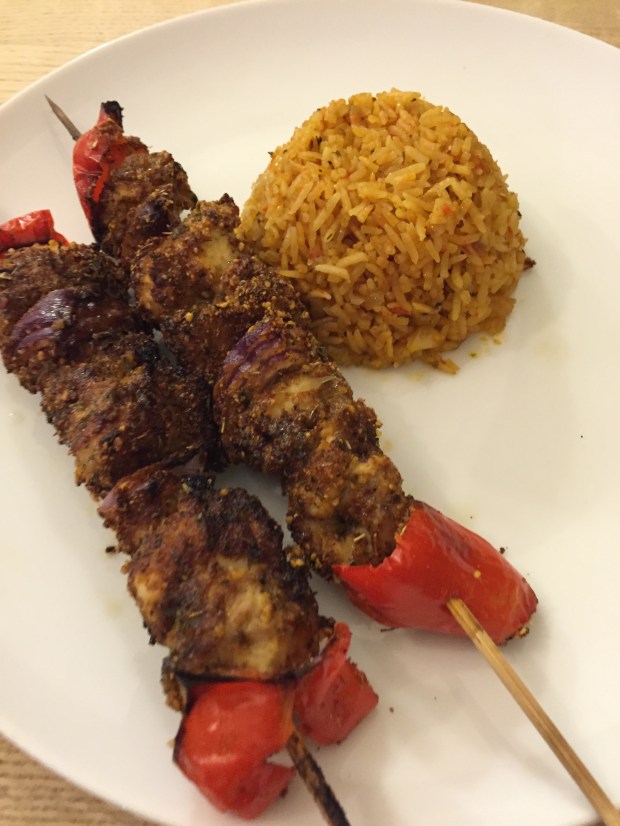
Ghanaian cuisine highlights include; Fufu (pounded cassava), Groundnut stew, Omo tuo (rice balls served in fish or meat soup).  I opted to cook a couple of popular dishes – Jollof rice and Kyinkyinga (Pronounced chinchinga), a Ghanaian version of kebab.  Jamie Oliver cooked a Jollof rice recipe in Jun 2014, sparking reactions of outrage on social media from West Africans, who were not happy with his interpretation – #jollofgate!
Rating: 5/10.  Both dishes are quite dry and therefore I shouldn’t have served them together .. you live & learn.  The rice is very spicy!  We thought the kyinkyinga would’ve been better in a pitta bread with salad & mayo .. if we so dare to suggest.
Jollof rice
Serves 2
Prep time: 20 mins
Cook time: 40 mins
3/4 cups basmati rice
2.5 tbsp olive oil
1/2 heaped tbsp tomato puree
1/2 onion chopped
1 medium sized onion
2 medium tomatoes
1 clove of garlic
A small piece of ginger
1 scotch bonnet chilies (reduce if you don’t like it spicy)
1 tsp chicken or vegetable stock powder
Dried mixed herbs
1 small bay leaf
Salt to tasteBlend the ginger, garlic, chilli, tomatoes and two onions and set aside for later.
Heat oil in a non-stick pan and fry the chopped onions till soft and golden brown, about 10 minutes, then add the tomato puree and cook for a further 3 minutes.
Add the blended tomato and onion mixture from earlier and leave to cook through till the tomato mixture has lost its raw taste and the oil is visible at the top.
Add the stock powder, bay leaf and a sprinkle of the mixed herbs. Leave to simmer for about 3 minutes while you rinse the rice to remove excess starch.
When rice is rinsed, add to the sauce stirring it to make sure nothing sticks to the bottom. Now add 1/2 cup of water to the rice and sauce mix and stir, add salt to taste and cook till the water is almost evaporated.
Then cover and simmer on a low heat till rice is fully cooked, stir occasionally to prevent it sticking an add a dash of water if necessary .

Kyinkyinga (chicken kebab)
Prep time: 20 mins + 1 hour marinating time
Cook time: 15-20 mins

250g chicken thigh fillet, cut into cubes
2 tbsp olive oil
2 fat cloves of garlic
2 tbsp grated ginger
1 small onion
1 heaped tsp chicken stock powder
1 red pepper cut in cubes
1 red onion cut in cubes

Suya spice
mix 1/4 cup grounded roasted peanuts (milled into powder with excess oil taken out so that it is very dry)
8g chili powder
8g cup paprika
8g cup of garlic salt
8g cup Onion powder
8g cup dried mixed herbs
1 tsp chicken stock powder
Salt to taste

Blend the ginger, garlic, onion, stock cube seasoning with the oil to form a smooth paste.
Add the paste to the chicken and marinate for about an hour.
Skewer the marinated chicken pieces alternating with the peppers and onions and set aside.
Combine all the ingredients for the suya seasoning and mix together.
Sprinkle some of the suya spice on the skewered chicken and grill till it is cooked and browned both sides.
Remove from the heat and sprinkle a bit more of the suya powder on it, then serve.
IMG_7302
Jollof rice ingredients
IMG_7303
Kyinkyinga ingredients
IMG_7306
Kyinkyinga kebabs
IMG_7312
Cooking the jollof rice
IMG_7314
Kyinkyinga & Jollof rice
africa-634231_1280
Fishermen in Ghana
africa-634236_1280
Castle of Elmina, a UNESCO World Heritage Site
ghana-700979_1280
Ghanaian children enjoying the beach

Poland

“Cześć” … “Hello”
The world’s tallest statue of Jesus is found in the town of Swiebodzin in Poland.  The 167 foot tall statue (including its 55 foot pedestal) is called Christ The King and towers higher than Rio de Janeiro’s Christ The Redeemer which stands at a mere 125 feet.
It is also home to Wroclaw, Europe’s Capital of Culture 2016, which is often called The Venice of the North, due to it’s location on the Odra River, with its 12 islands, 130 bridges and riverside parks.
One of the world’s oldest salt mines is the Wieliczka Salt Mine which was built in the 13th century and produced table salt until 2007.   It is also referred to as “the Underground Salt Cathedral of Poland” due to its three chapels and an entire cathedral which was carved out of the rock salt by the miners and was placed on the UNESCO list of World Heritage Sites in 1978.
Many notable people hail from Poland including; Marie Curie, Chopin, Roman Polanski and Pope John Paul II.
Poland has been invaded or fought for freedom in insurrections 43 times from 1600 – 1945.
In September 1939, World War II started with the invasions of Poland by Nazi Germany and the Soviet Union (as part of the Molotov–Ribbentrop Pact). More than six million Polish citizens died in the war.

Some popular Polish recipes include Bigos (hunters stew), Pierogi (dumplings),   On a wet and cold February evening however, we were in the mood for something relatively simple & quick, so I cooked Kotlet schabowy (breaded pork cutlet) and served it with little roasted rosemary spuds.
Rating: 7/10.  It could’ve benefited from a little more seasoning, so I have adapted the recipe slightly.

Prep time: 10 mins
Cook time: 15 mins

2 boneless pork shoulder steaks (or 1 each for however many you want to feed!)
Salt and black pepper
1 tsp season all
Plain flour
1 large egg beaten with 1 tsp water
Panko breadcrumbs
Vegetable oil

Bash the pork between two pieces of clingfilm to 1/4-inch thickness.
Season both sides of the steaks with salt and pepper.
Put flour on a plate with 1 tsp of season all.
Dredge each steak in flour, then egg, then panko breadcrumbs.
Allow cutlets to dry for 10 minutes before frying.
Heat oil to a depth of 1/2 inch in a large skillet.
Fry the pork cutlets one at a time in the pan for 5 minutes per side until golden.
Put in the oven covered with foil to keep warm whilst you cook the other steak(s).
Serve with chips or little roasted potatoes.

Norway

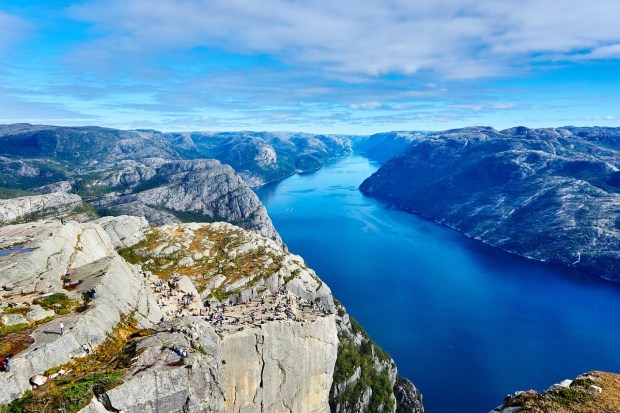
The land of Vikings, Skiing and Fjords.  Norway has the greatest length of any European country with almost one third of the country situated north of the Arctic Circle.  It has Europe’s deepest lake (Hornindalsvatnet – 514m), highest waterfall (Vinnufossen – 860m) and longest coastline at over 21,000km.  The Lærdal Tunnel, opened in 2000, is the longest road tunnel in the world (24.5 km).

Some interesting facts about Norway:

– Norway has won more Winter Olympic medals than any other country on Earth, with a grand total of 303 medals (including 107 gold medals) as of 2012, 50 more than the USA.
– The U.S. has more people of Norwegian descent than Norway.
– Norway will be the first country to turn off FM radio in 2017 and switch completely to digital.
– All prisoners in Norway have internet in their cells.
– Norway gets 98-99% of its electricity from hydroelectric power, more than any other country.

– The Vikings of Norway are well known, however they did not have helmets with horns. In fact, it is not clear if Vikings used helmets at all. While tens of thousands of Viking weapons have been uncovered, only one helmet from around the Viking period exists.

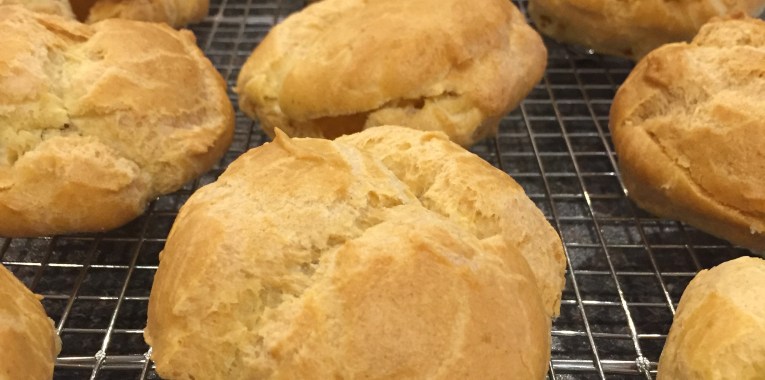
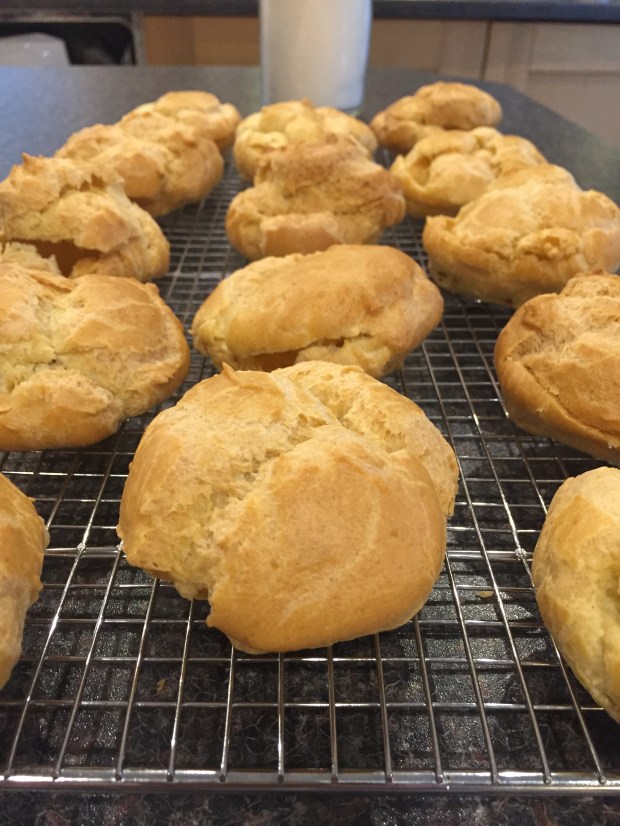
Norwegian cuisine is known for fish dishes; Smoked salmon Gravlaks, Rakfisk (fermented trout) and Mølje (poached fish, roe and liver).  Other dishes include Lapskaus (similar to Irish stew), Fårikål (mutton stew) and Smalahove (made from sheep’s head).  I was in the mood for something sweet, so I opted to cook the very simple Vannbakkels (choux buns) filled with vanilla cream.

Rating: 8/10

Makes 15 buns

Prep time: 5 mins
Cook time: 10 + 35 mins baking
Choux:
250ml water
125 g butter
125 g plain flour
4 eggsCream filling:
200ml double cream
1 tbsp icing sugar
1 tsp vanilla essencePlace the butter and water in a saucepan and bring to boil.
Remove from the heat and sieve in the flour slowly until all the flour is mixed in and it forms a smooth ball.

Preheat oven to 190c.
Let the batter cool slightly then beat in the eggs one at a time until mixed well.
Spoon tablespoons of batter onto a baking sheet lined with baking parchment and bake for 30- 35 minutes or until golden brown and well risen.
Once cooked pierce each bun open, just enough to let some steam out.
Leave to cool on a wire rack.
Whip the cream with the vanilla essence & icing sugar.
Once the vannbakkels are cooled, spoon or pipe in the cream filling.

Enjoy!

IMG_7222
Ingredients
IMG_7231
Vannbakkels (choux buns)
IMG_7236
Vannbakkels (cream filled choux buns)
the-fjord-483189_1280
Norwegian fjord village
fjord-984130_1280
Norway fjord

Madagascar

Madagascar lies in the Indian Ocean off the southeast coast of Africa opposite Mozambique.  It is the fourth largest island in the world.
A stunning diversity of plant and animal species evolved after the island broke away from the African continent millions of years ago.  Over 90% of its wildlife is found nowhere else on Earth.  From 1999 to 2010, scientists discovered 615 new species in Madagascar, including 41 mammals and 61 reptiles.  To help secure the future of lemurs, WWF and Malagasy conservationists are working together to establish and manage parks and protected areas in Madagascar.  Through the WWF you can adopt a ring tailed lemur for $25 – $100.

In 2012, the population of Madagascar was approximately 22 million people, 90% of them live on less than $2 per day.
Madagascar produces about two-thirds of the world’s vanilla. The vanilla bean (or pod) is the only edible fruit-bearing orchid. Each flower opens only one day a year and must be hand-pollinated to produce a pod, which is very labor intensive.

Recipes I came across include Saosisy sy Tsaramaso (beans & sausage) , Ro-mangazafy (beef broth) Ron-akoho (chicken and ginger broth).  I opted to cook the popular Mofo Gasy (Malagasy bread), which is actually more like a pancake.
Rating: 9/10

Makes 15
Prep time: 10 mins + 2-4 hours resting for batter
Cook time: 10 mins

1/2 cup plain flour
1/4 cup + 2 tbsp ground rice
1/2 tsp instant yeast
2 tbsp caster sugar
3/4 cup lukewarm water
1.5 tsp condensed milk
1/2 tsp vanilla extract
Vegetable oil

In a mixing bowl, combine flour, ground rice, yeast, 1 tsp sugar and water.
Mix well, cover the bowl and set aside to rise for 2-4 hours.
Stir in the remaining sugar, condensed milk and vanilla extract. Mix to combine.
Cover and set aside until the mixture gets frothy, about 30~45 minutes.
Heat an aebleskiver pan on medium heat.
Put 1/4 tsp oil and pour about 1 tbsp batter in each well.
Cook for 1-2 minutes or until the bottoms get golden brown.
Using chopsticks, flip them over and cook on the other side until golden and the inside is cooked through.
Serve hot for breakfast.

Burma / Myanmar

Well is it Burma or is it Myanmar?

That’s a tricky question … so we’ll start with the basics.  It is the largest country in mainland Southeast Asia, and the 40th-largest in the world.  It has a population of over 55,000 with the majority being Buddhist.  The capital is Yangon.

There has been a hell of a lot going on here so I’ve tried to do my best to summarise (very badly).  There’s a bit more info here than I would usually go into, which is at the request of one of my intellectual readers!

The country has been called “Burma” in English since the 18th century.
General Aung San, who was generally considered the father of independent Burma was assassinated in 1947.
Burma became independent from the UK in 1948.
In 1962, left-wing general Ne Win staged a coup, banned political opposition, suspended the constitution, and introduced the “Burmese way of socialism.”
In 1987, Ne Win suddenly cancelled certain currency notes which caused a great down-turn in the economy as it wiped out the savings of the vast majority of people. The main reason for the cancellation of these notes was superstition on Ne Win’s part, as he considered the number nine his lucky number—he only allowed 45 and 90 kyat notes, because these were divisible by nine.
After 25 years of economic hardship and repression, the Burmese people held massive demonstrations in 1987 and 1988. These were brutally quashed by the State Law and Order Council (SLORC).
In 1989, the military government officially changed the name of the country to Myanmar.  At the same time, they changed the name of Rangoon, the former capital, to Yangon.
Daughter of the assassinated general Aung San and leader of the opposition, Aung San Suu Kyi, was awarded the Nobel Peace Prize in 1991, which focused world attention on SLORC’s repressive policies.
In Nov 2005, the military junta, in a massive and secretive move, relocated the seat of government from the capital Yangon to a mountain compound called Pyinmanaa in Naypyidaw. The move perplexed many, and the junta was vague in its explanation, saying, “Due to changed circumstances, where Myanmar is trying to develop a modern nation, a more centrally located government seat has become a necessity.”
In May 2008, Cyclone Nargis ravaged the Irrawaddy Delta and Yangon, killing 22,500 people and leaving up to a million homeless. Another 41,000 people were reported missing and feared dead. Most of the death and destruction were caused by a 12-foot high tidal wave that formed during the storm.
Days after elections in Oct 2010, the country’s first elections in 20 years, opposition leader Aung San Suu Kyi was freed after nearly 20 years under house arrest, she won a seat in parliament and took office in May.  Thousands of supporters gathered outside her home, where she gave a speech calling for a “peaceful revolution”.
The country’s first Parliament in 20 years convened in Jan. 2011 and elected Prime Minister Thein Sein as president. The military junta officially disbanded in March 2011. However, Parliament is civilian largely in name only. The military won about 60% of the seats in October 2010 elections, and another 25% are reserved for members of the military
In his first year as president, Thein Sein initiated stunning changes in political and economic philosophy that saw a loosening of the tight grip the authoritarian junta held on the country. He initiated talks with opposition leader Aung San Suu Kyi, allowed her and her party, the NLD, to run in upcoming parliamentary elections, freed more than 800 political prisoners and signed a cease-fire with ethnic Karen rebels.
In Jan. 2012 the U.S. restored full diplomatic relations with Myanmar following a visit from Hilary Clinton, Secretary of State in Dec 2011.
In 2015, Aung San Suu Kyi announced that her party, the National League for Democracy (NLD), would take part in the election after boycotting the previous one in 2010, which was condemned for irregularities by international organisations.
In Feb 2016 Aung San Suu Kyi won the election in a landslide victory, but she cannot become president due to the constitution, which among other things:
i) prevents leaders having foreign relatives, her two sons are both British citizens; and
ii) demands the president has military experience, of which she has none.
According to Transparency International, Burma ranked 157 out of 177 countries in terms of perceived corruption. The Corruption Perceptions Index ranks countries/territories based on how corrupt a country’s public sector is perceived to be. It is a composite index, drawing on corruption-related data from expert and business surveys carried out by a variety of independent and reputable institutions
And on to the cooking.  Through my research I came across Mohinga (rice vermicelli with fish soup), which is the traditional breakfast dish and Burma’s national dish, Sanwinmakin (Semonlina cake) and Laphet Thohk (pickled tea leaf salad).  Also popular are curries of many varieties.  I chose Kyetha hin (chicken curry).
Rating: 9/10
Prep time: 30 mins
Cook time: 40 mins
390g chicken breast cut into bite size
1/2 med onion, chopped roughly
1 large garlic clove, smashed
1 strip of lemon peel, sliced
1/2 tsp ginger, grated
Vegetable oil
3/4 tbsp salt
1/2 tsp turmeric
1/4 tsp chilli powder
2 cups water
1 tbsp tomato puree
1/2 tbsp fish sauce
1/4 tsp tamarind paste or use tbsp lemon juice
Fresh coriander, chopped
Pinch ground cardamom
Blend the onion, garlic, lemon peel and ginger with a little oil to make a smooth paste.
Heat 1 tbsp oil in a pan and when hot add the paste, salt, turmeric & chilli powder.
Fry over a med heat for a few minutes stirring regularly and add a few drops of water if it starts to stick to the pan.
Reduce to a low heat and simmer for 10 minutes until all the liquid has evaporated and its turned deep brown.
Add the chicken pieces, stirring well to coat with the paste.
Cover and simmer for 15 minutes. T
hen add the water, potato, tomato puree, fish sauce, tamarind or lemon juice and stir to mix well.
Cover and continue to simmer for another 20 – 25 minutes, until the potato is soft.
Turn the heat off, sprinkle over the coriander & cardamom.
Serve with boiled rice.


Azerbaijan

South of Russia, Azerbaijan is on the west coast of the Caspian Sea with the Caucasus Mountains in the northwestern border of this republic. The oil rich capital is Baku, with a population of c. 2m. Marco Polo visited Baku in 1264 and witnessed the oil being collected, he said “there is a fountain from which oil springs in great abundance”. Azerbaijan gets its name from Atropates, a Persian nobleman. He ruled over the present-day Azerbaijan. His name evolved over a millennia, and in modern Persian translates to “The Treasury” and “The Treasurer” of fire or “The Land of the Fire”.
Azerbaijan is home to the first known fireplace, discovered in Azikh Cave, the largest cave in Azerbaijan, and also one of the ancient proto-human habitations in human history, that dates back to 700,000 – 500,000 years ago.
In 1879, the Nobel brothers, founders of Nobel Prize, set up their oil company in Azerbaijan; The Nobel Brothers Petroleum country. The Nobel brothers from Sweden acquired much of their wealth from Azerbaijan’s oil industry.
The former world chess champion Garry Kasparov hails from Baku.
Tea is the most popular drink in Azerbaijan. Traditionally served in a pear shaped glass, the drink is often consumed through lumps of sugar or jam, held in the mouth.
A few of the popular dishes in Azerbaijan cuisine include Plov (saffron covered rice), Dolma (minced and spiced lamb wrapped in vine leaves), and Dyushbara (meat dumplings). Also very popular are kebabs, which is what I opted to cook – Lyulya (lamb kebab). There is an Azerbaijan restaurant near Ravencourt Park, where they serve ‘Lulle’ kebab for £9.49.
Rating: 8/10

Prep time: 20 mins
Cook time: 15 mins
Serves 2 as a large starter

220g lamb neck fillet
20g suet
1/2 onion chopped
Salt & pepper

Blend the lamb, suet and onions in food processor. Add salt, pepper and then leave it in the fridge for 30 minutes.
Rinse your hands in salted water, mould into 6 sausages and skewer.
Preheat the grill and cook for 10-15 minutes, turning so they are brown on all sides.
Serve with flatbread and chutneys.