Switzerland

Switzerland or officially the Swiss Confederation, is the best place to be born in the world, ranking number 1 in the EIU ‘where to be born’ index (previously known as quality of life index).
The Swiss Confederation was established on 1 August 1291, which is celebrated annually as the Swiss National Day. It has not been in a state of war internationally since 1815 and ranks number 5 in the Global Peace index.

Some random interesting facts
The Swiss eat more chocolate than any other nation in the world, 11.3 kg per year.
One is never more than 10 miles from a lake in Switzerland.
In Switzerland, it is illegal to keep just one guinea pig. They must be kept in pairs.
Albert Einstein came up with his theory of relativity and the formula E=MC2 in Bern, Switzerland.
The Sonnenberg tunnel in Lucerne is able to house up to 20,000 people for an extended period of time as a fallout shelter. It serves as the world’s largest nuclear bomb shelter.
The Dalai Lama owns the smallest vineyard in the world, which is located in Switzerland.
The most expensive hotel room in the world is The Royal Penthouse suite at Hotel President Wilson in Geneva. Bill Gates and Michael Douglas have both been residents. At $83,000 per night you can enjoy your own private elevator, gym, 12 bedrooms and 12 marble bathrooms, a Steinway Grand Piano, and a panoramic view of Lake Geneva.

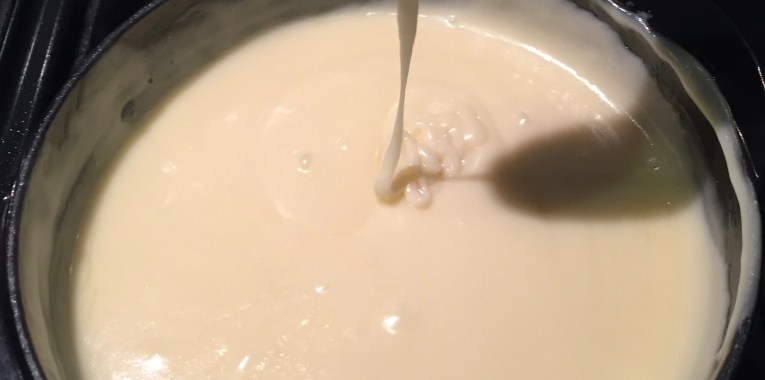
Swiss cuisine shows many regional influences as well as French, German and Italian. Traditional dishes include Rosti (fried grated potato), Papet Vaudois (potatoes, leek with sausage) , Zürcher Geschnetzeltes (veal and mushroom in a cream sauce), Bűndnernusstorte (caramelised nut filled pastry) and Zopf (plaited loaf). Although I had a recommendation from Valerie who I had met on holiday, my friends and family well know that I am addicted to cheese, so there really was only one recipe for me to cook; it had to be Fondue! My sister and brother in law joined us for the evening and suffice to say, it was truly scrumptious.

Rating: 10/10

Serves: 4
Prep time: 5 mins
Cook time: 15-20 mins

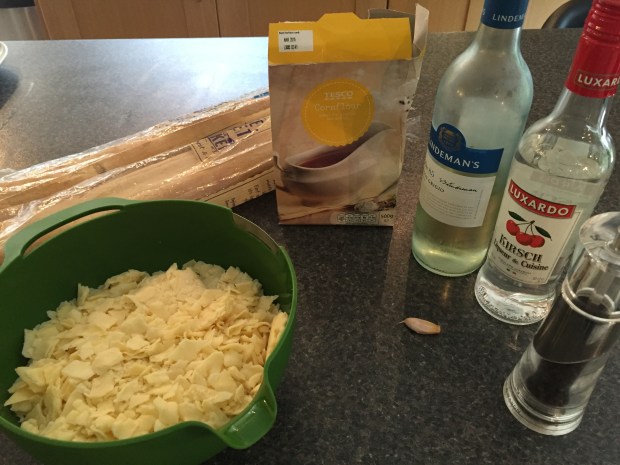
2 French sticks (a day old), cut into cubes
1 clove of garlic
350ml dry white
2tsp cornstarch
400g Vacherin Fribourgeois, grated
400g Gruyere, grated
2 tsp of kirsch
pepper

Half the garlic and rub it around the fondue pot
Dissolve the cornstarch in the kirsch
Place the fondue pot on the stove over a low heat
Pour the wine into the fondue pot and bring it to a simmer
Gradually add the grated cheese, stirring continuously with a wooden spoon until it melts together.
Add the kirsch and the pepper.
Transfer to the serving stand, with the burner on a steady temperature.
Serve with the cubed bread.
IMG_9559
Ingredients for Swiss fondue
IMG_9587
Swiss fondue
IMG_9590
Family enjoying Swiss fondue
IMG_9593
Swiss fondue

Foodies100 Index of UK Food Blogs
<a target=”

Monaco

The Principality of Monaco is the second smallest country in the world with Prince Albert II as the head of state. The House of Grimaldi have ruled Monaco, with brief interruptions, since 1297. A treaty was agreed in 2002 that if the reigning Prince failed to leave dynastic offspring, then sovereignty over the Grimaldi realm would revert to France (no pressure there then Princes of Monaco!)

In 2014 it was noted about 30% of Monaco’s population was made up of millionaires and it is the third most expensive country in the world. From a brief internet search I managed to find a 4 bedroom villa for sale, overlooking the harbour for a nice sum of 45 million pounds. Well, we can all dream!!

Tourism and gambling drive the economy with millions flocking to Monaco each year for the luxurious beachfront hotels, the extensive yacht harbour and the famous Monte Carlo Casino. If money was no object, you could lunch at Louis XV, Monaco’s most prestigious dining address, spoil yourself with a gold dust bath at the Thermes Marin de Monte Carlo, take in a performance by the Monte Carlo Philharmonic Orchestra or shop till you drop at the famous 5 Pavillions shopping area.

When it comes to the food, there are 237 restaurants in Monaco serving any and every type of cuisine you could wish for. Traditional Monegasque dishes include Brandamincium (salt cod pounded with garlic, oil & cream), Pan Bagnats (Monegasque sandwiches) and Socca (chickpea crepes). I opted to make Barbajuans (pastries filled with cheese and chard) and they were very tasty, a little fiddly to make, but worth the effort.

Rating: 8/10

Makes 12 – 14
Prep time: 25 mins + 1 hour chill time
Cook time: 20 mins

For the pastry
125g plain flour
1 tsp salt
1 tbsp extra virgin olive oil
50g water

For the filling
1 tbsp onion, finely chopped
1 tbsp leek, finely chopped
3 stems swiss chard leaves, stems removed, chopped
1 tbsp parmesan, freshly grated
1/2 tsp dried oregano
1 egg beaten
1 1/2 tbsp ricotta
1/2 tbsp olive oil
Salt & pepper

Mix the flour with water (at room temperature) salt and extra virgin olive oil. Start mixing with a fork first, then with your hands until ingredients are perfectly blended.
Knead vigorously on a floured surface until smooth, around 8 – 10 minutes.
Form the dough into a ball and wrap it in cling film. Place in the fridge for 1 hour.

Heat olive oil in heavy medium skillet over medium heat.
Fry the onion and leek about 4 mins.
Add chard, oregano and fry for about 8 mins until tender.
Transfer to a small bowl and mix in cheeses.
Season with salt and pepper, mix in 1 tbsp egg.
Set aside to cool.

Roll out dough on floured surface to 1mm thickness and cut out 12 – 14 rounds using 2-2 ½”” cutter.
Place 1/2 tsp. of filling in center of each round.
Brush edges of rounds with egg.
Stretch the dough out and fold it over, forming half-circle, pressing the edges with a fork to seal.
Place pastries on baking sheet lined with greaseproof paper.

Pour vegetable oil into large skillet to depth of 1 ½”” and heat to 375°F.
Working in batches, fry pastries until brown and crisp, about 5 min.
Using a slotted spoon, transfer pastries to paper towel and drain. Serve warm or at room temperature.

IMG_9540
Ingredients for Barbajuans
IMG_9539
Dough for Barbajuans
Filling for Barbagiuans (savoury pastries)
Filling for Barbajuans
IMG_9549
Making the Barbajuans
IMG_9551
Making the Barbajuans
IMG_9563
Frying the Barbajuans
IMG_9565
Frying the Barbajuans
IMG_9574
Barbadians (savoury filled pastries)
Port of Monaco
Port of Monaco
Monte Carlo Casino
Monte Carlo Casino


Saint Lucia

I visited Saint Lucia a few years ago and being entirely honest, I wasn’t as amazed as I’d hoped. The hotel was a little tired and we were there during rainy season. However, after doing research for the blog, I’d definitely like to go back and further explore what it has to offer.

Lying in the eastern Caribbean Sea and part of the Lesser Antilles, Saint Lucia is 27 miles long and 14 miles wide. It is more mountainous than most Caribbean islands. The French gave Saint Lucia it’s name, after Saint Lucy of Syracuse, as they were the first Europeans to colonise the island. Saint Lucia gained independence from Britain in 1979. It is a Commonwealth realm and Queen Elizabeth II is the Head of State.

Along with the picturesque beaches, tourists come to Saint Lucia to see The Pitons, majestic twin peaks called Gros Piton (797m) and Petit Piton (750m) soaring from the sea. They are the only two of its kind in the world and have recently attained world heritage site status. Other highlights include the rain forests, Pigeon Island National Park and the world’s only drive-in volcano at Sulphur Springs (Soufriere). Ranking no.1 on Trip Advisor, ‘the’ place to stay is The Inn On The Bay in Marigot Bay.

The cuisine of Saint Lucia is a blend of French, East Indian and British influences. Dishes include Banana fritters, Green figs and Salt fish (the national dish), Accras (fishcake), Souse (pork broth), Breadfruit (like potato but sweet) and Pouille Dudon (chicken stew with treacle and coconut). I made Hot bakes, which are a little like muffins. The recipe I followed didn’t advise how many I should make, so mine were larger than they should have been, however they went down a treat with the kids at breakfast. We had them with jam, treacle and chocolate spread, but I think they would work equally well with a poached egg.

Rating: 9/10

Makes 12 – 20 (depending on how big you make them!)
Prep time: 20 mins + 1 hour resting time
Cook time: 15 mins

3 1/2 cups plain flour
2 tbsp sugar
2 1/2 tbsp baking powder
1/2 tbsp salt
1 tbsp butter
1/4 cup milk
oil for frying
1 cup water

Put the flour into a large bowl add sugar, baking powder, melted butter and salt. Mix thoroughly. Add the milk and just enough water to make a dough sticky to the touch.
Knead the dough for about 5 minutes. If it becomes too sticky, add a little flour to make it easier to handle.
When you are done kneading the dough, cover it and allow it to rise in a warm place for at least half an hour.
Preheat the oven to 160°C
Heat up a frying pan over low – medium heat and then add enough oil to cover the pan.
Divide the dough into small balls (I made 13 but they were probably too big, so I’d aim for 20).
Flatten the dough balls to about ½ inches thick.
When the oil is hot (not smoking), place the flattened balls of dough in your frying pan until one side turns golden brown, about 3-4 minutes and turn over to the other side for same results. Do them in batches if necessary.
Once their all browned, place them in the oven for 10 minutes.
Serve with preserves or poached egg.

Dominican Republic

The Dominican Republic is the second largest republic in the West Indies, after Cuba. It was called Santo Domingo (which is it’s capital) until the early 20th century.
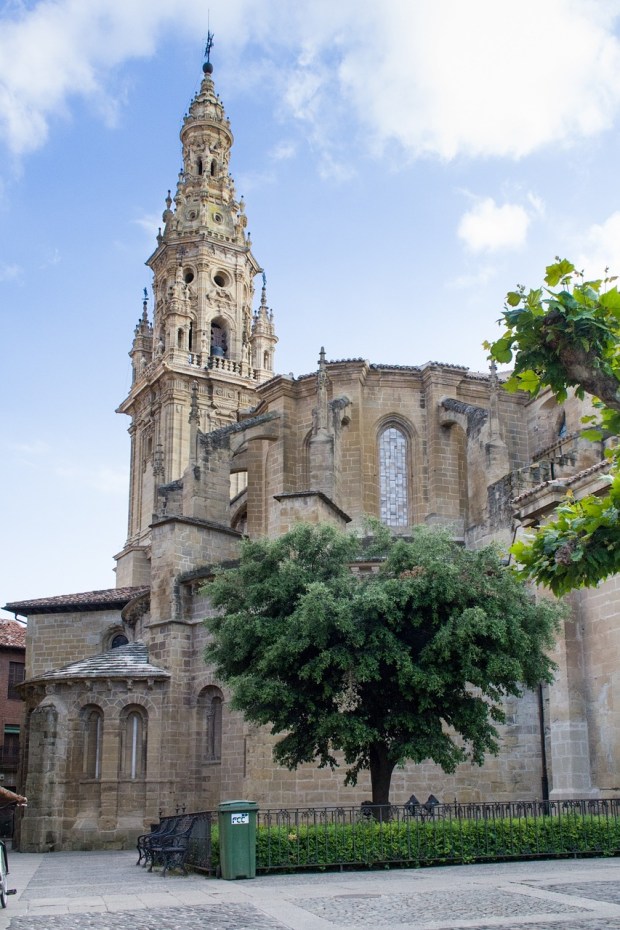
Santo Domingo, founded in 1496, is the oldest European settlement in the Western Hemisphere and is home to the oldest operating Cathedral in the Americas, the Cathedral of Santa María la Menor, was completed in 1540.

A few interesting facts:
The Dominican flag is the only one to have a bible in it.
Francis Ford Coppola filmed scenes of the The Godfather Part II in Santo Domingo.
Dominican Republic is one of the worst 20 countries in the world for murders with a murder rate of 22.1 per 100,000 people, most probably due to drug smuggling.
It is the only place in the world where you can find Larimar, also called “Stefilia’s Stone”, a rare blue variety of the silicate mineral pectolite. It’s healing properties are said to cool and draw out inflammation from the body, reducing fevers and the heat of sunburn.

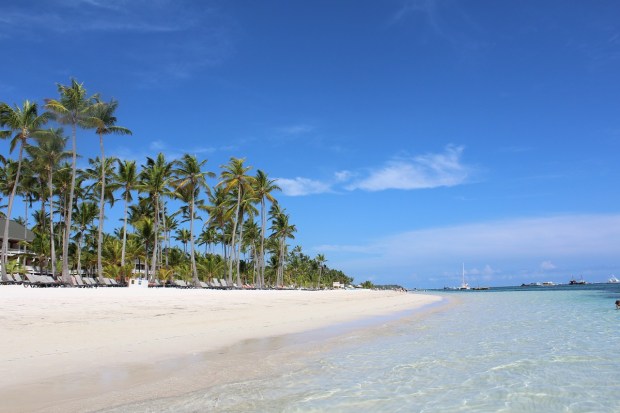
Dominican Republic is the most visited destination in the Caribbean with 5.1 million visitors in 2014. Highlights include the beautiful beaches at Playa Rincón and Punta Cana, Pico Duarte (the largest peak in the Caribbean), Cascada el Limon (waterfall), whale watching in Samaná and snorkelling the Cayo Paraiso (Paradise Island).

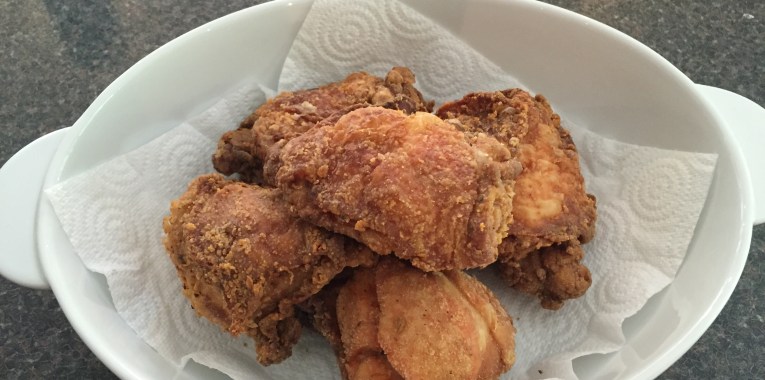
Some popular dishes I came across include Turkey a la Dominicana Stuffed with Rice and Pigeon Peas, Buñuelos de Yuca Recipe (Cassava ‘Beignets’ in Spiced Syrup), Locrio de Pica-Pica (Rice and Spicy Sardines), Dominican sancocho (meat stew) and Locrio de Pollo Dominicano (Dominican style Chicken with Rice). As it was Friday, and therefore we deserved a treat, I decided to cook Pica Pollo (fried chicken). It was crispy and tasty, but we felt it could’ve done with a bit more spice.

Rating: 7/10

Serves 4
Prep time: 20 mins + 12 – 24 hours marinating
Cook time: 30 mins

8 chicken pieces (a mix of thighs, breasts, legs or wings, whatever you prefer)
1/2 cup of vinegar
1 tsp salt
1/2 tsp freshly ground black pepper
4 garlic cloves, peeled and bashed
1 tbsp of oregano
1 tsp ground coriander
1 small red onion, quartered
Juice of 2 limes

Coating:
1 cup white flour
1 cup semolina flour
1/2 cup cornflour
1 tsp salt
1/2 tsp black pepper

Soak the chicken with the vinegar in a bowl for about 5 minutes, then drain and pat dry.
Place the chicken pieces in a large bag and add salt, pepper, garlic, onion, oregano, coriander and the lime juice.
Marinade in the fridge for 12 – 24 hours.
Remove the chicken from the fridge an hour before cooking.
In another large bag, place the flour, cornflour, semolina flour, salt & pepper. Shake to mix
Heat the oven to 100°C
Heat a deep fat fryer, or deep pan with enough oil to cover the chicken to 180°C.
Place the chicken pieces in the flour bag, draining off the marinade mix beforehand.
Ensure all the chicken pieces are coated in the flour mix.
Place 3 pieces of chicken into the hot oil and fry for 10-12 minutes.
Once done, put the chicken pieces onto a tray lined with kitchen towel and leave in the oven to keep warm, whilst frying the rest of the chicken pieces.
Serve with chips and ketchup.


Santo Domingo Cathedral
Cathedral of Santa María la Menor, Santo Domingo
Dominican Republic flag
Punta cana beach Dominican Republic
Punta Cana beach
larimar
Larimar

Cuba

The largest island in the Caribbean is noted for it’s historic heritage, beautiful beaches, a missile crisis, cigars and rum.  Discovered in 1492 by Christopher Colombus, it became a hub for the slave trade and the export of sugar and coffee. By the mid 1800s sugar plantations were satisfying a third of world demand.

The Republic of Cuba encompasses more than 4,000 islands and cays and is located in the northern Caribbean Sea at the confluence with the Gulf of Mexico and the Atlantic Ocean. The average temperature is 21°C (69.8 °F) in January and 27°C (80.6 °F) in July. Protected natural areas make up nearly 22% of Cuban territory, providing habitats for crocodiles, flamingos, orchids among others.

Fidel Castro seized power in Cuba on February 16, 1959 and remained until he announced his resignation, due to bad health, in February 2008. In March 1960, Eisenhower gave his approval to a CIA plan to arm and train a group of Cuban refugees to overthrow the Castro regime. The invasion (known as the Bay of Pigs Invasion) took place on April 14, 1961. About 1,400 Cuban exiles disembarked at the Bay of Pigs, but failed in their attempt to overthrow Castro. Since 1965, the country has been governed by the Communist Party of Cuba and it is one of the world’s last remaining socialist countries following the Marxist-Leninist ideology.

A few interesting facts:
Only 5% of Cubans actually have access to the uncensored, open Internet.
The US pays Cuba $4,085 a month in rent for the controversial Guantanamo Bay Naval Base. Cuba has never cashed the checks.
Cuba is one of two countries where the sale of Coca-Cola is prohibited (the other is North Korea).
Cuba possesses one of the best health care systems anywhere in the world with the highest doctor-to-population ratio of any country in the world.
Christmas did not become an official holiday in Cuba until 1997.
Cuba is full of US cars from the 1950s. This is because they’re the only cars Cuban citizens can legally own. Only pre 1959 cards that were seized from their original owners can be privately owned and worked on. All newer cars are owned by the government.

2.7 Million international tourists visited Cuba in 2011, the third highest in the Caribbean. It’s highlights include the UNESCO cities of Havana, Trinidad, Cienfuegos and Camagüey, Playa Sirena beach, Havana’s Capitolio Nacional building and Parque Nacional Viñales to name a few.

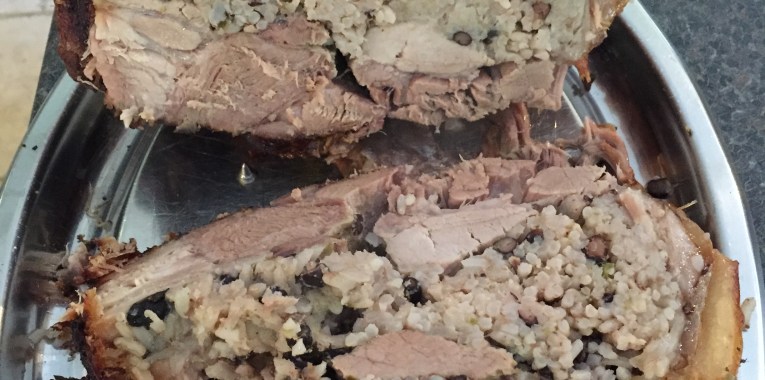
Some popular Cuban dishes I came across; Boliche (beef roast stuffed with chorizo sausages), Ropa Vieja (braised beef with tomato sauce) , Malanga Fritters, Cuban black bean soup and Mixto (cuban sandwich). As we had company (who had visited Cuba), I opted to cook a feast of Pernil Relleno con Moros y Cristianos (Pork shoulder stuffed with black beans stewed with white rice). It was a bit of an effort but it went down very well with our guests. I served it with a green salad of leaves, avocado, asparagus tips and broad beans.

Rating: 8/10

Serves: 6 – 7

Prep time: 30 mins + overnight marinating
Cook time: 6 hours

For the stuffed pork
whole pork shoulder, boned and opened out
1 cup olive oil
1/4 cup orange juice
1/4 cup fresh lemon juice
10 garlic cloves, chopped
1/2 tsp oregano
salt and freshly ground black pepper

For the moros y cristianos
1 tin of black beans
2 tbsp vegetable oil
4 cloves of fresh garlic, minced
1/2 small green pepper, minced
1/2 white onion, minced
2 cups white rice, long-grain
1/2 cup fresh squeezed lime juice
salt and fresh ground pepper

For the stuffed pork
In small bowl, combine oil, orange juice, lemon juice, garlic, oregano, and salt and pepper. Let stand for 1 hour.
Coat the inside of the pork with marinade and refrigerate for at least 2 hours.
Preheat oven to 220°C.
Spread Moros y Cristianos down the middle of meat and fold to fully cover stuffing. Tie with a string both lengthwise and across.
Place in a roasting tray with 2 cups of water and roast for 6 hours, checking it isn’t getting too black.

For the moros y cristianos
Add the vegetable oil to a saucepan and sauté the garlic, pepper and onion for 5 minutes until they soften.
Stir in the black beans and rice, and add 4 cups of water.
Bring the mixture to a boil, then reduce the heat to a simmer and cook until the rice is tender, approximately 20 minutes.
Stir frequently and check to see if you need additional water to keep the rice from sticking. Add more if needed but don’t let it get too mushy.
Once the rice is fully cooked, add the lime juice and salt and pepper.


Nauru

Nauru is the world’s smallest island nation, covering just 21 square kilometers and is the only republic in the world without an official capital.

Nauru is a phosphate rock island, and its primary economic activity since 1907 has been the export of phosphate mined from the island. Nauru boasted the highest per-capita income enjoyed by any sovereign state in the world during the late 1960s and early 1970s. With the exhaustion of phosphate reserves, its environment severely degraded by mining, and the trust established to manage the island’s wealth significantly reduced in value, it briefly became a tax haven and money-laundering center to obtain income. Since 2001, in exchange for aid from the Australian government, Nauru housed a detention center for asylum seekers trying to enter Australia. The unemployment rate is estimated to be 90 percent, and of those who have jobs, the government employs 95 percent.

By measure of mean body mass index (BMI) Nauruans are the most overweight people in the world with 97 percent of men and 93 percent of women being overweight or obese. More than 40 percent of the population has type 2 diabetes, the world’s highest rate.

They are unable to grow fresh vegetables so the diet is limited. Almost all food in Nauru is imported, except for fish, coconut and a few other items. Spam and Corned Beef are popular and they also eat a lot of rice. I struggled to find an authentic recipe for Nauru, so I decided to challenge my culinary skills by experimenting! I cooked yellowfin tuna (which is available in Nauru’s waters) with coconut, chilli flakes & lime. I served it as a canape to our guests and they thoroughly enjoyed it!! If anyone has any traditional Nauruan recipes, I’ll happily cook Nauru again.

Rating: 8/10

Serves: 5 (as a canapé)

Prep time: 5 mins + 2 hours marinating time
Cook time: 7 mins + 10 mins resting time

2 yellowfin tuna steaks (about 400g)
1 small can coconut cream
1/2 tsp chilli flakes
1 lime, zest & juice
Baguette

Place the tuna steaks in a bag with all the other ingredients and refridgerate for 2 hours.
Heat a medium size frying pan to medium-hot and place the tuna steaks in when it’s hot, without the marinating juice.
Cook on each side for 3 minutes, then put the marinating juices into the pan, turn up the heat for 1 minute then turn it off, put a lid on the pan and let it rest for 10 minutes.
Meanwhile, warm the baguette a little in the oven.
Place the tuna in a bowl and mash it with a fork, then pour some of the juice over the tuna but don’t make it too wet.
Slice the baguette into small rounds and then put a teaspoon of the tuna on top.

Portugal

I’ve visited Portugal a few times and was looking forward to what the cuisine had in store for me. Piri Piri chicken is one of my favourites, so I was optimistic and fortunately not disappointed!
Portugal is situated on the Iberian Peninsula and was founded in 1139, making it one of the oldest nations in Europe. It is also the most westerly and it’s 754 mile long border with Spain is the longest in the EU.

Here are a few interesting facts I came across:
Portugal was the first county in the world to decriminalize the usage of all common drugs.
The biggest wave ever surfed, at 90ft (27.5m) was at Praia de Norte in Portugal by Hawaiian Garret McNamara.
The longest bridge in Europe, measuring 10.5 miles (17 kilometers) in length, is the Vasco da Gama bridge in Lisbon, completed in 1998 to celebrate the 500th year anniversary of the discovery of the sea route between Europe and India.
The largest community of Portuguese outside Portugal is in Paris.
There are 15 UNESCO World Heritage Sites in Portugal and more than 13 million tourists visit the country each year.
The largest artificial underwater park in the world – The Ocean Revival Underwater Park is in Portugal.
The oldest director in the world, Manoel de Oliveira lived until he was 106 and continued to make films until his death on 2 April 2015.
Portugal is the largest producer of cork in the world, around 70% of total production.

Besides the obvious Piri Piri, there were plenty of tasty recipe options I found including Cataplana stew with Sausage and Clams , Cabidela (rice with chicken or rabbit), Caldeirada (fish stew) , Canja de galinha (chicken soup) , Espetada (chunks of beef rubbed in garlic and salt, skewered and barbequed), Queijada (a sweet made with cheese, milk, sugar & eggs) , Peixinhos da horta (deep fried green beans) and Camel’s drool (a portuguese sweet that recently featured on Master Chef, UK). I opted for Carne de Porco à Alentejana (pork and clams). It was relatively simple and tasted really good. I served it with Portuguese style fried potatoes, which were equally delicious.

Rating: A high 9/10!

Serves 2
Prep time: 30 mins + 10 – 24 hours marinating time
Cook time: 45 mins

450g pork fillet cut into 2″ thick slices
50 ml dry white wine
250 ml milk
2 bay leaves
1 tbsp olive oil
2 garlic cloves, crushed
1 medium onion, thinly sliced
100 ml vermouth
500g clams (fresh or frozen)
175 ml (3/4 cup) chicken stock
1 bunch thyme, tied with kitchen string
1 tbsp parsley, chopped

For the roast pepper paste
2 long red peppers
6 cloves of garlic
1 tbsp olive oil
Salt & pepper

To make roast pepper paste
Preheat oven to 200°C. Place peppers and garlic cloves in an oven tray with olive oil. Season well and roast for 35 – 40 minutes or until softened and slightly blackened. Transfer to a bowl, cool slightly, then remove the skins and seeds from the peppers and the garlic skins.
Blend the peppers and garlic in a food processor until smooth. Season with salt and pepper. Transfer to a bowl and cover with oil.

To make the Porco à Alentejana
Place pork in a bowl with white wine, milk, bay leaves, ½ tsp salt and ¼ tsp white pepper. Cover and refrigerate for 10 – 24 hours.
Drain, discard liquid and pat dry with paper towel.
Preheat oven to 180°C.
Heat oil in a large ovenproof and lidded casserole dish over high heat and brown the pork for 3 minutes.
Remove the pork using a slotted spoon and transfer to a bowl.
Add garlic and onions to the same pan and cook over medium heat for 5 minutes or until softened.
Stir in ¼ cup roast pepper paste, vermouth and pork.
Place the dish in the oven and bake, uncovered, stirring occasionally, for 30 minutes or until pork is tender.
Add clams, stock and thyme, cover the pan and bake for a further 10 minutes or until the clams have opened.
Remove the thyme sprig.
Season and sprinkle with parsley.
Serve with Portuguese style fried potatoes.

Jamaica

Jamaica is a mountainous Caribbean island discovered by Christopher Columbus in 1494. England conquered the island in 1655 and renamed it to Jamaica from Santiago. Under British rule Jamaica became one of the world’s leading sugar-exporting, slave-dependent nations. Although the slave trade was abolished in 1807, the British government formally abolished slavery in Jamaica by an 1833 act, beginning in 1834, with full emancipation from chattel slavery declared in 1838. It has been independent from Britain since 1962. Although independence is widely celebrated, a 2011 survey showed that approximately 60% of Jamaicans would push to once again become a British territory, citing years of social and fiscal mismanagement in the country.

Kingston Harbour is the seventh-largest natural harbour in the world. Although not currently, it previously facilitated cruise ships in the 1950s and 1960s, and a project has been proposed for the development of a cruise ship pier.

Some interesting facts
Jamaica is the birthplace of Rastafarianism – an Afro-Caribbean Religio-political Movement.
Blue moons occur in Jamaica whenever the weather and climate is perfect. Over the past 40 years there have been 12 blue moon sightings.
Jamaica is home to the fastest man on the planet – Usain Bolt, who allegedly ate 1,000 Chicken McNuggets in Beijing in 2008.
Ian Fleming created the character James Bond 007 from his home called ‘Goldeneye’ in St. Mary Jamaica. He also used the island as a setting in his novels Live and Let Die, Doctor No, “For Your Eyes Only”, The Man with the Golden Gun, Octopussy and The Living Daylights. James Bond Beach is in Oracabessa.
Reggae originated in Jamaica in the late 1960s.
After quitting Hollywood, Errol Flynn lived in Port Antonio, Jamaica in the early 1950s and was largely responsible for developing tourism in this area.
An estimated 1.3 million foreign tourists visit Jamaica every year.

There are many highlights for the tourist including Fort Charles (the only one of Kingston’s 20 forts to survive the 1692 earthquake), Doctor’s cave beach (Montego Bay’s most famous beach), Blue Lagoon (the waters that launched Brooke Shields’ movie career), Bob Marley Museum in Kingston and Maima Seville Great House & Heritage Park.

Jamaican cuisine includes various dishes from the different cultures brought to the island, alongside flavours & spices from the indigenous people. Some popular dishes are Jerk chicken, Jamaican Escovitch Fish (marinated fish), Ackee and Saltfish (salt cod and ackee fruit), Curry goat and Callaloo (leaf vegetable stew). Thanks to a recommendation from a friend (cheers Nigel Smith), I decided to cook Oxtail with Broad beans and we thoroughly enjoyed it. It was definitely worth the wait!

Rating: 9/10

Serves: 2
Prep time: 15 mins
Cook time: 10 hours

500g beef oxtail, cut into pieces
1 large onion, chopped
1 spring onion, thinly sliced
2 cloves garlic, minced
1 tsp minced fresh ginger root
1 scotch bonnet chilli pepper, chopped
2 tbsp soy sauce
1 sprig fresh thyme, chopped
1/2 tsp salt
1 tsp black pepper
2 tbsp vegetable oil
1 1/2 cups water
1 cup canned or frozen broad beans, drained
1 tsp whole allspice berries
1/2 tbsp cornflour
1 tbsp water

Preheat oven to 130 degrees
Heat the vegetable oil in a large skillet over medium-high heat.
Add the oxtail, onion, spring onion, garlic, ginger, chilli, soy sauce, thyme, salt, and pepper.
Brown the oxtail in the skillet until browned all over, about 10 minutes.
Put the oxtail & onions mix into a lidded heavy casserole dish, and pour in 1 1/2 cup water.
Cover the casserole with foil and the lid.
Cook for 10 hours, checking a couple of times to ensure there is still liquid (add a little more water if dry)
Add the broad beans and allspice berries, and bring to a simmer over medium heat.
Dissolve the cornstarch in 2 tablespoons water, and stir into the simmering oxtail.
Cook for a few minutes until the sauce has thickened, and the beans are tender.
Serve with rice or mash potato


Democratic Republic of the Congo

The Democratic Republic of the Congo (DRC), located in Central Africa is the second largest country in Africa and was previously named Zaire (from 1971 – 1997). It is slightly larger than the combined areas of Spain, France, Germany, Sweden, and Norway. The country has a tiny coast on the Atlantic Ocean, just enough to accommodate the mouth of the Congo River. It’s equatorial position gives it the highest frequency of thunderstorms in the world and it is home to the Congo Rainforest, the second largest rain forest in the world (after the Amazon). Five of the country’s national parks are listed as World Heritage Sites: the Garumba, Kahuzi-Biega, Salonga and Virunga National Parks, and the Okapi Wildlife Reserve.

The Congolese Civil Wars, which began in 1996, brought about the end of dictator Mobutu Sese Seko’s 32-year reign and devastated the country. The wars ultimately involved nine African nations and resulted in the deaths of 5.4 million people. Mobutu Sésé Seko (he renamed himself), roughly means “the all-conquering warrior, who goes from triumph to triumph”. Mobutu became notorious for corruption, nepotism and embezzlement. Mobutu allegedly stole as much as US$5 billion while in office. In July 2009, a Swiss court determined that the statute of limitations had run out on an international asset recovery case of about $6.7 million of deposits of Mobutu’s in a Swiss bank, and therefore the assets should be returned to Mobutu’s family. Under his rule the nation suffered from uncontrolled inflation, a large debt, and massive currency devaluations. Around 55% of people live below the poverty line, living on less than a dollar each day and less than a third of children in the DRC attend secondary school.

The DRC is the world’s largest producer of cobalt ore and a major producer of copper and diamonds. It is the second largest diamond-producing nation in the world, although a third of the DRC’s diamonds are believed to be smuggled, making quantifying production very difficult.

Although the Foreign and Commonwealth Office (FCO) advise against non essential travel to the majority of the DRC, it has a lot to offer adventurous travellers. Highlights include the rare Mountain Gorillas, living in the Virunga Mountains, the Lola Ya Bonobo Sanctuary, Mt Nyiragongo volcano and taking a cruise down the Congo River.

Some of the recipes I came across were Poulet à la Moambé (chicken with a peanut sauce), Soso na Loso (chicken and rice), Ntaba or Ngulu yako tumba (grilled goat or pork), Liboke (fish stewed in manioc leaves). I opted to cook Kamundele (beef kebabs) which traditionally would be served with fried plantain (not that easy to find), so I served it in pitta bread with salad and grated cheese. It was very simple and pretty tasty.

Rating: 8/10

Serves 2 hungry people
Prep time: 10 mins + overnight marinating
Cook time: 6 mins

500g sirloin steak, trimmed of fat and cut into cubes
1 tsp ginger root, grated
2 tbsp mustard
1 oxo or maggi beef cube
2 garlic cloves, crushed
Juice of half a lemon juice
2 tbsp olive oil

Place all the ingredients in a bag, except the olive oil and marinate in the fridge overnight.
Put the beef on to skewers.
Heat the griddle pan or BBQ and cook the beef kebabs for 3 minutes on each side.
Serve with pitta, salad & grated cheese.


Czech Republic

The Czech Republic is an independent country in Central Europe consisting of the regions of Bohemia and Moravia. It was once part of the Great Moravian Empire formed by Slav tribes in the early ninth century. At the close of WW I, the Czechs and Slovaks of the former Austro-Hungarian Empire merged to form Czechoslovakia. On 1 January 1993, Czechoslovakia peacefully dissolved, with its constituent states becoming the independent states of the Czech Republic and Slovakia.

Some interesting facts:
The Czech Republic possesses a developed high-income economy with a per capita GDP rate that is 87% of the European Union average.
Škoda Auto is one of the largest car manufacturers in Central Europe. In 2014, it sold a record number of 1,037,000 cars.
The Czech Republic has the most Wi-Fi subscribers in the European Union.
Czech people are the world’s heaviest consumers of beer.
The Charles University in Prague, founded in 1348, is the oldest university in Eastern Europe, and one of the oldest in the world in continuous operation.
The Czech chemists Otto Wichterle and Drahoslav Lím invented the soft contact lenses in 1959.

The Czech economy gets a substantial income from tourism. Prague is the fifth most visited city in Europe after London, Paris, Istanbul and Rome. The spa towns of Karlovy Vary, Mariánské Lázně, Františkovy Lázně and Jáchymov, are also popular relaxing holiday destinations. There are many castles and palaces that appeal to visitors namely Prague Castle, the castle and chateau in Český Krumlov and Karlštejn Castle.

Czech cuisine is marked by a strong emphasis on meat dishes. Pork is quite common, beef and chicken are also popular. Dishes I came across during my research include Houbova Polevka Myslivecka (Hunter’s mushroom soup), Pečené kuře s brambory (Roasted chicken with potatoes), Koleno (Roast pork knuckle), Knedlíky (dumplings) and Schnitzel (fried breaded meat). I opted to cook Hovězí Guláš (Czech Beef Goulash) which I served with rice and thick slices of bread. Along with our guests, we thoroughly enjoyed it.

Rating: 9/10

Serves 4 hungry people
Prep time: 25 mins
Cook time: 2 hours

500g sirloin steak, cut into cubes
2 medium size onions, chopped
1/4 cup of oil
2 tsp caraway seeds
3 tsp sugar
3 tsp paprika
4 garlic cloves
4 tbsp tomato paste
1 1/2 tbsp salt
pepper
5 cups water
1 beef oxo cube
1 cup breadcrumbs
2 tsp marjoram

Fry the onions in the oil over a medium heat for 5 – 10 minutes, so they are soft but not browned
Add the caraway seeds, sugar, paprika, garlic and mix well to coat, cook for 2 minutes
Add the tomato paste and mix well
Add the beef and mix well to coat
Add the salt, pepper, oxo cube and water
Bring to just before boiling point, reduce the heat and simmer for 1.5 hours, stirring occasionally
Add the breadcrumbs and stir
Simmer for a further 30 minutes
Turn off the heat, add the marjoram and stir
Serve with rice or thick slices of bread (or both)

IMG_9206
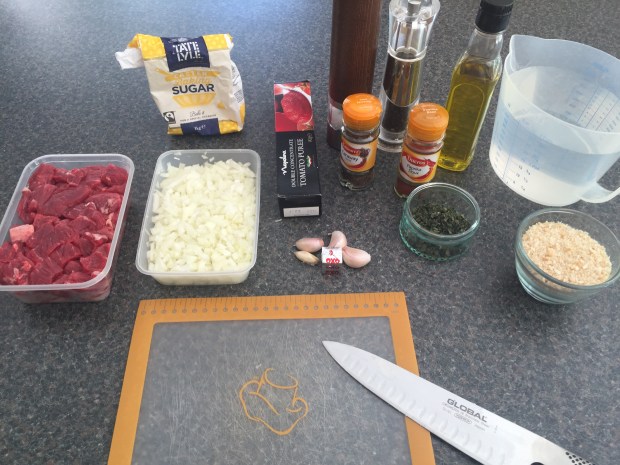
Ingredients for Hovězí Guláš (beef goulash)
IMG_9207
Making Hovězí Guláš (beef goulash)
IMG_9214
Hovězí Guláš (beef goulash)
IMG_9250
Hovězí Guláš (beef goulash)


IMG_9257
Our guests enjoying Hovězí Guláš (beef goulash) … cheers!


Micronesia (FSM)

The Federated States of Micronesia (FSM) are in the western Pacific Ocean and comprise of around 607 islands with a combined area of 271 sq miles. The FSM is made up of what is known as the Western and Eastern Caroline Islands. The islands are grouped into four states; Yap, Chuuk, Pohnpei and Kosrae. It forms part of the Micronesia region encompassing the FSM, Palau, Kiribati, Marshall Islands and Nauru. FSM’s capital is Palikir, located on Pohnpei Island. Pohnpei reputedly is one of the wettest places on earth, with up to 330 inches of rain per year.

Pohnpei is notable for the prevalence of an extreme form of color blindness called Achromatopsia, and known locally as maskun (meaning ’no see’). Approximately 5% of the atoll’s 3000 inhabitants are afflicted. A person with complete achromatopsia would see only black, white and shades of grey. The neurologist Oliver Sacks wrote a book about it in 1997 called ‘The Island of the Colorblind’.

Economic activity in the FSM consists primarily of subsistence farming and fishing. The potential for a tourist industry exists, but the remoteness of the location and a lack of adequate facilities hinder development. Top things to see and do in FSM include The ‘Venice of Micronesia’, Phonpei’s ancient stone city Nan Madol, Yap’s large stone money banks, diving Chuuk’s underwater WWII ‘museum’ that’s hailed as one of the world’s ultimate aquatic experiences and Kosrae’s mangrove swamps and sandy beaches.

The main staple foods in the FSM are taro, yam, bread-fruit, banana, and coconuts. Crab, shellfish, pork and chicken are also popular. Recipes include Prawn Adobo in Coconut Milk, Coconut Chicken Curry and Breadfruit salad. I opted to cook Kelaguen Chicken (Marinated chicken with coconut, spring onion & chilli) served with toasted flatbreads. We had friends to dinner and they all thought it was unique and very flavoursome.

Rating: 10/10

Serves 4
Prep time: 30 mins + 6 – 24 hours marinating time
Cook: 15 mins

For chicken kelaguen
4 boneless chicken thighs (with skin)
1/2 lb fresh coconut, coarsely grated
3 spring onions with their stalks, finely chopped
2 red chillies, seeds removed
1 green chilli, seeds removed
1/2 cup of fresh lemon juice
Flatbreads, toasted under the grill

For finadene marinade
1 cup lemon juice
1 cup soy sauce
1 medium onion, finely slices
1 red chilli

Mix together all the marinade ingredients and marinate the chicken for at least 6 hours.
Grill the chicken thighs on the barbecue for 10 – 15 minutes.
Remove the skin and slice.
Mix with coconut, onions, lemon juice, and chilies.
Add salt and pepper.
Serve with toasted flatbreads.


Diving in Yap
Diving with Manta Rays in Yap
micronesia
Federated states of Micronesia
micronesia sunset
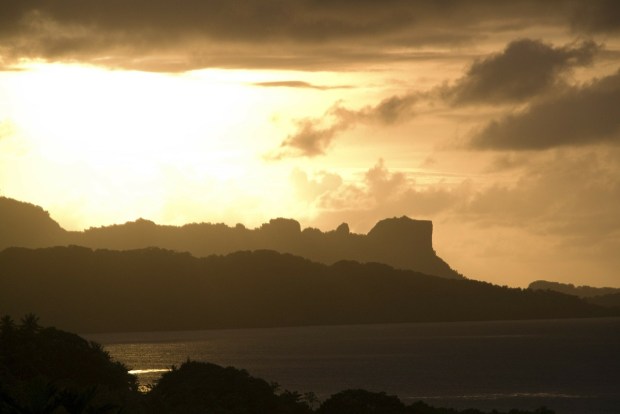
Micronesia sunset

Latvia

The Republic of Latvia was founded on 18 November 1918 but it was annexed by the USSR in 1940 – an action never recognized by the US and many other countries. Latvia reestablished its independence in 1991 following the breakup of the Soviet Union. It is situated in the Baltic region of Northern Europe and is one of the three Baltic states along with Estonia and Lithuania. Latvia became a member of the European Union in 2004. Most of Latvia’s territory is less than 100 metres above sea level and it has the 5th highest proportion of land covered by forests in the European Union. Latvia has a long tradition of conservation. Nationally protected areas account for around 20% of Latvia’s total land area. The 2012 Environmental Performance Index ranks Latvia second, after Switzerland, based on the environmental performance of the country’s policies.

Arvids Blumentāls aka the original Crocodile Dundee (he was the inspiration behind the Crocodile Dundee character played by Paul Hogan) was born in Latvia.

Riga, Latvia’s capital, was the European Capital of Culture 2014 and it’s historical centre is a UNESCO World Heritage Site. It is famous for notable wooden and art nouveau architecture, a vast Central Market and a medieval Old Town. Riga Cathedral was founded in 1211 and is the largest medieval church in the Baltic. Other Latvia highlights are emerald lakes and blueberry fields in Latgale Lakelands, Cape Kolka (desolate coastal villages) and Gauja National Park. The Venta Rapid, a waterfall on the Venta River in Kuldīga, is the widest waterfall in Europe at 249 metres and up to 270 metres during spring floods. Its height is 1.80–2.20 metres.

Latvian cuisine features meat in most main dishes. Pork and potatoes are common ingredients, along with cabbage, onions and eggs. It also offers plenty of varieties of bread and milk products, which are an important part of the Latvian cuisine. Some recipes I found include Rupjmaize (dark rye bread), Kāpostu tīteņi (cabbage rolls), Biezpiena sieriņš (pressed cottage cheese) and Skābeņu zupa (sorrel soup). I decided to make Pīrāgi (bacon pies), which I served as a snack to guests and they went down very well indeed.

Rating: 9/10

Makes 75
Prep time: 1.5 hour + 1.5 hours proving time
Cook time: 45 mins

For the dough
500ml milk
125ml cream
125g sugar
4 tsps dry yeast
125g butter, cubed
125g sour cream
1kg plain flour
1 egg, lightly whisked
1/4 cup milk
1 tbsp salt

For the filling
500g streaky bacon
1 small onion
salt and pepper
Extra flour for rolling
1 egg for egg wash

Put 385ml of milk and cream in a saucepan and add the sugar. Heat the mixture until it becomes blood warm. (Test by placing couple drops on your wrist, if the milk feels very hot, let it cool down a bit. Do not get the milk to the boiling point as it will kill the yeast.)
Place the yeast and 1 teaspoon of sugar in a small bowl and add 115ml of milk. Combine well and set aside for 15 minutes.
In a large bowl, pour the heated milk mixture and add cubed butter, sour cream and the whisked egg, combine well.
Add the yeast, sifted flour and salt and mix until all is combined well to create the dough. Knead the dough until it becomes smooth and does not stick to the hands or the bowl (add a bit more flour if necessary).
Cover the bowl with a clean tea towel and place in a warm spot for an hour or until the dough has doubled in size (about 1 to 1 1/2 hours).
Meanwhile, make the filling: finely cut the bacon and the onion, add a teaspoon of finely ground pepper and combine well.
Preheat the oven to 180 degrees. Line a baking tray with baking paper. Whisk the egg in a small bowl, add 1/4 cup of milk and set aside.
Sprinkle some flour on the rolling surface and place the dough on it. Cut it in quarters and work on each quarter at a time by rolling it until the dough is 5 mm thick.
Cut out circles about 6 cm in diameter. Place one teaspoon of filling on one side of the circle and fold over. Tightly press the dough together using your fingers, place pīrāgis seam side down and bend in a shape of a half moon.
Transfer pies on to the baking tray, spaced about 2 cm apart. Using a pastry brush, brush each pie with the egg wash.
Place the tray in the oven and bake for 15-17 minutes until golden brown.

IMG_9205
Ingredients for Pīrāgi
IMG_9217
Pīrāgi dough
IMG_9235
Pīrāgi (space them further apart than shown in this picture)
IMG_9242
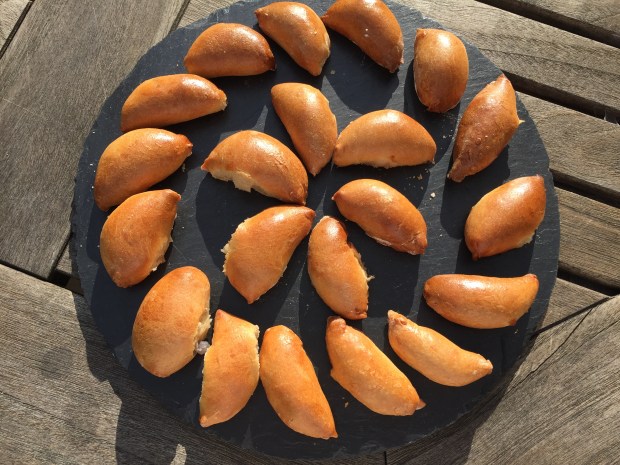
Pīrāgi
Latvia old town
Riga old town
Riga art nouveau
Art nouveau, Riga

South Korea

South Korea, officially the Republic of Korea is situated in East Asia in the southern half of the Korean Peninsula bordering the Sea of Japan and the Yellow Sea. The Seoul Capital area is the world’s sixth leading global city, with the fourth largest economy. 75% of South Korea is mountainous, making it a popular winter sport destination. They are to host the 2018 Winter Olympics.

President PARK Geun-hye, daughter of former ROK President PARK Chung-hee, took office in February 2013 and is South Korea’s first female leader. Her father PARK Chung-hee took over leadership of the country in a 1961 coup. During his regime, from 1961 to 1979, South Korea achieved rapid economic growth, with per capita income rising to roughly 17 times the level of North Korea.

Some interesting facts about South Korea
South Korea has the highest rate of plastic surgery per capita in the world.
They have a very unusual approach to age. Every South Korean child is considered to be one year old when it is born and it will turn two on the next Lunar New Year.
The iconic song “Gangnam Style” by the South Korean musician Psy became the first YouTube video to reach 1 billion views (The phrase “Gangnam Style” refers to a luxury lifestyle associated with the Gangnam District of Seoul).
It has the world’s fastest Internet speed and highest smartphone ownership, with half of Koreans paying all their bills using their mobile phones.
Although South Korea has very high living standards, suicide is a serious and widespread problem. It has the second-highest suicide rate in the world according to the World Health Organization.
Since 1997, every July the nine-day Boryeong Mud Festival takes place, attracting 1.5 million attendees. It was started to promote the health benefits of mud.

South Korea has 12 world heritage sites including Changdeokgung Palace Complex in Seoul, Hwaseong Fortress, Jongmyo Shrine and the Jeju Volcanic Island and Lava Tubes. In 2012, 11.1 million foreign tourists visited South Korea, making it the 20th most visited country in the world. The South Korean government has set a target of attracting 20 million foreign tourists a year by 2017.

Korean cuisine is largely based on rice, vegetables, and meats. Ingredients and dishes vary by province. Traditional Korean meals are noted for the number of side dishes that accompany steam-cooked rice. Recipes I came across include Kalbi Jim (stewed korean short ribs), Dak Galbi (spicy stir fried chicken) and Mi Yeok Gu (seaweed soup). I opted to cook Bulgogi (grilled marinated beef) which was absolutely delicious.

Rating: 10/10

Serves 2
Prep time: 10 mins + 2 hours marinating
Cook time: 6 mins

450g thinly sliced beef (sirloin or rib eye)
5 tbsp sugar
½ cup soy sauce
2 garlic cloves (bashed)
¼ tsp salt
5 tbsp Mirin (sweet sake, optional)
2 tbsp sesame oil
2 tbsp toasted sesame seeds
1 cup spring onions, chopped
2 cups thinly sliced carrots

Mix together all ingredients except carrots.
Marinate in the fridge for at least 2 hours.
Griddle the beef slices on a medium to high heat for a few minutes.
Add the marinating juice and carrots and cook for an additional 3 minutes.
Serve with steamed rice.


Chad

Chad is a landlocked nation in north central Africa. It is the fifth largest country in Africa in terms of area and the largest of Africa’s 16 landlocked countries. Lake Chad, after which the country is named, is the largest wetland in Chad and the second largest in Africa. Lake Chad occupied 130,000 sq mi of the Chad Basin 7,000 years ago, now it covers only 6,875 sq mi. Sadly it is falling victim to the Sahara and is receding northwards each year and may soon not even be in Chad.

Not long ago, geologically speaking – what is today the Sahara, was green savannah teeming with wildlife. During the African Humid Period, roughly 11,000 to 5,000 years ago, a vibrant animal community including elephants, giraffes, hippos, and antelope lived there. The last remnant of the “Green Sahara” exists in the Lakes of Ounianga in northern Chad, a series of 18 interconnected freshwater, saline, and hypersaline lakes now protected as a World Heritage site.

Extensive deforestation has resulted in loss of trees such as acacias, baobab, dates and palm trees. This has also caused loss of natural habitat for wild animals and lions, leopards and rhino have been almost decimated. Poaching is a serious problem in the country, particularly of elephants for the profitable ivory industry. Elephants are often massacred in herds in and around the parks by organised poaching. The problem is worsened by the fact that the parks are understaffed and that a number of wardens have been murdered by poachers.

Since independence from France in 1960, Chad has suffered instability stemming mostly from tension between the mainly Arab-Muslim north and the predominantly Christian and animist south. The only thing that unites the two is abject poverty. The United Nations’ Human Development Index ranks Chad as the seventh poorest country in the world, with 80% of the population living below the poverty line. In 2005, Transparency International’s Corruption Perceptions Index named Chad (tied with Bangladesh) as the most corrupt country in the world.

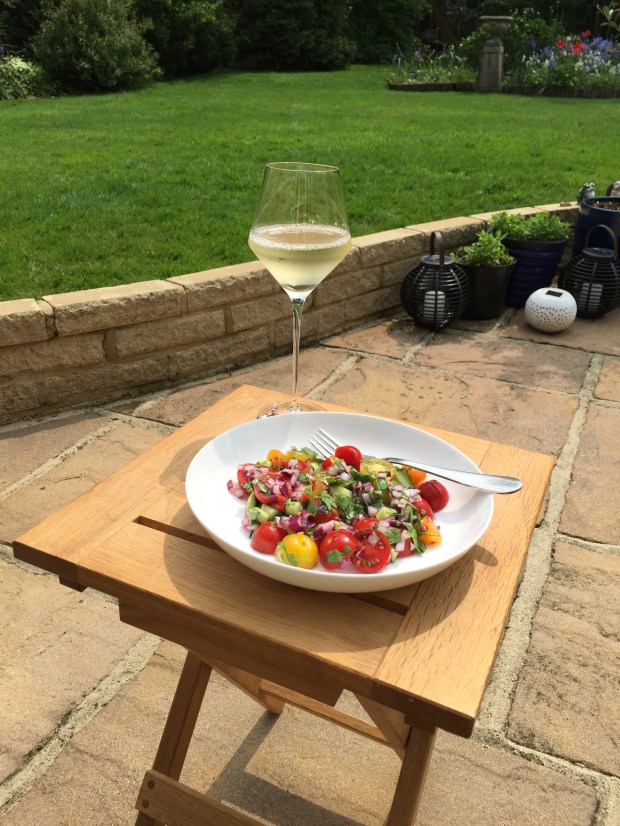
Despite all this, Chad possesses a rich cultural heritage and the cuisine offers a variety of grains, vegetables, fruits and meats. Fish is abundant in northern Chad, including tilapia, perch, eel, carp and catfish. Some of the recipes I came across during my research include Jarret de Boeuf (slow cooked beef and vegetable stew), Broiled Fish (A recipe from the villages along the Chari River) , Kisser (sourdough crepe) , Fangasou (fried doughnuts made of millet or wheat flour) and Maharagwe (beans in coconut milk). I decided to make Kachumbari (Chadian Tomato & Onion Salad) which I enjoyed al fresco in my garden on a rare sunny day in the UK! Unbelievably simple and it tasted so zingy and fresh – I absolutely loved it.

Rating 10/10

Serves 1
Prep time: 10 mins
Cook time: 0 mins

1/4 red onion, thinly sliced (or diced)
8 cherry tomatoes – red & yellow, halved (use ripe ones, ideally that have been on the window shelf for a while)
2 inches of cucumber, middle removed and diced
1/2 red chilli, seeds & placenta removed and sliced
Handful of fresh coriander, chopped
The juice of 1/2 lime

Combine all ingredients in a mixing bowl and toss until well combined and serve immediately.

IMG_9158
Ingredients for Kachumbari (Chadian tomato and onion salad)


IMG_9170
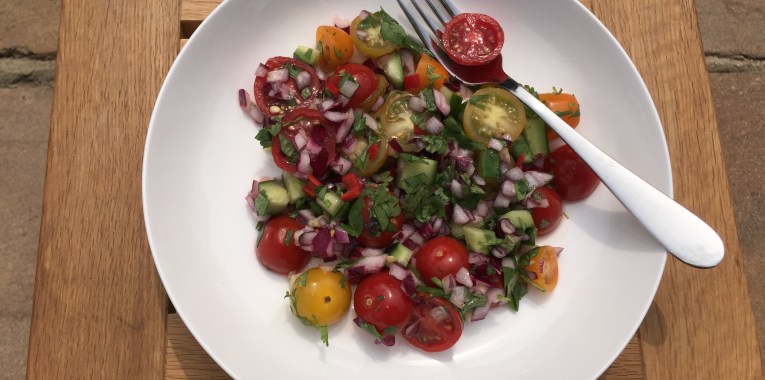
Kachumbari (Chadian tomato and onion salad)

IMG_9161
Kachumbari (Chadian tomato and onion salad)
chad sahara
Chad Sahara

Chile

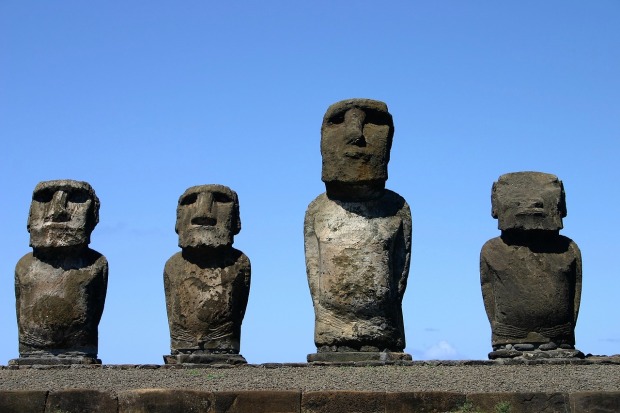
I’m lucky enough to have been to Chile and it really is one of the most stunning countries in the world with a remarkable variety of climates and landscapes. It stretches for 4,000 km down the west coast of South America between the Andes to the east and the Pacific Ocean to the west, but averages only 175 km wide. Chilean territory also includes the Pacific islands of Juan Fernández, Salas y Gómez, Desventuradas, and Easter Island in Oceania. Chile claims about 1,250,000 square km of Antarctica, although all claims are suspended under the Antarctic Treaty. 80% of Chile is covered by mountains.
The diverse climate of Chile ranges from the world’s driest desert in the north—the Atacama Desert—through a Mediterranean climate in the centre, humid subtropical in Easter Island, to an oceanic climate, including alpine tundra and glaciers in the east and south.

Some facts about this extremely diverse nation:
The Atacama Desert is the driest place in the world. It witnessed the longest record of 40 years without rain.
The world’s southernmost city “Puerto Williams” is in Chile.
Chile has the second largest volcano chain in the world after Indonesia and Ojos del Salado Volcano, located on the border of Chile and Argentina, is the highest active volcano in the world.
Escondida is the largest copper mine in the world and Chile produces a third of the world’s copper.
It ranks 5th in the world for wine production, at 1,832,000 tonnes per annum.
Gabriela Mistral was the first Latin American to receive a Nobel Prize in Literature in 1945.
Chile’s national bird, the Andean condor is the largest flying bird in the world by combined measurement of weight and wingspan. It has a maximum wingspan of 3.3 m.
The largest bunch of grapes ever grown was by Bozzolo Y Perut Ltda of Santiago, Chile weighing 9.4 kg (20 lb 11½oz).

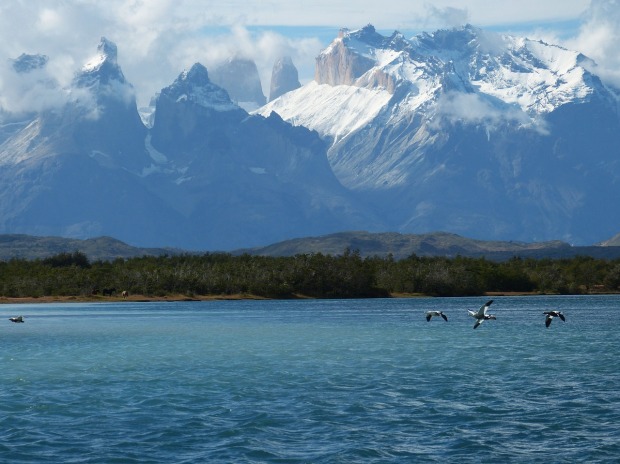
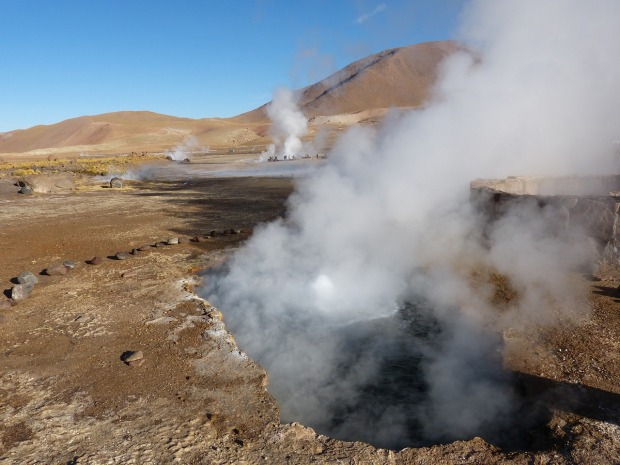
Having had first hand experience, there are so many attractions for the visitor. My highlights would include the breathtaking Torres del Paine National Park, meandering up the steep hills in Valparaiso, the peace and tranquility watching El Tatio Geysers in the Atacama desert at sun break and sipping wine whilst watching the beautiful sunset at La Serena beach.

Chilean cuisine takes influence from traditional Spanish, as well as the indigenous Mapuche culture. Recipes in Chile are notable for the variety of flavours and ingredients, with the country’s diverse geography and climate. There are many regional specialities including asado (barbequed meat) in the north, Pastel de choclo (layered pie with meat and corn) from the central valley and Mapuche chicken in the south. Other popular recipes include cazuela (stew with fish, meat or poultry), Chicharrón de papa (meat and fat from llama and lamb, boiled and then fried) and Leche asada (baked milk dessert with caramel). I decided to make empanadas, as I remember enjoying them very much when I was in Chile. They can be filled with a variety of ingredients, but traditionally they are filled with minced beef & onions. The recipe I found also included raisins, olives & hard boiled egg in the filling, which I’m not a fan of, so I opted to leave these out. The pastry was very simple to make and easy to work with. I will definitely be experimenting with different fillings.

Rating: 9/10

Makes 10 – 12
Prep time: 1 hour
Cook time: 1 hour 10 mins

For the dough:
1/2 cup milk
1/2 cup warm water
2 tsp table salt
1 lb all-purpose flour
2 egg yolks
3 oz melted butter

For the beef filling:
2 tbsp of oil
2 lb good quality minced beef
1/2 tsp paprika
1/2 tsp dry oregano
1 tsp salt
Pepper to taste
1/2 tsp of cumin
1/2 cup water
1 large onion chopped
1 tbsp all-purpose flour

Optional other filling ingredients:
20 black olives, chopped
40 raisins
2 hard-boiled eggs, chopped

To make the dough:
Mix together the milk, water and salt and stir until salt is completely dissolved
In a large bowl combine the flour and egg yolks, and mix using a knife
Add butter and gradually add the milk & water mix to form a dough
Knead dough for about 10 minutes until it is smooth and elastic
At this point you can put it in clingfilm in the fridge until you’re ready to use it.

To make the filling:
In a large frying pan, heat oil at medium to high heat
Fry the meat for 3 minutes without mixing
Turn over and brown for another couple of minutes
Add paprika, oregano, salt, pepper and cumin, and mix well
Add water and chopped onion
Cover and cook for 30 minutes on low heat
Add flour and mix well, modifying the seasoning if you like
Turn off heat, leave to cool and refrigerate

To assemble:
Preheat oven to 175c
Separate dough into 10 – 12 portions and cover with a clean kitchen cloth
Working each portion individually, shape into a ball and with a rolling pin smooth out the dough to about the size of a side plate (8 inches)
Fill each with 2 tablespoons of beef (you can also add a few raisins, chopped olives & chopped hard boiled egg if you like them)
Make sure to release trapped air before closing. Lightly brush the edges with milk, press firmly and fold. Brush the top of the empanadas with egg before putting them in the oven.
Bake for 30 to 35 minutes until browned, keeping a close eye on them. If they bubble up or swell, poke with a toothpick, so that they don’t come undone or open up.
Serve hot


torres-del-paine-675737_1280
Torres del Paine
el-tatio-1038353_1280
El Tatio geysers, Atacama desert
easter-island-1336918_1280
Maoi statues, Easter Island

Antigua and Barbuda

Separated by a few nautical miles, Antigua and Barbuda are in the middle of the Leeward Islands, part of the Lesser Antilles. There are also a number of smaller islands (including Crump Island, Lobster Island, Wicked Will Island and Prickly Pear Island). Columbus named Antigua after the church of Santa Maria de la Antigua in Seville, Spain. Antigua has a population of 85,632, mostly made up of people of West African, British, and Madeiran descent.

The Bird family has controlled the islands since Vere C. Bird founded the Antigua Labour Party in the mid-1940s. While tourism and financial services have turned the country into one of the more prosperous in the Caribbean, law enforcement officials have charged that Antigua and Barbuda is a major centre of money laundering, drug trafficking, and arms smuggling. Several scandals tainted the Bird family, especially the 1995 conviction of Prime Minister Lester Bird’s brother, Ivor, for cocaine smuggling.

Cricket is the national sport of Antigua and it has produced several famous cricket players including Sir Vivian Richards, Andy Roberts, Richie Richardson and Curtly Ambrose.

Eric Clapton founded The Crossroads Centre, a drug and alcohol addiction rehabilitation centre in 1998. For nearly twenty years Antigua served as Eric Clapton’s refuge from his drug-riddled rock stardom. Mr Clapton thought of the island as a safe and serene place where he could begin the process of healing from very devastating life events and situations. He writes in his 2007 autobiography “It really has been one of the only places on earth I’ve found where I can completely discard the pressures of my life and blend into the landscape. Clapton calls the land of Antigua his second home.

Tourism accounts for over half of the country’s GDP, with annual visitors of around 250,000. Some of the key highlights for the visitor are Nelson’s Dockyard (18th century British naval base), the port town of St John, beaches at Hawksbill Bay and Barbuda’s Codrington Lagoon.

Some of the recipes I came across were Pork with bacon & banana, Fungie (cooked cornmeal like polenta), Dukuna (sweet steamed dumpling), Antiguan fish broth and Fruit cake. I opted to cook Antiguan Jerk Chicken, which can be slowly cooked wings or breast on the bone.

Rating: 8/10

Serves 2
Prep time: 10 mins
Cook time: 4 hours

2 chicken breast quarters (with skin and on the bone)
1 tsp ancho chilli powder
1 tsp ground allspice or 1/2 tbsp allspice berries
1 tsp black peppercorns
1 tbsp honey
1 tbsp brown sugar
1 tsp dried chilli flakes
t tsp freshly grated ginger
1 tsp fresh parsley, chopped

Preheat the oven to 140c
In a mortar and pestle, grind all the spices together
Add the honey and brown sugar and continue to grind well
Add the chopped parsley and ginger and grind till a paste forms
Massage the paste all over the chicken breasts with your hands – it’s a messy job!
Place the chicken breasts in a lidded casserole pot with 1/4 cup of water and cook in the oven for 4 hours
After 4 hours, shred the chicken using a fork
Serve in pitta bread, sub rolls or wraps with a slice of melted cheese and hot sauce

Mali

This is a land locked country, some say in North Africa, others say West Africa. Mali lies in the torrid zone and is among the hottest countries in the world. Most of Mali receives negligible rainfall and droughts are very frequent.

Mali has considerable natural resources, with gold, uranium, phosphates, kaolinite, salt and limestone. It has the third highest gold production in Africa (after South Africa and Ghana). Despite this, Mali is one of the poorest countries in the world with an average worker’s annual salary of approximately US$1,500.

Infamous Timbuktu, known as the remotest place on earth, is a city in Northern Mali. Goods from the Mediterranean shores and salt were traded in Timbuktu for gold from the 11th century. The prosperity of the city attracted African and Arabs who were both scholars and merchants. To sum it up, Timbuktu was the city of Divine light, the city of knowledge, the city of trade and the city of hospitality.
It is home to three of the oldest mosques in West Africa. The Centre de Recherches Historiques Ahmed Baba houses 23,000 Islamic religious, historical and scientific texts from all over the world. The oldest manuscripts date from the 12th century, but there are countless other priceless works. Mali is also home to the world’s largest mud brick building – the Great Mosque of Djenne, built in 1907 and became a Unesco World Heritage Site in 1988.

Rice and millet are the staples of Malian cuisine. Popular dishes include fufu (pounded cassava), jollof rice, and maafe (peanut stew). A friend of my sister has lent me a cookbook with many traditional recipes from countries all over the world (thank you Laurie).  I was pleased to find it included one for Mali called Meni-meniyong (Sesame seed sticks) which sounded quite tasty. Unfortunately they didn’t turn out well at all as they were far too sticky and soft to actually eat, so sadly the first recipe of the challenge to end up in the bin (the photo is deceptive!).

Rating: 0/10 (so sorry Mali)

IMG_9013