Antigua and Barbuda

Separated by a few nautical miles, Antigua and Barbuda are in the middle of the Leeward Islands, part of the Lesser Antilles. There are also a number of smaller islands (including Crump Island, Lobster Island, Wicked Will Island and Prickly Pear Island). Columbus named Antigua after the church of Santa Maria de la Antigua in Seville, Spain. Antigua has a population of 85,632, mostly made up of people of West African, British, and Madeiran descent.

The Bird family has controlled the islands since Vere C. Bird founded the Antigua Labour Party in the mid-1940s. While tourism and financial services have turned the country into one of the more prosperous in the Caribbean, law enforcement officials have charged that Antigua and Barbuda is a major centre of money laundering, drug trafficking, and arms smuggling. Several scandals tainted the Bird family, especially the 1995 conviction of Prime Minister Lester Bird’s brother, Ivor, for cocaine smuggling.

Cricket is the national sport of Antigua and it has produced several famous cricket players including Sir Vivian Richards, Andy Roberts, Richie Richardson and Curtly Ambrose.

Eric Clapton founded The Crossroads Centre, a drug and alcohol addiction rehabilitation centre in 1998. For nearly twenty years Antigua served as Eric Clapton’s refuge from his drug-riddled rock stardom. Mr Clapton thought of the island as a safe and serene place where he could begin the process of healing from very devastating life events and situations. He writes in his 2007 autobiography “It really has been one of the only places on earth I’ve found where I can completely discard the pressures of my life and blend into the landscape. Clapton calls the land of Antigua his second home.

Tourism accounts for over half of the country’s GDP, with annual visitors of around 250,000. Some of the key highlights for the visitor are Nelson’s Dockyard (18th century British naval base), the port town of St John, beaches at Hawksbill Bay and Barbuda’s Codrington Lagoon.

Some of the recipes I came across were Pork with bacon & banana, Fungie (cooked cornmeal like polenta), Dukuna (sweet steamed dumpling), Antiguan fish broth and Fruit cake. I opted to cook Antiguan Jerk Chicken, which can be slowly cooked wings or breast on the bone.

Rating: 8/10

Serves 2
Prep time: 10 mins
Cook time: 4 hours

2 chicken breast quarters (with skin and on the bone)
1 tsp ancho chilli powder
1 tsp ground allspice or 1/2 tbsp allspice berries
1 tsp black peppercorns
1 tbsp honey
1 tbsp brown sugar
1 tsp dried chilli flakes
t tsp freshly grated ginger
1 tsp fresh parsley, chopped

Preheat the oven to 140c
In a mortar and pestle, grind all the spices together
Add the honey and brown sugar and continue to grind well
Add the chopped parsley and ginger and grind till a paste forms
Massage the paste all over the chicken breasts with your hands – it’s a messy job!
Place the chicken breasts in a lidded casserole pot with 1/4 cup of water and cook in the oven for 4 hours
After 4 hours, shred the chicken using a fork
Serve in pitta bread, sub rolls or wraps with a slice of melted cheese and hot sauce

Mali

This is a land locked country, some say in North Africa, others say West Africa. Mali lies in the torrid zone and is among the hottest countries in the world. Most of Mali receives negligible rainfall and droughts are very frequent.

Mali has considerable natural resources, with gold, uranium, phosphates, kaolinite, salt and limestone. It has the third highest gold production in Africa (after South Africa and Ghana). Despite this, Mali is one of the poorest countries in the world with an average worker’s annual salary of approximately US$1,500.

Infamous Timbuktu, known as the remotest place on earth, is a city in Northern Mali. Goods from the Mediterranean shores and salt were traded in Timbuktu for gold from the 11th century. The prosperity of the city attracted African and Arabs who were both scholars and merchants. To sum it up, Timbuktu was the city of Divine light, the city of knowledge, the city of trade and the city of hospitality.
It is home to three of the oldest mosques in West Africa. The Centre de Recherches Historiques Ahmed Baba houses 23,000 Islamic religious, historical and scientific texts from all over the world. The oldest manuscripts date from the 12th century, but there are countless other priceless works. Mali is also home to the world’s largest mud brick building – the Great Mosque of Djenne, built in 1907 and became a Unesco World Heritage Site in 1988.

Rice and millet are the staples of Malian cuisine. Popular dishes include fufu (pounded cassava), jollof rice, and maafe (peanut stew). A friend of my sister has lent me a cookbook with many traditional recipes from countries all over the world (thank you Laurie).  I was pleased to find it included one for Mali called Meni-meniyong (Sesame seed sticks) which sounded quite tasty. Unfortunately they didn’t turn out well at all as they were far too sticky and soft to actually eat, so sadly the first recipe of the challenge to end up in the bin (the photo is deceptive!).

Rating: 0/10 (so sorry Mali)

IMG_9013


Estonia

The territory of Estonia consists of a mainland and 2,222 islands and islets in the Baltic Sea. It is bordered to the north by the Gulf of Finland, to the west by the Baltic Sea, to the south by Latvia, and to the east by Lake Peipus and Russia.

Invaded by both the USSR and Germany during WW2 and after, Estonia became independent (for the second time) in September 1991. The Singing Revolution is the term used for the events between 1987 and 1991 that led to the independence of Estonia, Latvia and Lithuania. The term was coined by an Estonian activist and artist, Heinz Valk, in an article published a week after spontaneous mass night-singing demonstrations at the Tallinn Song Festival Grounds. In 1989 in a landmark demonstration for independence, more than two million people formed a human chain stretching through Lithuania, Latvia and Estonia, called the Baltic Way. Despite not being directly involved in the WW2 (only fighting against the occupation of its land), Estonia lost around 20-25% of its population during the war; some left the country and some died as a result of the war.

The first version of the Skype software was created by three Estonians (Ahti Heinla, Priit Kasesalu, and Jaan Tallinn) in 2003, in cooperation with Janus Friis from Denmark and Niklas Zennström from Sweden. Today it has nearly 700 million users worldwide, of which over 100 million use it each month. Most of the development team and nearly half of all employees of Skype are still situated in Estonia. It is often described as one of the most internet-focused countries in Europe with Tallinn being listed among the top 10 digital cities in the world.

Tallinn’s Old Town is listed as a UNESCO World Heritage Site and it’s highlights include the award winning KUMU art museum, the Alexander Nevsky Orthodox Cathedral and Kadriorg Park. The residents of Tallinn receive completely free public transport, which has helped to reduce cars in the city and decrease pollution.

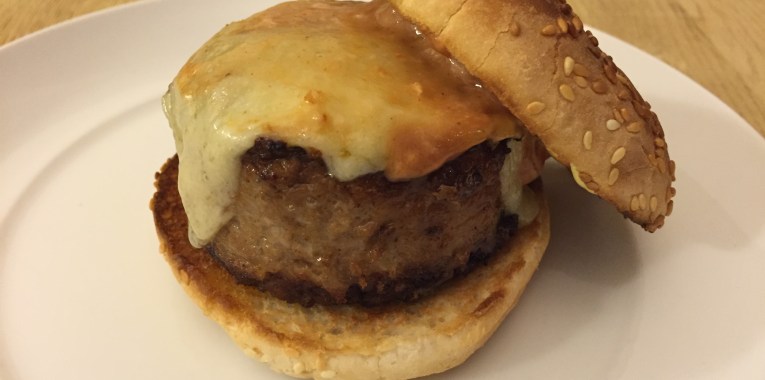
Traditional Estonian cuisine has substantially been based on meat and potatoes, and fish in coastal and lakeside areas. Today it is influenced by many countries. Recipes I came across include Taidetud vasikarind (Roast stuffed shoulder of veal) , Kringel (cinnamon buns), Karask (Barley bread) and Rosolje (sausages served with potatoes). I decided to cook Hakklihakotlet (ground meat patties) and I served them in burger buns with melted cheese. They were simple to make and pretty tasty.

Rating: 8/10

Makes 8 patties

Prep time: 20 mins
Cook time: 20 mins

220g lean ground beef
220g lean ground veal
220g ground lean pork
2 eggs
1 1/2 cup fresh breadcrumbs
1 tsp salt
1⁄4 tsp ground black pepper
1⁄2 cup onion, finely chopped
1/4 cup cold water
4 tablespoons vegetable oil

In a large mixing bowl, combine everything except for 1 cup bread crumbs and the oil, and knead with your hands for 5-10 minutes or until mixture is smooth, light and fluffy.
Moisten your hands with cold water and shape the mixture into 8 thick, round patties, then dip each in the remaining bread crumbs, coating all sides.
Heat the vegetable oil in a heavy frying pan over a medium to high heat.
Fry the patties 4 at a time for about 5-10 minutes on each side, keeping an eye on the heat so that they brown but don’t burn.
To make sure that they are fully cooked insert the tip of a knife into one of the patties and look to see that there is no pink. If it is still pink in the middle, lower the heat and cook for a few minutes longer.
Serve in burger buns with your choice of melted cheese.


Burundi

Burundi is a landlocked country in the African Great Lakes region of East Africa. The Twa, Hutu and Tutsi peoples have lived in Burundi for at least 500 years. Burundi has been plagued by ethnic conflict between the majority Hutus and the Tutsis, who tend to dominate the government and army—but are only 14 percent of the population. A 2003 cease-fire and new government offered hope for peace, however this peace came to a shattering end in 2015 when President Nkurunziza decided to run for what many Burundians believed to be a constitution breaking third term in office. Violence broke out before the election, and has escalated since. The entire country is now considered a no go area for travellers.

Burundi is one of the most eroded and deforested countries in all of tropical Africa. The cutting of forests for fuel is uncontrolled despite legislation requiring permits. Only about 5.7% of Burundi’s total land area is protected.

Burundi is one of the world’s poorest countries, owing in part to its landlocked geography, poor legal system, lack of economic freedom, lack of access to education, and the proliferation of HIV/AIDS. The World Happiness Report 2016 update ranked Burundi as the world’s least happy nation.

Bujumbura’s Lake Tanganyika beaches are some of the best urban beaches of any landlocked country in Africa. A small spring at Kasumo, 115km southeast of Bujumbura might be the southernmost source of the River Nile. Drumming is an important part of Burundi’s cultural heritage. The world-famous Royal Drummers of Burundi have performed for over 40 years.

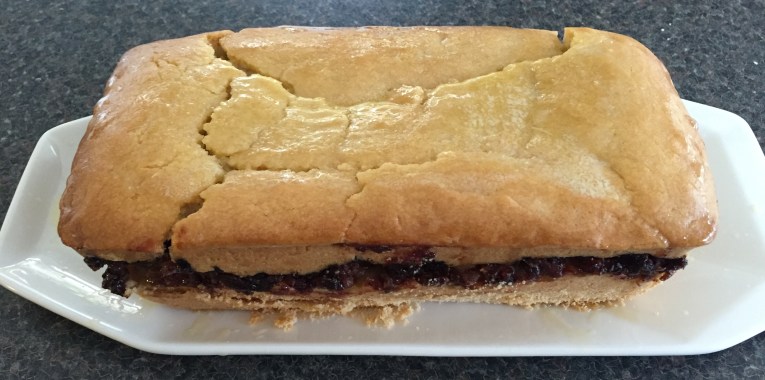
A typical Burundian meal consists of sweet potatoes, corn, and peas. Due to the expense, meat is eaten only a few times per month. Recipes I came across included Marahagwe (bean and vegetable stew), Ibiharage (fried beans) and the somewhat strange pairing of banana with beans. I opted to make date & banana loaf, which although it was a little dry, the flavour was pretty good.  Untraditionally, I did however serve it with clotted cream as I felt it was too dry on it’s own.

Rating: 6/10

Serves 8
Prep time: 20 mins
Cook time: 30 mins

260g butter, melted
1 cup sugar
2 eggs
4 cups flour
1/4 tsp salt
1 tsp baking powder
1 large or 2 small bananas
1 & 1/2 cup chopped dates
2 tbsp powdered sugar
1 tbsp ground cinnamon

Preheat the oven to 175c.
Beat 230g of the melted butter with the sugar until well blended.
Add the eggs one at a time mixing well before adding the second one.
Add the flour, salt and baking powder and mix well.
Line a loaf tin with parchment paper.
Spread half of the mix in the bottom of the tin and level the surface with your fingertips.
Add the sliced bananas.
Remove pits from dates, chop coarsely and pout on top of the bananas.
Cover with the remaining cake mix.
Bake for about 30 minutes until golden brown in an oven.
Remove from the oven and brush the top of the cake with the remaining 2 tablespoons of melted butter.
Sprinkle the surface with a mixture of powdered sugar and cinnamon.

Benin

Benin is a country in West Africa, bordered by Togo to the west, Nigeria to the east, and Burkina Faso and Niger to the north. About 42 African ethnic groups live in Benin, with most people living on its small southern coastline on the Bight of Benin.  It was formerly called Dahomey, a kingdom that rose to prominence in about 1600 and over the next two and half centuries became a regional power, largely based on its slave trade. Dahomey was also widely known for its corps of female soldiers known as the Dahomey Amazons.

Benin is widely seen as the birthplace of voodoo. They hold an annual Voodoo festival in Ouidah on Voodoo Day (January 10th), which is a public holiday. There is a national Voodoo museum.  Voodoo is more than a belief system, it is a complete way of life, including culture, philosophy, language, art, dance, music and medicine.

Oscar nominated Djimon Hounsou (of Gladiator and Blood Diamond) was born in Cotonou, Benin.

It offers the visitor many interesting sights including the Parc National de la Pendjari, which is one of the best wildlife parks in West Africa. Lions, cheetahs, leopards, elephants and hundreds of other species thrive here.  Other highlights are Grand Popo (palm fringed beaches), the colonial buildings of Porto Novo (the capital) and Grand Marche de Dantokpa (the large market in Cotonou).

Recipes I came across for Benin include Ago Glain (spicy crab, tomato and onion stew) , Akkra Funfun (white bean fritters) , Talé Talé (deep fried banana fritters).  I opted to make Yovo doko (Beninese sweet fritters) which I served for breakfast.  The kids enjoyed them with chocolate spread!

Rating: 8/10

Makes about 40 fritters
Prep time: 10 mins
Cook time: 30 mins

Peanut oil
500g plain flour
170g caster sugar
1/2 tsp vanilla powder
15g yeast
500ml water
Salt

Put the flour, yeast, salt, sugar and water in a bowl and mix with your fingers until it is well blended.
In a large frying pan, heat the oil to low – medium.
Place spoonfuls of the mixture around the pan and fry for 6 minutes on each side and then 2 minutes again on the first side.
Drain on kitchen towel and serve with a dusting of icing sugar.

Malawi

Malawi lies landlocked in southeast Africa.  It was formerly known as Nyasaland.  The name Malawi comes from the Maravi, an old name of the Nyanja people that inhabit the area. The country is also nicknamed “The Warm Heart of Africa”.  Lake Malawi, which takes up a third of Malawi’s area is a huge freshwater lake, lined with excellent beaches and filled with colorful fish, as well as the occasional hippo and crocodile.   Lake Malawi was once called “The Lake of the Stars” by the famed Scottish explorer David Livingstone, because lantern lights he saw from the fishermen’s boats resembled the stars at night.

Malawi has been independent from Britain since 1964.  President Hastings Kamuzu Banda ruled for more than 25 years until democratic elections in 1994 brought in new leadership.

Apparently Malawi is the only country in the world that has a Carlsberg factory (with the exception, of course, of Denmark) – so Carlsberg beer is sold here at just about 35p!

Highlights for the visitor are aplenty with several wildlife national parks and reserves (Nyika, Nkhotakota, Lilongwe and Majete to name a few), the beaches of Likoma Island, Mt Mulanje and the impressive Manchewe Falls.

Popular cuisine of Malawi includes different types of fish, nsima (ground corn), kachumbari (tomato & onion salad) and kondowole (cassava flour & water). They also enjoy tea & coffee, so I opted to cook a dish called Mandasi (doughnuts) which are generally served with a hot drink.  We had some family visiting for the weekend so I served these for breakfast alongside Yovo Doko fritters from Benin and the kids really tucked in!!

Rating: 9/10

Makes 12 doughnuts
Prep time: 10 mins
Cook time: 15 mins

2 cups plain flour
Pinch of salt
2 tsps of baking powder
2 tbsps of sugar
1 beaten egg
1 cup of milk
Vegetable oil for frying

Mix the flour, salt, baking power in a bowl. Add the sugar, egg, milk and beat until smooth.
Drop spoonfuls of the batter into a deep fat fryer with hot oil and fry until golden brown, turning once.
Drain on kitchen towel and serve with a dusting of icing sugar.


The Gambia

The Gambia is the smallest country in Africa.  It is mostly surrounded by Senegal, except for a short strip on the Atlantic coastline.  The River Gambie (from which the country takes it’s name) flows from east to west for three hundred miles, the entire length of the country.

The Gambia gained its independence from the UK in 1965.  A short-lived federation of Senegambia was formed between 1982 and 1989. In 1991 the two nations signed a friendship and cooperation treaty, but tensions have flared up intermittently since then.

The Gambia’s economy is dominated by farming, fishing, and especially tourism.  They have 100,000 tourists visiting each year, mainly from Europe, and 50% are from the UK.  Among birdwatchers it is revered as one of Africa’s best birding destinations with more than 560 different species spotted.  Other highlights include the Atlantic Coast resorts with it’s lovely beaches & fishing villages, Banjul market (the capital), taking a pirogue ride through the mangroves and James Island slavery museum.

Recipes I came across for The Gambia were Domada (peanut & tomato paste), Superkanja (okra & beef stew), Base nyebe (rich stew of chicken or beef with green beans and other vegetables) and Chere (steamed millet flour balls).  I decided to make Cashew Nut Ngato (cashew nut brittle), which in all honesty turned into a bit of a disaster.  I’m not sure if the ingredient ratios I followed weren’t quite right or if I should’ve bashed the nuts before adding them to the sugar, but either way it wasn’t great!

Rating: 3/10

Japan

Japan is a place I’ve always wanted to go to, but I haven’t quite made it yet.  A quote from Chris Rowthorn on the Lonely Planet website sums it up beautifully;
“I’ve spent most of my adult life in Japan and now it feels like home to me. I love the food: it’s incredibly varied and nourishing and there seems to be no end to the culinary discoveries one can make. I love the combination of a hike in the mountains followed by a long soak in an onsen. But, most of all, I love the meticulous and careful nature of the Japanese people, reflected in every aspect of Japanese life, from trains that run right on time to sublime works of art. Put it all together and you come away with a country that still intrigues me even after two decades of living there.”


Japan is a stratovolcanic archipelago of 6,852 islands. The four largest are Honshu, Hokkaido, Kyushu and Shikoku, which make up about ninety-seven percent of Japan’s land area.  Over 70% of Japan is mountainous and there are over 100 active volcanoes.  The population of 126 million is the world’s tenth largest.  It has the world’s third-largest economy by nominal GDP and the world’s fourth-largest economy by purchasing power parity.  Japan has the highest life expectancy ranking in the world with an overall life expectancy of 84 (vs 81 in the UK, which is ranked no.20).


Some quick facts …
Coffee is very popular and Japan imports approximately 85% of Jamaica’s annual coffee production.
On average there are around 1,500 earthquakes every year in Japan.
Japan is the largest automobile producer in the world.
It is home to the world’s longest railroad tunnel at 54 kilometers (33 miles) – the Seikan Tunnel linking Honshu to Hokkaido.
As of 2011, Japan overtook France in the highest number of Michelin starred restaurants and has maintained the title since.


I received a few suggestions from friends for Japanese recipes including Shabu shabu (hotpot of meat & vegetables), Katsu curry (deep fried pork or chicken in curry sauce) and Okonomiyaki (savoury pancake).  Other traditional dishes include miso soup, soba or udon noodles, sashimi (raw fish), chahan (fried rice), tempura (deep fried fish or vegetables), gyoza (dumplings) and teriyaki (grilled meat, fish or vegetables).


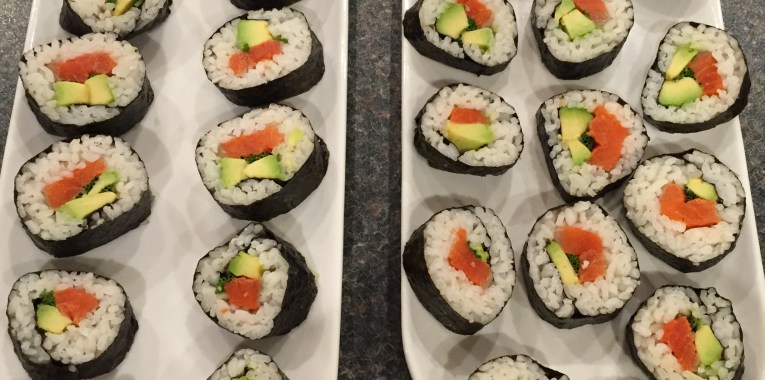
As I was having a little get together with friends I decided to make Maki-zushi (sushi rolls) with salmon & avocado to serve as a nibble with drinks.  It seemed the jury is still out for some of my guests when it comes to raw fish.


Rating: 8/10

Makes 32 sushi rolls
Prep time: 20 minutes
Cook time: 10 minutes

300g sushi rice
2 tbsp rice or white wine vinegar
1 tsp caster sugar
1 large avocado
juice ½ lemon
4 sheets nori seaweed
2 previously frozen salmon fillets thawed
1 bunch chives
Soy sauce & wasabi to serve

Put the rice in a small pan with 600ml water. Bring to the boil and cook for 10 mins until the water is absorbed and the rice is tender. Stir through the vinegar and sugar, cover and cool.
Skin, stone and slice the avocado. Put in a bowl and squeeze over the lemon juice, turning the avocado to ensure the pieces are covered.
Divide the rice between the nori sheets and spread it out evenly, leaving a 1cm border at the top and bottom. Lay the salmon over the rice, followed by the chives and finally position the avocado across the centre.
Fold the bottom edge of the seaweed over the filling, then roll it up firmly. Dampen the top border with a little water to help it seal the roll. Repeat to make 4 rolls. At this stage, the rolls can be wrapped individually in cling film and chilled until ready to serve.
Using a serrated knife, cut each roll into 8 rounds. Serve with sweet soy sauce for dipping.

Ukraine

Ukraine, the largest country in Europe (excluding Russia) is 603,628 square kilometres with a coastline of 2,782 kms.  It borders the Black Sea, Poland, Romania, and Moldova in the west and Russia in the east.  The geographic center of Europe is considered to be in a small Western Ukrainian town called Rahiv.  Ukraine’s population has been declining since the 1990s because of its high death rate and a low birth rate. The population is shrinking by over 150,000 annually since 1993.  Ukrainians are of Slavic origin. About 75% of the population is ethnic Ukrainian. The largest minority group is the Russians at about 20%.

The territory of modern Ukraine has been inhabited since 32,000 BC. During the Middle Ages, the area was a key centre of East Slavic culture, with the powerful state of Kievan Rus’ forming the basis of Ukrainian identity.  It has been ruled and divided by a variety of powers, including Lithuania, Poland, the Ottoman Empire, Austria-Hungary, and Russia.  It is currently in territorial dispute with Russia over the Crimean peninsula which Russia annexed in 2014 but which Ukraine and most of the international community recognise as Ukrainian.

Ukraine suffered the world’s worst recorded nuclear accident. On the morning of April 26, 1986, reactor No. 4 at the Chernobyl Nuclear Power Plant, 80 miles north of Kiev, exploded, sending radioactive contaminants three miles up into the atmosphere and out over parts of Europe, Asia, and North America.

For the visitor it offers a diverse range of sights and activities namely; the Carpathian mountains and National Park, the 16th century Khan’s Palace, Yalta, the laid back beach resort, the quaint town of Lviv, a Unesco World heritage site and Kyiv, the capital with plenty of cultural points of interest.

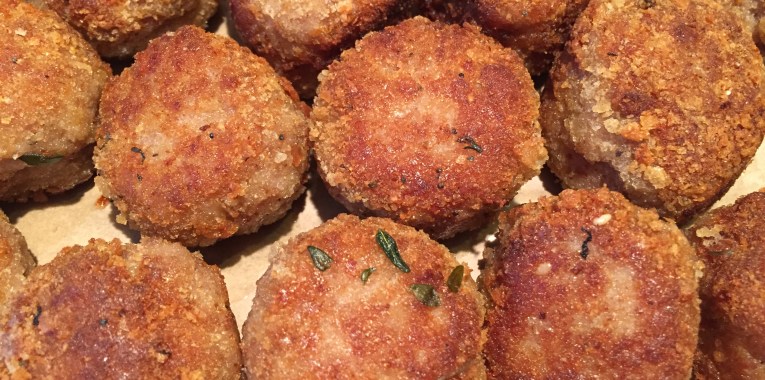
The diet of Ukraine features chicken, pork, beef, fish and mushrooms.  Popular traditional dishes include varenyky (dumplings), nalysnyky (filled pancakes) and of course chicken kiev.  Some other recipes I came across were Kruchenyky (meat rolls), Pyrizhky (stuffed pastry buns) and Shynka (baked ham).  I opted to cook Mazuricks (turkey cutlets with cheese), which I served to a number of guests as a bit of a snack along with drinks and they went down extremely well!

Rating: 9/10

Serves: makes 34 bite size mazuricks
Prep time: 20 mins + 40 mins cooling

Cook time: 15 mins

750g turkey mince
112g finely grated cheddar cheese
75g butter
2 eggs
37ml milk
150g plain flour
75g breadcrumbs
2 tbsp vegetable oil
A few sprigs of thyme
2 garlic cloves bashed
Salt & pepper

Put the turkey mince into a mixing bowl. Melt the butter and add to the meat, stir well.
Add the eggs, milk, salt, pepper, flour and cheese to the meat. Stir well until fully combined.
Shape into balls, sausages or patties and roll in breadcrumbs.
Put them into bowl with a tightly fitted lid and store into fridge for 40 mins.
Heat the vegetable oil in frying pan, add thyme twigs and garlic.
Once garlic is browned, remove it from the oil along with thyme.
Fry the mazuricks on both sides in the flavoured oil, approximately 10 – 15 minutes (depending on the size).
I wasn’t serving them straight away, so I heated them up in the oven on 170c for 10 minutes before serving.

North Korea

The world’s most secretive country is situated in the northern part of the Korean Peninsula.  Early European visitors to Korea remarked that the country resembled “a sea in a heavy gale” because of the many successive mountain ranges that crisscross the peninsula.


After the Japanese surrender at the end of World War II in 1945, Korea was divided into two zones by the United States and the Soviet Union, with the north occupied by the Soviets and the south by the Americans. Negotiations on reunification failed, and in 1948 two separate governments were formed: the Democratic People’s Republic of Korea in the north, and the Republic of Korea in the south. An invasion initiated by North Korea led to the Korean War (1950–53). Although the Korean Armistice Agreement brought about a ceasefire, no official peace treaty was ever signed.  Both states were accepted into the United Nations in 1991.
North Korea has the highest number of military and paramilitary personnel in the world, with a total of 9,495,000 active, reserve, and paramilitary personnel.


It isn’t impossible to visit North Korea, however it isn’t straightforward.  Koryo Group offer group or independent tours to North Korea from China.
You can expect to pay from €1,800 for a 3 night basic tour departing from Beijing, including round-trip tickets to Pyongyang on Air Koryo, accommodation, guide fee, private transport, meals, and entry fees.  You cannot travel alone at any time, you must always be accompanied by 2 state employed guides.


A few of the highlights according to Lonely Planet include Paekdu (the country’s highest mountain and an extinct volcano with a vast crater lake at its centre), Pyongyang’s Juche Tower and the Arirang Mass Games annual event in May.


Korea cuisine is based on rice, meat & vegetables. Some of the recipes I came across include Dae Ji Bool Gogi (spicy marinated pork) , Chap Chee or Japchae Noodles (mixed vegetables with noodles) , Bulgogi (Korean grilled meat on skewers) and Naengguk (cold soup).  I decided to cook Kalbi (BBQ short ribs).  The recipe called for short cooking time, although the beef short ribs I bought stated they should be slow cooked.  The marinade was really tasty but our palates would’ve preferred the meat to be slow cooked.


Rating: 6/10


Serves 2 – 3
Prep time: 10 minutes + 3 hours or overnight marinating
Cook time: 25 minutes


1/2 cup soy sauce
1/2 cup brown sugar
1/2 cup water
1 garlic clove, minced
2 spring onions, chopped
1 tbsp toasted sesame oil
700g beef short ribs


In a bowl, stir together the soy sauce, brown sugar, water, garlic, green onions, and sesame oil until the sugar has dissolved.
Place the ribs in a large plastic zipper bag. Pour the marinade over the ribs, squeeze out all the air, and refrigerate the bag for 3 hours to overnight.
Preheat an outdoor grill to medium-high heat, and lightly oil the grate.
Remove the ribs from the bag, shake off the excess marinade, and discard the marinade.
Grill the ribs on the preheated grill until the meat is still pink but not bloody nearest the bone about 10 – 12 minutes per side.
Serve with boiled rice.


United Arab Emirates

The United Arab Emirates (UAE) is a federation of seven emirates established in 1971 – Abu Dhabi (the capital), Ajman, Dubai, Fujairah, Ras al-Khaimah, Sharjah, and Umm al-Quwai.
Once a quiet Bedouin backwater, now an astonishing blend of Arabian tradition and economic innovation.  The UAE’s oil reserves are the seventh-largest in the world and as such is one of the wealthiest countries in the Middle East.
In 2013, the UAE’s total population was 9.2 million, of which 1.4 million are Emirati citizens and 7.8 million are expatriates.   Dubai is the most populated Emirate with about 36% of the UAE population.
The climate of the U.A.E is subtropical-arid with hot summers and warm winters. The hottest months are July and August, when average maximum temperatures reach above 45 °C on the coastal plain.  In 2004, there was snow in the UAE for the very first time.
According to Lonely Planet there are 186 sights in the UAE.  The top picks include Sheikh Zayed Grand Mosque in Abu Dhabi, Dubai museum, Al Jahili Fort in Al Ain, Deira Souqs and Emirates Palace.  The Burj Khalifa, in Dubai, was completed in January 2010 and became the world’s tallest building at 2,716 feet (828 meters) and 160 stories. It contains the world’s fastest elevators and 20.7 acres of glass.
The Telegraph states that the most expensive hotel room in Dubai is the Royal Suite in Burj Al Arab Jumeirah, priced at up to £12,000 per night.  This is a snip in comparison to the Royal Penthouse Suite at the President Wilson Hotel in Geneva which would set you back £53,000 per night!!
When it comes to the food, they have adopted most of their foods from other West and South Asian countries including Iran, Saudi Arabia, Pakistan, India and Oman.  Seafood is popular along with meat and rice.  Alcohol is only allowed to be served in hotel restaurants, bars and nightclubs.  Although one may consume alcohol, it is illegal to be intoxicated in public.  Recipes I came across include Machboos (spicy stew with rice) , Harees (dumplings) , Shawarma (kebab) , Khanfaroush (cookies) , Chicken Salona (stew) and Chabab (bread).  I opted to make Khameer bread, which is traditionally served at breakfast with cottage cheese or fruit, however I served it as a starter with dips.  It was a little sweet, but enjoyable none the less.
Rating: 7/10
1 cup plain flour
1 cup wholemeal flour
1/2 tbsp instant yeast
1/4 cup milk powder
1/4 cup sugar
1/2 tsp saffron
1/2 tsp cardamom powder
3/4 cup warm water
2 tbsp toasted sesame seeds
Add both flours, yeast, milk powder, saffron, cardamon powder and sugar in a large bowl and whisk well to combine.
Slowly add water and knead to make a soft dough. When the flour holds together as a dough (you may not need to use all the water), place it on a flat surface and knead for 5 minutes to get a smooth dough.
Let the dough rest for 1 hour in a warm place.
Divide the dough into 6-7 portions. Roll each portion into a disc of 4-5 inches.
Heat a non stick fying pan or griddle and when it is medium hot, place one of the rolled out discs into the pan.
It will start to puff up, flip after a minute and cook the other side, spread a tsp of oil on top, sprinkle toasted sesame seeds and flip and cook for a few seconds.
Remove it on serving plate and repeat with the other discs.
Serve warm.

Serbia

Serbia is a land locked country situated in the central part of the Balkan Peninsula.  Bordered by 8 countries; Hungary, Romania, Bulgaria, Macedonia, Albania, Montenegro, Croatia and Bosnia and Herzegovina.
Nearly half of Serbia is mountainous, with the Dinaric Alps on the western border, the North Albanian Alps (Prokletija) and the Sar Mountains in the south, and the Balkan Mountains along the southeast border.
Serbia had previously been a dominant state within Yugoslavia.  Serbia’s brutal war in the southern province of Kosovo, started in 1998, causing Montenegro to distance itself from Slobodan Milosevic and his Yugoslav government. On February 4, 2003, the name “Yugoslavia” passed into history, replaced by the union of “Serbia and Montenegro.”  Serbia became a stand-alone sovereign republic in the summer of 2006 after Montenegro voted in a referendum for independence from the Union of Serbia and Montenegro.  The two republics had been united in one form or another for nearly 90 years.
Some interesting facts:
Serbia is the largest exporter of raspberries in the world, contributing 30% to the international market.
‘Vampire’ is a Serbian word and is known the world over.
Serbia is ahead of the Swiss in clock making. They started this almost 600 years before the Swiss took over the industry.
Nikola Tesla was Serbian and there has been a museum in his name in Belgrade since 1952.
I came across many different meat dishes when researching Serbia namely; Ćufte u paradajz sosu (meatballs in tomato Sauce) , Đuveč (stewed vegetables and pork or chicken similar to pilaf) , Paprikaš (pork or chicken and pepper stew), Ćevapi u lepinji sa kajmakom (kebabs in flatbread with kaymak) and Podvarak (roast meat with Sauerkraut).  I decided to cook Pljeskavica (a ground beef/pork patty).
Rating: 6/10 – I felt there was too much paprika which overpowered the flavour for me.  I would halve the quantity if I made them again.
Serves 6
Prep time: 10 minutes + 8 hours fridge time
Cook time: 10 – 15 minutes
450g ground beef chuck
225g ground pork
225g ground lamb
2 cloves garlic, finely chopped
1/2 cup finely chopped onions
1 1/2 tsp salt
1 tbsp sweet or hot paprika (I would use half this amount)
Mix together all ingredients until thoroughly combined and refrigerate for several hours for flavours to meld and mixture to firm.
Heat griddle pan.
Using slightly dampened hands, divide meat mixture into 6 portions.
Form into thin patties, 20 cm x 1cm, or about the size of a small dinner plate.
Pan fry pljeskavica about 5 minutes per side.

Serve in a pitta bread with salad.

IMG_8087
Pljeskavica mix
IMG_8105
Pljeskavica
IMG_8107
Griddling the Pljeskavica
IMG_8119
Pljeskavica


river-882718_1280
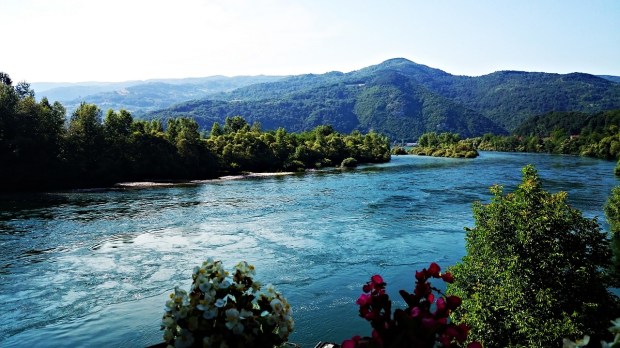
Serbian river
belgrade-466173_1280
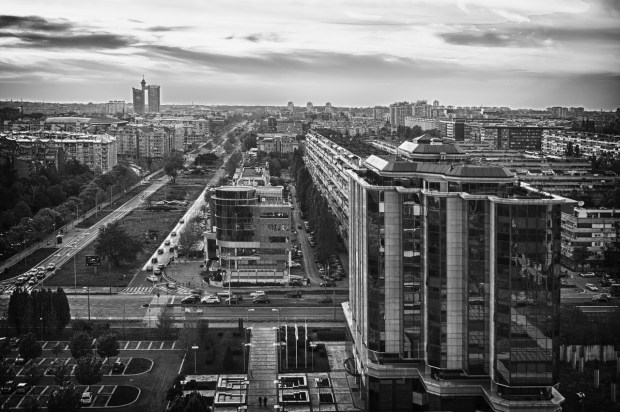
Belgrade, Serbia

Uzbekistan

Dominated by the Qizilqum desert, Uzbekistan is Central Asia’s most populous country.  About 80 percent of the country is flat desert, with mountain ranges rising in the far southeast and northeast.  The world’s largest open-pit gold mine is at Muruntau in the Qizilqum desert.
The oldest cities of Uzbekistan are more than 2,750 years old, and the most famous of them – Samarkand, is one of the oldest cities in the world.
Uzbekistan, along with Liechtenstein, is one of the only two doubly landlocked countries in the world.
Tashkent, the capital, has a metro station featuring chandeliers, marble pillars and ceilings, granite, and engraved metal. It has been called one of the most beautiful train stations in the world.  Along with Tashkent, some of the key highlights of Uzbekistan include The Ark at Bukhara (a royal town within a town dating back to the 5th century), the turquoise-tiled Kalta Minor Minaret, the desert citadels of Khorezm and Samarkand’s Registan Square, one of the world’s great architectural feats.
Under Soviet rule there was intensive production of cotton and grain leading to overuse of agrochemicals and depleted water supplies.  The land has been left degraded and the Aral Sea and certain rivers half dry.  Since it’s independence in 1991 the country is seeking to gradually lessen it’s dependency on cotton, while developing mineral and petroleum reserves.
Bread and noodles are of significant importance in the cuisine of Uzbekistan, thanks to much grain farming.  Mutton is the most popular meat choice due to a large sheep population.  Recipes I came across include Plov (pilaf of rice, meat, carrots & onions), shorpa (soup of mutton & vegetables), dimlama (stew) and manty (dumplings).  I opted to cook Samsas (savoury filled pastry, similar to samosas).
Rating: 7/10 – even though I thought I’d filled them well, I might be tempted to make less and fill them more!
Makes 8 small samsas
Prep time: 30 minutes
Cook time: 30 minutes
225g ground meat (I used ground lamb, but you can use a mixture of beef & lamb)
1 medium sized onion, chopped
2 cloves of garlic, chopped
1 tbsp ground cumin
1/2 tsp cumin seeds
1 tsp coriander
1/2 tsp salt
1 sheet of ready rolled puff pastry dough
1 egg yolk
1 tablespoon olive oil
In a medium frying pan, cook the onion and garlic with 1 tablespoon of olive oil on a low heat until the onion is soft.
Add the ground meat to the frying pan, and cook the meat until browned about 5 minutes and take it off the heat.
Add the coriander, salt, ground cumin, and rub the cumin seeds between your fingers.
Let the meat & spices cool for 30 minutes (or more) before forming the samsas.
Preheat the oven to 200 degrees.
Line a baking sheet with parchment paper.
Roll the puff pastry so it is slightly thinner and cut into 8 equally sized pieces.
Mix the egg yolk with a few drops of water in a bowl.
Divide the meat into 8 portions.
Put one portion of the meat onto half of each piece of pastry. Brush the edges with the beaten egg mix.
Fold the dough in half and push the ends of the dough together to close the pastry.
Coat the tops of the pastry with beaten egg mix.
Cook for about 25-30 minutes until the dough is brown.
Let them cool a little and serve warm.

Cape Verde

Situated off the west coast of Africa, Cape Verde is made up of 10 volcanic islands and 5 islets.  It was discovered by the Portuguese mariners in 1456.  Half of the population live on the largest island, Santiago.  The combined area of all the islands is 1,557 square miles.  It forms part of the Macronesia group of islands, which also includes the Canaries and the Azores.  Cape Verde’s best beaches are found on the islands of Boa Vista and Sal.  Although Sao Pedro on São Vicente is also worth a visit.

Cape Verde is home to the Mediterranean monk seal, the northern bald ibis, the green sea turtle, and the hawksbill turtle, all of which sadly, are endangered.

Mussolini the Italian dictator bought the rights to build an airport on Sal, Cape Verde as he needed to refuel his aircraft on the flights between Europe and South America. Portugal bought the airport back off him in 1945.

Corn is the staple food of Cape Verde. The national dish, cachupa, is a stew of hominy, beans, and whatever meat or vegetables may be available.  Other recipes I came across were Buzio (fish stew), Bol de cus-cus (corn & sugar cake) , Cado de Peixe ou Caiderado (vegetables cooked with fish) and Canjo (soup). I decided to cook Gufong (fried pastry) and served them with a chocolate sauce.

Rating: 6/10

2 cups water
1 cup sugar
1 cup semolina flour
1 cup plain flour
Pinch of salt
Pinch of baking powder
Vegetable oil for frying

In a saucepan combine the water and sugar and bring to a boil.
Once it is boiling add in the semolina flour until it is well mixed then add the plain flour.
Add a dash of salt and baking powder and continue mixing until everything is well combined.
Let the mixture cool.
Once the mixture is cool, take a small piece of the dough and roll them into small finger sized logs on a floured surface.
Heat up your oil in a frying pan or you can use a deep fryer
Cook until golden brown.
Drain on a paper towel
Serve warm with coffee or tea and if you would like drizzle some chocolate syrup and powdered sugar to taste.

Ireland

As I had my mother in law staying with us from Ireland and the kids were also here, it felt only right to cook Ireland on St Patrick’s Day!
So, The Emerald Isle, my husband’s homeland .. the pressure’s on!!
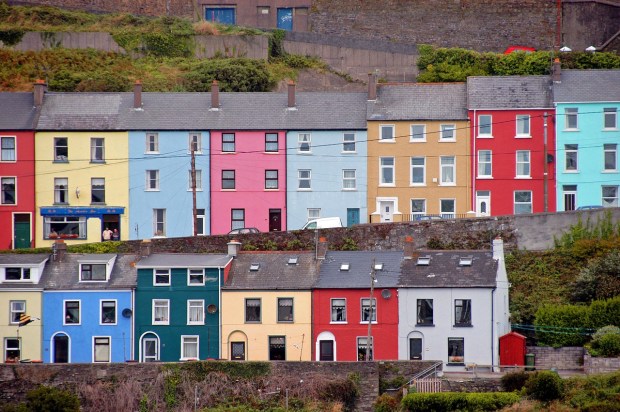
I’ve been to Ireland several times and have had the pleasure of visiting Cork, Dublin and Galway.  All very different and yet delightful in their own unique way.  Beautiful beaches and sea views in Cork, great food, shopping and bars in Dublin and stunning scenery in Galway.
The land of potatoes, guinness, shamrocks and leprechauns has a very long and interesting history.  The first people arrived in Ireland in around 7000 BC and lived by farming and fishing.
In 432 a man named Patrick arrived in Ireland from Western England.  He had been captured by Irish pirates, brought to Ireland as a slave and was forced to work as a herdsman.  He managed to escape back to England but had a vision in which he read a letter asking him to come to Ireland, so he returned to become a missionary and the first bishop of Ireland.  He is said to have died on 17th March 461.
The Great Famine was a period of mass starvation, disease, and emigration in Ireland between 1845 and 1852.  The famine was caused by potato blight.  One third of the population was dependent on the potato for a range of ethnic, religious, political, social and economic reasons and therefore impacted Ireland significantly.  During the famine, approximately 1 million people died and a million more emigrated from Ireland causing the island’s population to fall by between 20% and 25%.
A few quick facts:
Ireland’s top tourist attraction is the Guinness storehouse in Dublin, where over 1 million people visit every year.
In 2010, Dublin was designated UNESCO City of Literature, one of only four in the world (the others are Edinburgh, Iowa and Melbourne).
James Hoban, designer of The White House was Irish.
Rotunda Hospital in Dublin is the longest continually operating maternity hospital in the world.
The Titanic made it’s last port of call in Cobh (then called Queenstown) on 11th Feb, 1912.
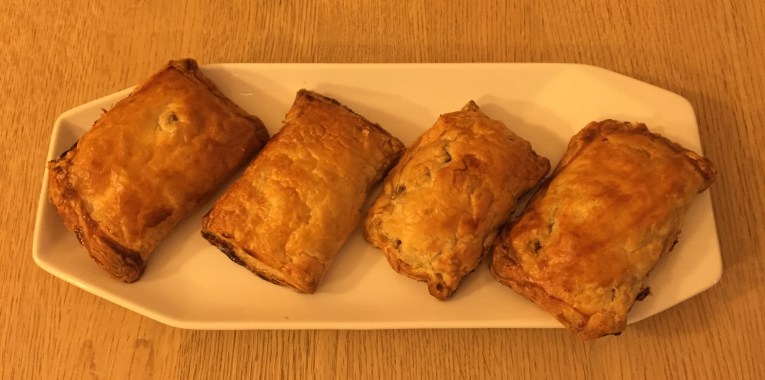
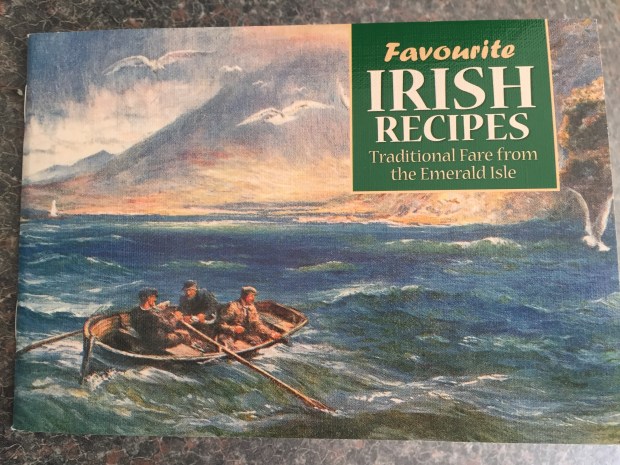
When it comes to Irish food, there was a lot to choose from.  A few years ago, my mother in law had given me an Irish recipe book which came in very handy!  Some obvious options I considered were Irish stew, Colcannon and a full Irish breakfast!  However, I opted for Scallop pie and Soda bread.  Thankfully both went down extremely well.
Rating: 9/10
Recipe for Scallop pie:
Prep time: 1 hour

Cook time: 45 minutes

IMG_7961


Recipe for Soda bread:
Prep time: 10 minutes
Cook time: 40 minutes (longer than the recipe states)
IMG_8022


IMG_7962
Irish cookbook
dublin-1049403_1280
The Ha’penny Bridge, Dublin
cliff-of-mohar-324746_1280
Cliffs Of Moher, County Clare
cobh-cove-285147_1280
Cork
ireland-531137_1280
Guinness
IMG_8021
Family fun on St Patrick’s Day 2016

Guyana

Guyana situated on the northern mainland of South America is the only English speaking country in the continent.  It gained independence in 1966 and officially became a republic within the British Commonwealth of Nations in 1970.
It is a member of the Caribbean community (CARICOM), which has it’s headquarters in Guyana’s capital, Georgetown.
Guyana means “land of many waters”.  80% of the country is made up of rainforest.  Kaieteur Falls is the world’s widest single drop waterfall, located on the Potaro River in the Kaieteur National Park and is about four times higher than the Niagara Falls.

90% of the population lives in a narrow coastal strip, which makes up approximately 10% of the nation’s total land area.

In 1973,  Jim Jones, founder of ’The People’s Temple’, leased some land in the Guyanese jungle and set up the Jonestown compound.  Hundreds of People’s Temple members flew to Guyana and moved in to the compound.  It was meant to be utopia, but it was overcrowded and cabins were segregated by gender, meaning married couples were forced to live apart.  It was run like a prison encircled with armed guards.  On Nov 18th 1978,  Jim Jones congregated the group and urged them to commit ‘revolutionary’ suicide.  Cyanide and valium were mixed with a flavoured powder to make the lethal drink.  The Jonestown massacre resulted in the deaths of 912 people, 276 were children.  Jones himself died from a single gunshot wound to the head – it is unclear if he did this himself.
The cuisine of Guyana is diverse, taking influence from Africa, Creole, Indian, Portugese and Chinese among others.  Popular dishes are curry, cookup rice (rice & peas), Pepperpot (Guyanese spicy stew) and black cake.  I decided to make Roti (flatbreads).
Rating: 10/10

As Mum & Dad were joining us for dinner, I served the Rotis alongside the South African sosaties, Lebanese tabbouleh and salad & raita.  Overall the meal was rated 9/10.

Makes 6 rotis
Prep time: 10 minutes + 45 minutes standing time for dough
Cook time: 40 minutes

175g self raising flour
350g plain flour
315ml water
1/4 tsp salt
3/4 cup oil
1/4 cup melted butter

Mix flours, salt and water to form a soft dough. Knead until smooth and let sit for 15 mins.
Roll dough into a rectangular shape about 1/8 inch in thickness.
Place oil and butter together in a bowl. Spread oil and butter mixture liberally over the dough, making sure entire surface of dough is oiled.
Starting from the longer side, roll up the dough tightly.
Slice into six pieces. Scrunch the oily ends of the dough together (like making a pork ball) and then tuck them in so you end up with a round ball.
Place on a tray with the joined side down.
Let them sit for at least half hour.
Place a crepe or omlette pan over a medium heat.
While the pan heats up roll out the dough to a flat, thin circle, one at a time.
Place the dough into the ungreased pan and cook for 1 minute, then flip.
Liberally brush the oil mixture on the roti and after 30 seconds, flip again.
Now brush the other side of the roti with the oil mixture and flip again.
Cook for an additonal minute, then take off the heat and place in a covered bowl.

Shake in covered bowl vigoruously.
This will make the roti fluffy and should reveal the layers.
Continue this process until all the roti is cooked.

South Africa

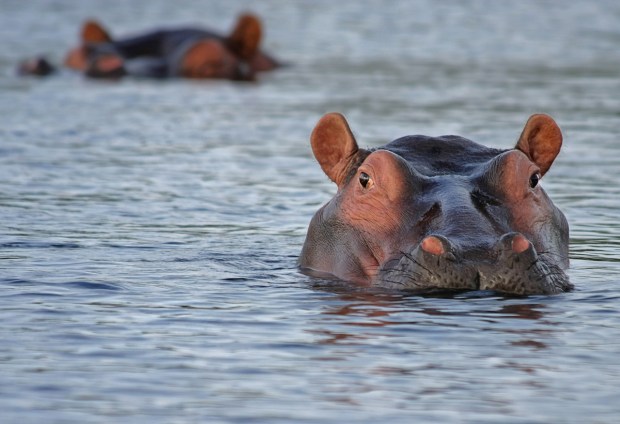
The Republic of South Africa is Africa’s largest and most developed economy.  It’s main exports are gold, diamonds, metals, minerals, cars & machinery.  It is an extremely diverse nation, home to hippos, penguins, zebras, dolphins and of course ‘the big five’ (African lion, African elephant, Cape buffalo, African leopard, and White/Black rhinoceros).  It hosts four of the seven fastest mammals in the world, namely the wildebeest, the African lion, the springbok and the cheetah.
A turbulent political history, dominated by apartheid from 1948 to 1994.  Racial segregation had been in place for centuries but a new policy, started in 1948 made it stricter and more systematic.  The people of South Africa were divided by their race and were forced by law to live apart from each other.  In 1990 President Frederik Willem de Klerk began negotiations to end apartheid.  The multi-racial democratic elections in 1994 were won by the African National Congress, led by Nelson Mandela and he became the first President of South Africa and also the first black president.   Nelson Mandela won the Nobel Peace Prize for his leadership of anti-apartheid activism in 1993.  The apartheid system was banned in 1994.
There are many inviting tourist highlights for visitors to South Africa; The Cape of Good Hope, Table Mountain, Kruger National Park, The Garden Route, Cape Town, Johannesburg to name a few!
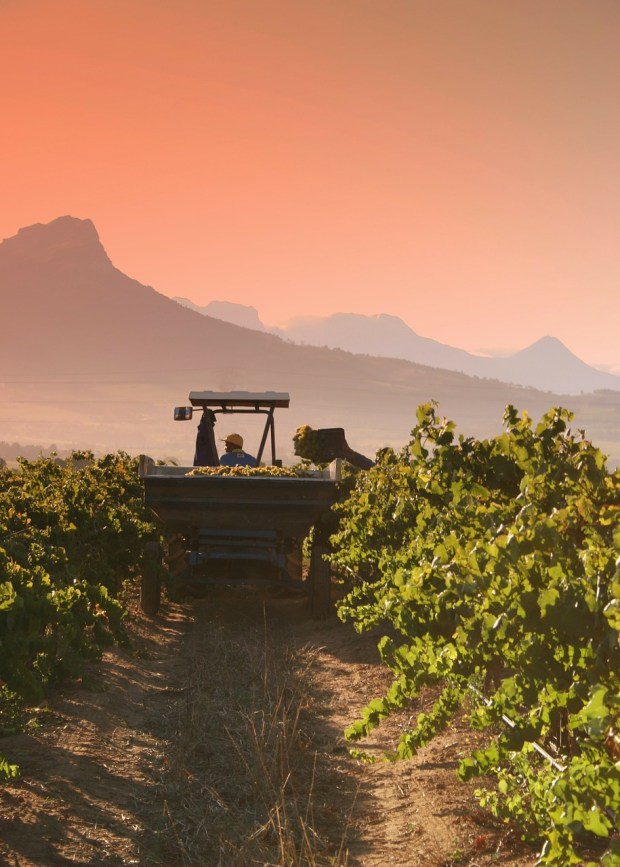
South Africa’s Garden Route is the longest stretching wine route in the world.  Route 62 is 850 km long from Cape Town to Port Elizabeth.  There are over 560 wineries in the Cape area.
It also has the highest commercial bungee jumping bridge in the world at Bloukrans, which is 216 metres long.  It’ll set you back £39.50 for the privilege.
When it comes to the food, again it is very diverse with influences from the Dutch, French, Indians and Malaysians.  Some of the recipes I came across were
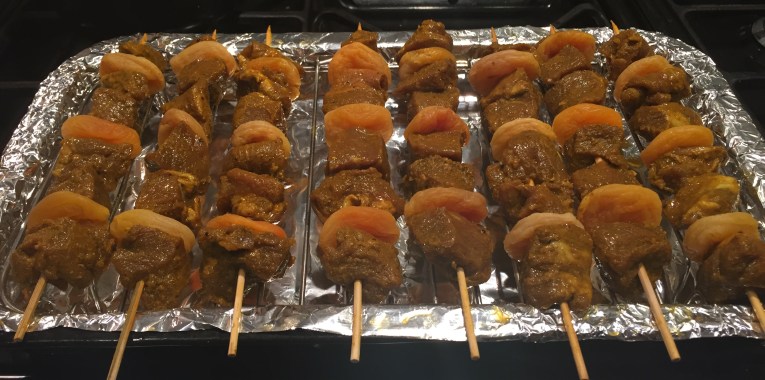
Bobotie (meatloaf with egg based topping), Chicken Curry Potjie, Buttermilk pudding and Koeksisters (sweet twisted pastries).  I decided to cook Sosaties (grilled lamb kebabs).
Rating: 8/10.
Prep time: 40 minutes + 24 hours marinating time
Cook time: 15 – 20 minutes
Sosaties:
500g trimmed lamb leg cut into chunks
200g dried apricots
8 metal or wooden skewers
Sosatie Marinade:
1 tbsp apricot jam
2 tbsp soft brown sugar
1 tbsp crushed garlic
6 cloves
3 bay leaves
2 tbsp curry powder
2 tbsp malt vinegar
2 tsp salt
1 tsp ground black pepper
1 tsp fresh ginger
2 tsp turmeric
2 tsp ground cumin
2 tsp ground coriander
1/4 cup water
Place all the marinade ingredients in a bowl and mix well together.
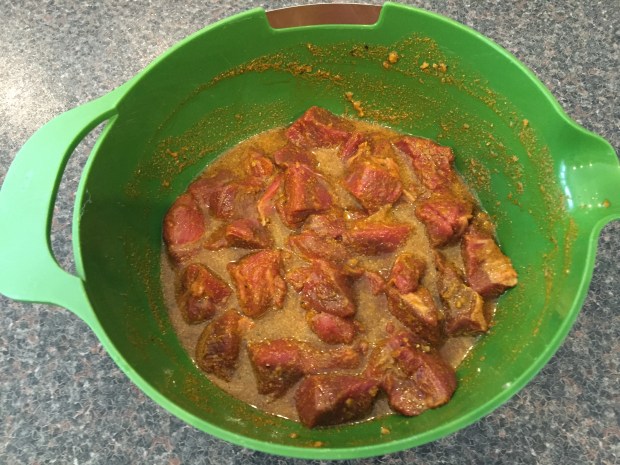
Add the lamb to the marinade and mix well.
Cover and leave in the fridge for 24 hours (or more). Stir the lamb 3 or 4 times during the marinating process.
If using wooden skewers, soak in water for a couple of hours before using.
Soak the apricots in warm water until they plump up.
Remove the lamb from the bowl and thread it on to the skewers alternating pieces of lamb and apricots.
Reserve the marinade.
Preheat the grill or BBQ and cook the sosaties for 10 – 15 minutes, turning regularly so they don’t burn.
Meanwhile pour the marinade into a saucepan and heat until almost boiling.
When serving pour the hot marinade over the sosaties and serve.
IMG_7738
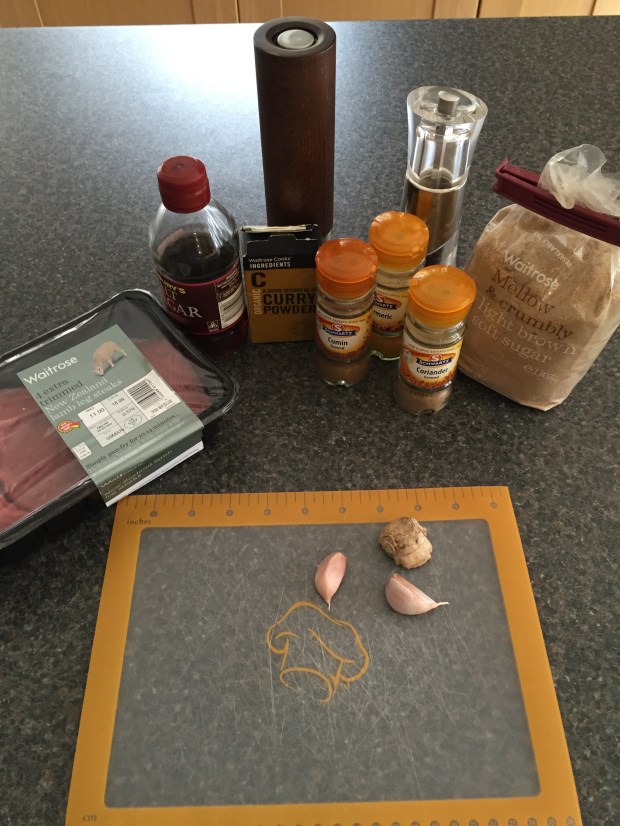
Sosatie ingredients
IMG_7740
Lamb marinating in sosatie marinade
IMG_7823
Marinated lamb in sosatie marinade
IMG_7830
Lamb Sosaties
hippo-515027_1280
Hippo
cape-of-good-hope-1219192_1280
The Cape of Good Hope
cape-town-997521_1280
Cape Town
chardonnay-227786_1280
Stellenbosch

Uruguay

Uruguay is situated on the east coast of South America, sharing borders with Brazil and Argentina.
Often called the Switzerland of South America for it’s stable democracy and social benefits such as free education.
Uruguay is ranked first in Latin America for democracy, peace, lack of corruption and quality of living.  It boasts one of the highest literacy rates in the world with 98.1% for adults.  The Economist named Uruguay “country of the year” in 2013.  It is regarded as one of the most liberal nations in the world and most socially developed.  In December 2013, Uruguay became the world’s first country to legalise the marijuana trade.
Uruguay is the only country that keeps track of 100 per cent of its cattle, of which, apparently there are 3 to every person!
The Uruguay national football team has won the FIFA World Cup on two occasions – at the inaugural tournament in 1930 and again in 1950.  It has also won gold for football at the 1924 and 1928 Olympics, which are the only gold medals they have ever won so far.
“Liberta o Murte” is Uruguay’s motto – “freedom or death”.
Thanks to it’s relatively temperate climate and stretches of beaches, it attracts many tourists each year.  Highlights include Montevideo, it’s culturally rich capital city, idyllic fishing villages such as Cabo Polonio, gaucho cowboys and tasty Parillas (steakhouses).
Beef is a major part of Uruguayan cuisine with Asado being very popular (a BBQ of different types of beef).  Also empanada (a meat filled turnover), Ñoquis (gnocchi which is traditionally eaten on the 29th of each month as years ago they only had flour & potatoes left at the end of the month!)

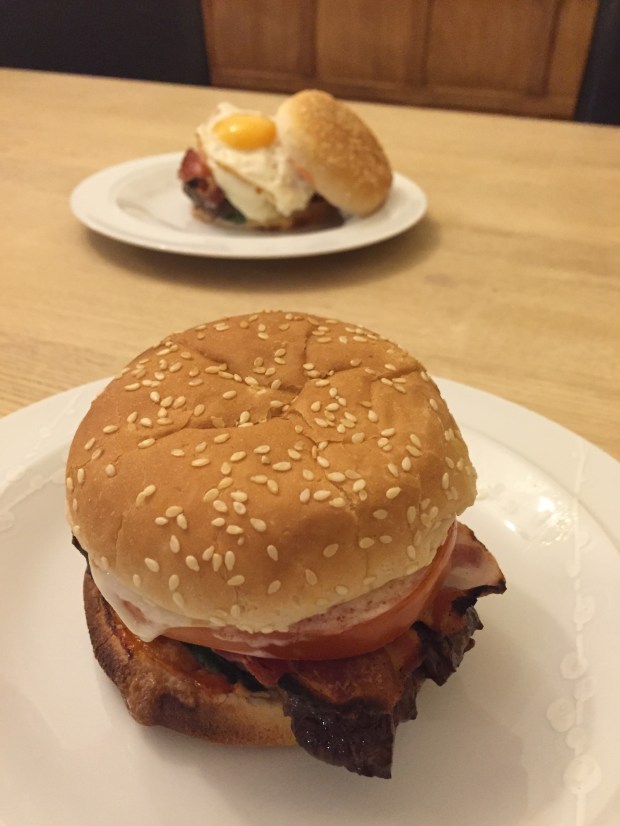
I opted to cook ‘Chivito’, Uruguay’s national sandwich!

Rating: 9/10.  It would’ve been a 10/10 if I had chosen a better bun like ciabatta.  It is important that you buy quality ingredients for this recipe.  Don’t scrimp on the steak, bacon or mozzarella!
Prep time: 20 mins
Cook time: 10 mins
2 burger buns or ciabatta (or your preferred type of bread roll)
2 beef fillet steaks
2 pieces of bacon
2 slices of deli ham
2 tomato slices
2 slices of mozzarella cheese
2 eggs
1-2 tablespoons butter
Lettuce
Mayonnaise
Ketchup
Salt and pepper to taste

Place a large skillet over medium heat and cook the bacon slices until crispy. Set aside on paper towels to cool.
Drain the excess bacon fat out of the skillet.
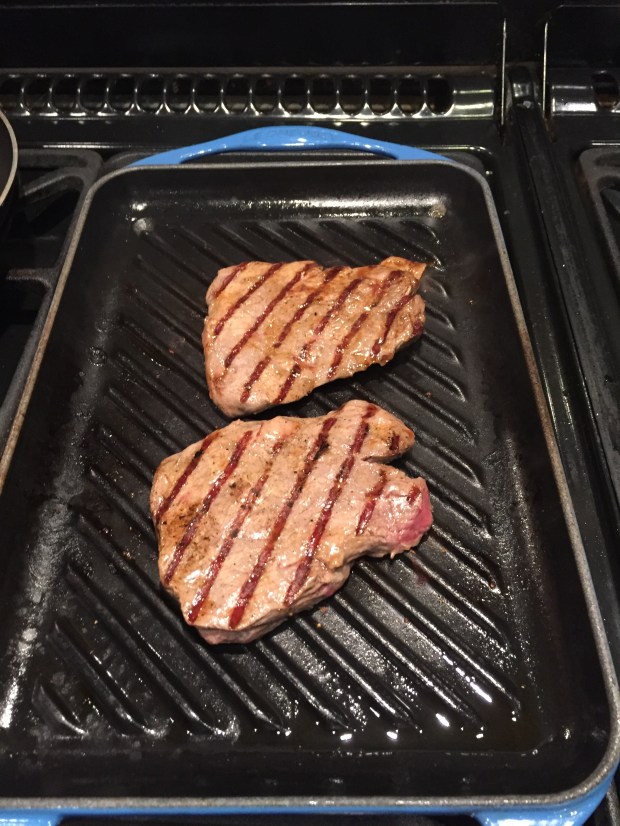
Sprinkle each steak with coarse salt, and use a mallet to pound the steaks. Heat the skillet over medium high heat until hot, and place steaks on the skillet.
Cook for about 1 and a half minutes per side, or until desired doneness.
Set aside on paper towels to rest.
Wipe the skillet clean. Melt the butter over medium heat, and fry eggs sunnyside up until desired doneness.
Preheat the grill.
Assemble sandwiches: Spread the inside of buns with ketchup and mayonnaise.
Place lettuce slices over bottom half of buns.
Top with a slice of beef, 2 bacon slices, a slice of ham, a slice of tomato, and a slice of mozzarella.
Place sandwiches (uncovered) under the grill briefly (keeping a close eye on them) to melt the cheese.
Remove from the grill and add the fried egg over the cheese, then top with the other half of the bun.
Serve immediately.

IMG_7753
Ingredients
IMG_7756
Cooking the steak
IMG_7759
Seared steak
IMG_7765
Chivito
IMG_7766
Chivito
IMG_7776
Chivito
fair-1122376_1280
Asador cooking Asado
canelones-91226_1280
Uruguayan beach

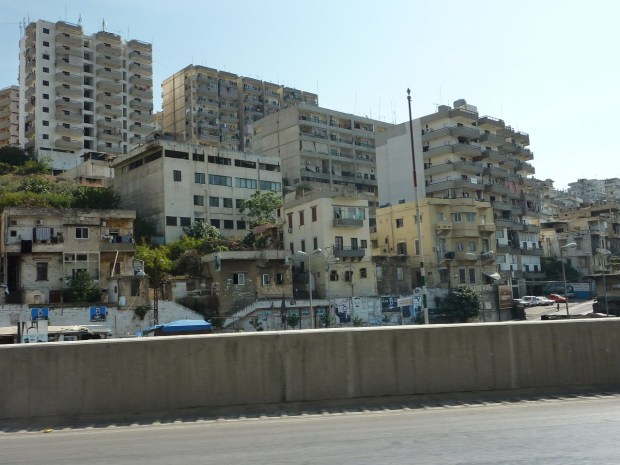
Lebanon

Lebanon, officially the Lebanese Republic is a sovereign state in Asia.  It is bordered by Syria to the north and east and Israel to the south

The earliest evidence of civilisation in Lebanon dates back more than seven thousand years in Byblos, where it is said the first alphabet was created.  The country’s name is known to be the oldest in the world and has remained unchanged for over 4000 years.  There are 4.5 million Lebanese in Lebanon and around 18 million living outside Lebanon.

Lebanon’s recent history is one of conflict and suffering. In 1975 civil war broke out, lasting 16 years, eventually ended by a Syrian backed initiative. During the civil war, in 1982 Israel invaded following PLO attacks. Hezbollah (The Party of God), a pro-Syrian Shia military/political movement, with financial backing from Iran, was formed in the 80s to primarily harass the Israeli occupation. It has significantly grown in strength over the years.  Tensions still continue and Lebanon’s borders with Syria and Israel remain unresolved.

Despite the decades of civil war, invasions and terrorist attacks, it is a country that is home to stunning ancient ruins, beautiful mountain vistas and Mediterranean coastline beaches.  Top things to see according to Trip Advisor include the Temples of Baalbek, National Museum of Beirut and the Crusader Castle in Byblos.

The food of Lebanon is considered some of the Mediterranean’s best food – mezze (small dishes), kibbeh (spiced minced lamb in a fried bulgar wheat shell), dhourba bi kousa (courgette & milk soup), daoud Pasha (meatballs with pine nuts).  I decided to make one of their most famous dishes – tabbouleh (bulgar wheat salad).

Rating: 8/10
Prep time: 15 minutes + 40 min for bulgar to soak
Serves: 2-3

1/2 cup bulgar wheat
1 cup boiling water
220g tomatoes roughly chopped
1/2 medium onion finely sliced
1 tbsp chopped fresh parsley
1 tbsp chopped fresh mint
3 tbsps olive oil
Juice of 1 large lemon
Salt & pepper
1/2 cup black or green olives (optional)

Put the bulgar wheat in a bowl with the boiling water and a little salt. Leave to soak for 40 minutes, then drain.
Take a salad bowl and add the bulgar wheat, tomatoes, onion, parsley & mint. Mix well.
In a separate bowl or jug, beat the oil with the lemon juice and season with salt & pepper.
Pour it over the salad & mix thoroughly.
Put the olives on top and then chill the salad in the fridge for 2 hours.
Add a sprinkling of parsley to garnish and serve.

img_7742
Ingredients for tabbouleh
img_7751
Tabbouleh
baalbeck-710599_1280
Temples of Baalbek
beirut-452164_1280
Beirut

Lesotho

Lesotho (pronounced le-soo-too) is a mountainous country surrounded by South Africa.  Originally called Basutoland, it was renamed the Kingdom of Lesotho upon independence from the UK in 1966.  “Lesotho” roughly translates to “the land of the people who speak Sesotho”.

80% of the country is greater than 1,800 m above sea level.

It’s principal exports are manufactures (clothing, footwear, road vehicles) wool & mohair.  Water is Lesotho’s major natural resource. Completion of a large hydropower plant in 1998 helps the economy expand through the sale of water to South Africa.
Some of the top things to do in Lesotho, according to trip advisor, include the AfriSki Ski and Mountain Resort in Buthe Buthe, Katse Dam in Maseru and the Maletsunyane Falls in Semonkong.
I struggled to find recipes that appealed to me, as I’m not a fan of porridge and ‘mealie pap’, a maize porridge is a very common dish in Lesotho.
They also have stews (oxtail) and curries.  However I came across a bread that they cook in the mountain regions of Lesotho called Borotho.  They cook it over a coal fire in a cast iron pot.  I opted to cook it in a copper pot in the oven.
Rating: 4/10.
The bottom of the buns were a bit too crunchy for our liking and the dough was quite dense.  Perhaps they’d be lighter if I’d used just strong white flour rather than a mix.
Prep time: 30 minutes + 1hr 30 minutes proving time
Cook time: 35 minutes
Makes: 12 buns
Ingredients
15g dried yeast
1 tsp sugar
1/2 pt tepid water
225g strong white flour
225g wholemeal bread flour
1 tsp salt
veg oil

Add the yeast & sugar to the water, stir and leave it to stand for 5 minutes.
Sift the flour & salt on to a clean worksurface or bowl.
Make a well in middle and add most of the liquid.
Gradually stir the flour into the liquid so you start forming a gluey paste and then a dough.
Knead the dough for 10 minutes and then place in a bowl with a tea towel over the top and put it in a warm place for at least 1 hour.
Remove the dough on to a lightly floured work surface and gently knead it for a couple of minutes.
Put it back in the bowl, covered with a tea towel and leave it to prove again for at least 30 minutes.
Preheat the oven to 200 c.
Put a tbsp of veg oil in a lidded oven proof dish (ideally copper or cast iron) and put in the oven to heat for 5 minutes.
Remove the dough from the bowl and make 12 round buns with your hands, placing them in a circle around the edge of the dish with a couple in the middle.  Leave a little bit of space around each one.
Put the lid on the dish and cook for 35 minutes.
Serve for breakfast with butter & jam or your preferred spread.